scaling
scaling at Beyond Market Intelligence is a file of 49 stories. The newest of them: “Scaling AI Agents From Prototype to Production on Kubernetes”, “Ramp crosses $2B in revenue as 85,000 customers adopt its AI platform”, and “From 40 Trillion Tokens, a Blueprint for Scaling AI Agent Trust”. Transitioning AI agents from a local FastAPI prototype to a production-grade system on Kubernetes is a challenge many teams are now facing. Ramp has crossed $2 billion in annualized revenue with 85,000 customers now on its AI platform. Acme AI is the next-generation, AI-powered spreadsheet platform built to replace Excel and redefine how analysts, data scientists, and enterprise teams work… The list below is every scaling story on Beyond Market Intelligence, newest first.
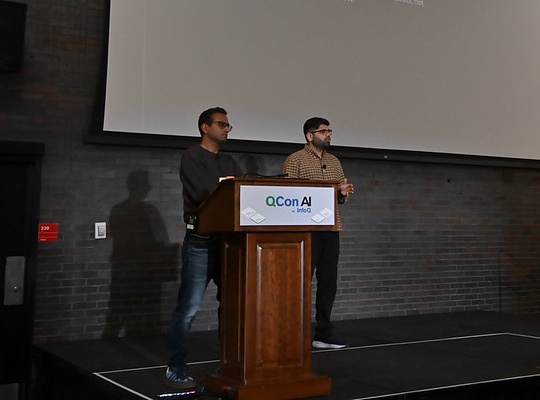
Scaling AI Agents From Prototype to Production on Kubernetes
Transitioning AI agents from a local FastAPI prototype to a production-grade system on Kubernetes is a challenge many teams are now facing. Deepak Mohanakumar Chandramouli and Bhumik Vinodkumar Thakkar share practical insights on RayCluster topology, stateful memory, and auto-scaling under dynamic traffic. They also cover guardrails, multi-region setups, and LLM-as-a-judge evaluation pipelines. For more on scaling reliable infrastructure, see our coverage of ARC's latest upgrades for self-hosted runners.

Ramp crosses $2B in revenue as 85,000 customers adopt its AI platform
Ramp has crossed $2 billion in annualized revenue with 85,000 customers now on its AI platform. That scale signals something worth paying attention to. Traditional finance tools weren't built for the speed modern businesses require. Ramp's approach turns that constraint into an opportunity. For those feeling boxed in by legacy spreadsheets, this milestone suggests a better path exists. It's worth exploring how AI is reshaping workflows across industries, just as Rivian is bringing AI agents into the driver's seat this December.

From 40 Trillion Tokens, a Blueprint for Scaling AI Agent Trust
Trust is the bottleneck, not model performance. Brendan O'Leary draws on 40 trillion tokens of usage data to map the four rungs of AI adoption, showing where context construction, multi-model routing, and feedback loops actually break down. For engineering leaders scaling agentic workflows, this is a practical blueprint. For deeper context on the infrastructure demands these agents create, see our companion piece on how CedarDB unifies operational and analytical data.
Exploring the Next Wave of AI Architectures Beyond Transformers
The race to move beyond the Transformer is producing a fascinating zoo of architectures, from Mamba's selective state spaces to Dragon Hatchling's emergent attention. What stands out is the shared goal: getting more intelligence from limited compute, not just scaling up. These aren't merely academic curiosities, they're practical bets on reasoning, memory, and adaptation. The comparison table reveals how linear attention, softmax, and test-time memory overlap across labs. For deeper context on system-level reasoning, see our piece on uncovering hidden flaws with formal methods.

AWS Smooths Event-Driven Growth with Unified EventBridge Custom Buses
Event-driven architectures scale fast, but the event infrastructure itself often doesn't keep up, especially when multiple teams or AWS accounts are involved. AWS's enhanced Custom Event Bus for Amazon EventBridge directly addresses this fragmentation, offering a unified path forward for growth. It's a confident step toward making distributed event systems feel less like a patchwork and more like a purposeful design. For another take on managing complexity at scale, see how EVE Online tames 20 years of telemetry data.
Exploring AI routing that trims memory while keeping long-context accuracy high
Memory is the bottleneck in long-context AI, and ALHR offers a refreshingly direct solution. This static binary tree system uses learnable functions to trim the number of keys, reducing VRAM usage while maintaining accuracy. Early tests with tiny stories look promising. It is a pragmatic, scalable approach. For deeper context on how AI learns from human action, see our related coverage on two new approaches shifting that dynamic.

CircleCI Automates Machine Runner Scaling to Match Workload Demand
Manual scaling has always been the hidden tax on self-hosted CI runners. CircleCI is removing that burden with the general availability of Machine Runner Orchestrator 1.0.0, which automatically matches your virtual machine footprint to actual workload demand. This is practical automation that lets teams stop babysitting infrastructure and start focusing on delivery. If you are exploring how AI-native tools are reshaping data and development workflows, our piece on building a complete data science stack with open-source tools offers a fitting next stop.

AI Coding Speeds Up Development, but Debugging Demands Grow
AI coding agents are writing code faster than ever, but a new survey from Undo and Coleman Parkes reveals a sharp trade-off: debugging now consumes more time than before. Faster generation means more code to troubleshoot, and that bottleneck demands new tools for comprehension. Developers aren't just writing, they're deciphering. For deeper insight into how AI is reshaping workflows, see our coverage of Flai's $27M round and its 50,000 monthly appointments.

Flai's $27M round fuels an AI platform booking 50,000 appointments monthly
Flai has closed a $27 million Series A, and the numbers behind it demand attention. The AI-native platform is now booking 50,000 appointments monthly, with revenue growing 20x in a single year. That trajectory signals a genuine shift in how businesses handle scheduling and data workflows. For teams feeling constrained by traditional spreadsheets, this is a compelling reason to explore what an intelligent, automated approach can do. The momentum speaks for itself.

Explore the complete breakout agenda for TechCrunch Disrupt 2026
TechCrunch Disrupt 2026 has released its full breakout session agenda, and it's designed for founders who need real answers. Taking place October 13-15 in San Francisco, this year's program tackles scaling challenges and technical hurdles head-on. If you're wrestling with the decisions that come with growth, consider pairing this event with our coverage on navigating founder decisions with insights from those who built before you. Register now to save up to $100, and bring a colleague for 50% off.

Navigate founder decisions with insights from those who built before you
There isn't a single manual or prompt that can truly prepare you to build a company. On November 4, TechCrunch Founder Summit offers the next best thing: a packed day at Boston's SoWa Power Station where investors and operators share how they've navigated the decisions that matter. It's about learning from those who built before you. If you're weighing strategic forks, our piece on Type One Energy's lean path to a fusion plant by 2034 offers a real-world example of focused execution.

Beyond Scaling: Cerebras on the Future of AI's Compute Demands
Andrew Feldman, CEO of Cerebras Systems, is set to challenge the AI industry's assumptions at TechCrunch Disrupt 2026. He'll confront a simple question: what happens when today's hardware can't keep up? Cerebras is building differently, not just faster chips, but a fundamentally different approach to compute, energy, and infrastructure. This isn't about incremental upgrades. It's about rethinking the ceiling. For context on why some builders are stepping back from consumer AI, see our related piece on frontier labs.

How Continuity Scales Git to 300 Pushes Per Second With S3
Cursor's Continuity architecture treats S3 as the source of truth, not a backup. By demoting local NVMe drives to warm caches and separating replica coordination from consistency, the design achieves over 300 pushes per second with linear read scaling across 100 replicas. That's a practical rethinking of how Git storage should work at scale. For teams wrestling with repository bottlenecks, this approach is worth exploring, much like the compute challenges addressed in our piece on LLM post-training research.
Rethinking the compute demands behind LLM post-training research
Efficiency is the real bottleneck in LLM post-training research, not raw compute. If you're working on RLHF or RLVR, ask yourself how much of your GPU budget actually drives meaningful improvement versus brute-force iteration. Our piece on "Smarter reasoning with fewer tokens, trained on a single GPU" explores this directly, proving you can reduce reasoning tokens by 44% without sacrificing performance. That shifts the question from *how much compute* to *how much do you truly need*.

Tesla secures $30B in credit, keeping future capital options open
Tesla just locked in $30 billion in credit facilities, a move that signals confidence without forcing its hand. The company says it won't tap those funds this year, especially with at least $25 billion already earmarked for capital expenditures. That's prudent planning, not desperation. It keeps options open while the balance sheet stays flexible. For a company scaling production and investing heavily, that's a smart position to hold.

Two fusion leaders map the path from breakthrough to the grid at Disrupt 2026
Fusion energy has long felt like a future that never arrives. Two leaders determined to change that, CFS' Brandon Sorbom and Helion's David Kirtley, will bring real answers to Disrupt 2026. They'll map the path from laboratory breakthrough to grid-scale power, and the obstacles still in the way. If removing bottlenecks in energy sounds familiar, our piece on how Uber solved the same problem with data orchestration is worth your time. Secure your pass at regular price and bring a colleague for half off.
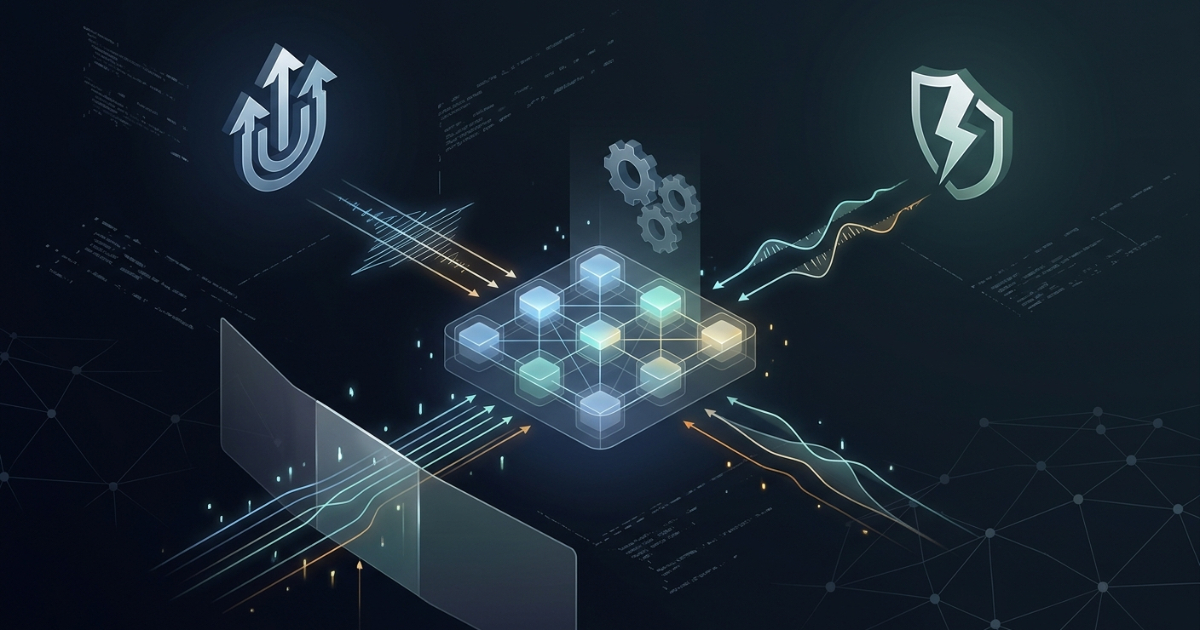
How Uber Gives Multiple Orchestrators Control Over Scaling Without Conflict
Uber has solved a tricky Kubernetes problem by separating scaling intent from execution. Its new ServiceScale controller lets multiple orchestrators manage the same workloads without stepping on each other, critical for regional failover without idle capacity. Engineers Egor Grishechko and Srikar Paruchuru explain how. It's a practical, human-centered approach to infrastructure that prioritizes outcomes over complexity. For more on how major platforms rethink their tech stacks, see Cloudflare's blog on migrating to EmDash.

Perplexity Transforms Search with CobbleDB, Achieving 5x Faster Queries
Perplexity has quietly rebuilt its search backbone, moving from Amazon DynamoDB to CobbleDB, its own key-value store written in Rust. The result is a fivefold speed boost and lower costs on large document batches, all while handling serious production traffic. That is the kind of infrastructure bet most teams talk about but rarely pull off. For deeper looks at similar moves, Cloudflare's blog migration to EmDash shows how internal tools can reshape performance.
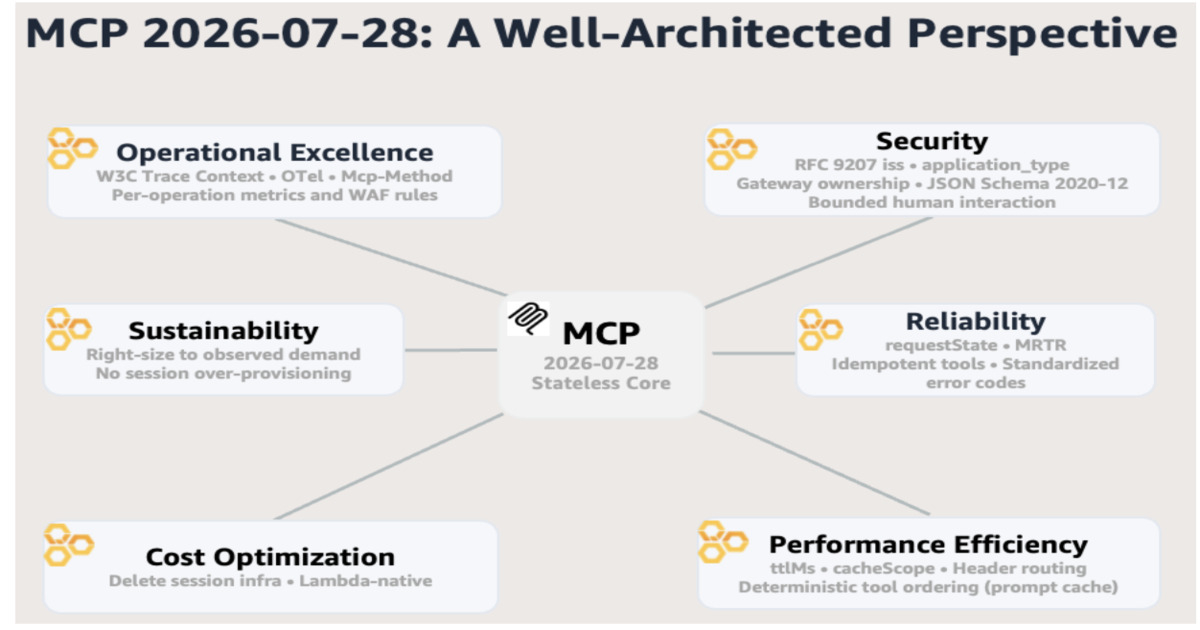
Scale AWS Server Deployments Effortlessly with Stateless Model Context Protocol
The latest Model Context Protocol specification strips away session-level overhead, and that matters for anyone running remote MCP servers at scale. By removing sticky-session requirements and session storage, AWS enables independent request routing, which makes horizontal scaling far more straightforward. The trade-off is real: application state, retries, and observability now live in other layers. That shift feels like a mature step forward, not a workaround.
Refine Your Accepted Paper: Maximizing Changes Before Camera Ready
A paper accepted to NeurIPS is now facing a difficult question: how much revision is too much before the camera-ready deadline? This author rewrote every section except results and conclusion, added a theorem with a five-page proof, and tacked on ten extra appendix pages. That is a substantial shift from what reviewers originally saw. The core tension is real. Reviewers approved a specific version, and changing the theoretical contribution or the sensitivity study's shape could feel like a new submission.

Waymo's Texas Fleet Grows Significantly, Reflecting Rapid Expansion
Waymo's Texas fleet just grew by 49% in a single month, and that kind of momentum is hard to ignore. It signals a deliberate push into new terrain, not just a test run. We're watching a company move with intent, and the pace is worth your attention. Expansion at this scale raises practical questions about deployment and real-world performance, questions our earlier piece, "Exploring Real-World Computer Vision," tackles head-on.

Unlock Growth: Connect with Investors and Founders in Boston
A full-day summit in Boston on November 4 brings founders and investors together for a practical look at scaling companies. The focus is on tactical insights, not theory, with top VCs and experienced entrepreneurs leading the conversation. It is a direct opportunity to build relationships that move businesses forward. If you are tracking how AI is reshaping infrastructure, our piece on Anthropic's cloud investment with Akamai pairs well with the event's growth-focused agenda.

Scale Sandboxes Instantly: A New Approach to Concurrent AI Workloads
Modal's staff engineers Colin Weld and Connor Adams didn't just tweak their sandbox setup; they rebuilt it from the ground up. The result is infrastructure that handles millions of concurrent sandboxes and tens of thousands of creations per second. That's the kind of scale that makes concurrent AI workloads feel almost routine. It's a smart, grounded look at what it takes to move past legacy limits. For more on practical AI adoption, our guide to unlocking ChatGPT for work is worth a look.
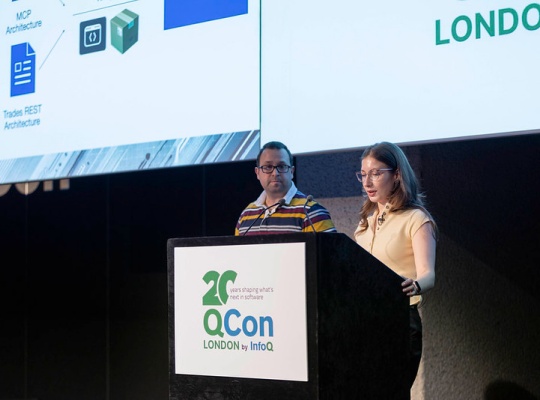
Scale AI Workflows: Modernizing APIs with Architecture as Code
Morgan Stanley is using Architecture as Code with CALM to modernize its API program, and the approach is worth your attention. Jim Gough and Andreea Niculcea show how integrating Model Context Protocol and Agent-to-Agent communications, paired with automated governance through deployment gates, makes scaling enterprise AI feel deliberate rather than chaotic. The zero-downtime upgrades are a practical win. If you are exploring how AI reshapes infrastructure, this pairs well with our piece on real-world computer vision deployments.