skill development
5 stories filed under skill development on Beyond Market Intelligence. The newest of them: “When AI Automates the Middle Rungs, Who Builds the Ladder”, “Move Beyond Borrowed Thinking to Stay Valuable as AI Advances”, and “Master the Code by Slowing Down in the Age of AI”. As AI writes more code, junior engineers risk losing the very practice that builds expertise. Borrowed thinking won't protect your career as AI gets smarter. Acme AI is the next-generation, AI-powered spreadsheet platform built to replace Excel and redefine how analysts, data scientists, and enterprise teams work… The list below is every skill development story on Beyond Market Intelligence, newest first.

When AI Automates the Middle Rungs, Who Builds the Ladder
As AI writes more code, junior engineers risk losing the very practice that builds expertise. In "When AI Automates the Middle Rungs, Who Builds the Ladder," Alasdair Allan examines the "supervision paradox" emerging from METR and Anthropic research: leaning on AI tools accelerates output today but starves tomorrow's talent of the hands-on learning needed to oversee autonomous systems. The long-term engineering pipeline is at stake.
Move Beyond Borrowed Thinking to Stay Valuable as AI Advances
Borrowed thinking won't protect your career as AI gets smarter. The real challenge is building value that machines can't replicate by simply retrieving and recombining what already exists. That means focusing on judgment, context, and the human decisions that shape outcomes. We've explored similar territory in our coverage of autonomous agents, where oversight and accountability become the differentiators. The path forward isn't resisting AI, it's deepening the skills that make your perspective irreplaceable.

Master the Code by Slowing Down in the Age of AI
Ben Linders argues that real mastery in software engineering comes from slowing down, even as generative AI accelerates output. He's right. Tools can produce code quickly, but they don't build understanding. Engineers still need to grasp how systems work to truly learn. Senior developers who coach juniors through deliberate, slower techniques are preserving the craft. For more on what AI agents can, and cannot, do with code, see our coverage of "300K lines refactored for $4,000: what a C codebase taught AI agents."
The Hidden Cost of Community Service in AI Reviewing
Signing up to review for AAAI felt like an obligation, but the reciprocity was absent. The regret is understandable, yet the self-criticism feels misplaced. Sacrificing personal time to reject papers is a thankless task, but the hidden value is real. Reading outside your field sharpens critical thinking, a skill that transfers beyond academia. It is not about feeling important; it is about honing judgment. If you are weighing the cost, consider the learning payoff.
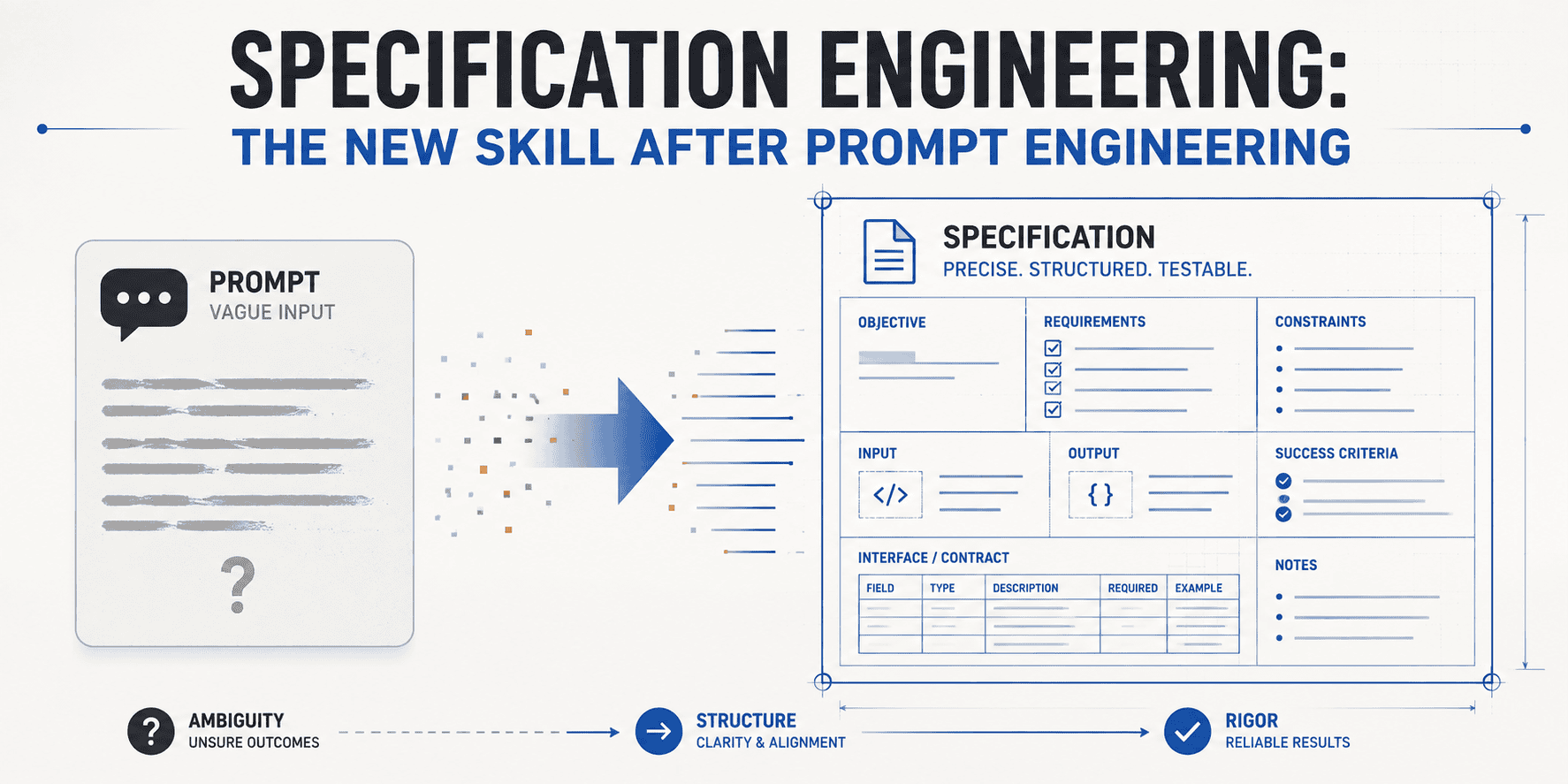
From Prompt to Purpose: The Shift Toward Specifying Work
Prompt engineering taught us how to ask better questions. Specification engineering teaches us how to define better work. That's the natural next step, and it's one worth exploring if you've ever felt the limits of a clever prompt. We're moving from conversational nudges to precise, actionable blueprints. For a deeper look at how AI can misunderstand even clear instructions, our piece on verifying your AI's understanding offers a practical checkpoint. This skill is about taking control, and that's a shift we can get behind.