software architects
software architects at Beyond Market Intelligence is a file of 5 stories. The newest of them: “See Why AI Agents Pick the Tools They Do with Kiji Inspector”, “How Gearset replaced guesswork in queue debugging with OpenTelemetry tracing”, and “Instrumentation Without Compromise: Full Visibility, Zero Overhead”. Hannes Hapke shows how Dataiku's open-source Kiji Inspector applies Sparse Autoencoders directly to decision tokens, exposing *why* an AI agent picks one tool over another. Queue debugging often feels like guessing. Acme AI is the next-generation, AI-powered spreadsheet platform built to replace Excel and redefine how analysts, data scientists, and enterprise teams work… The list below is every software architects story on Beyond Market Intelligence, newest first.

See Why AI Agents Pick the Tools They Do with Kiji Inspector
Hannes Hapke shows how Dataiku's open-source Kiji Inspector applies Sparse Autoencoders directly to decision tokens, exposing *why* an AI agent picks one tool over another. This moves past superficial chain-of-thought narratives into causal ablation and layer activation extraction. For architects and engineering leaders building production monitoring workflows, it's the kind of transparency that turns agent behavior from guesswork into something you can actually inspect.
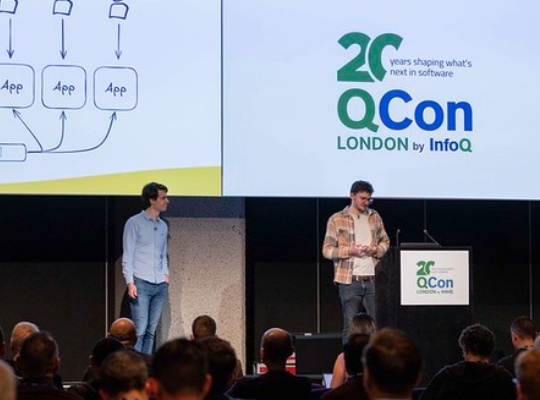
How Gearset replaced guesswork in queue debugging with OpenTelemetry tracing
Queue debugging often feels like guessing. Gearset's Oli Lane and Julian Wreford show how OpenTelemetry tracing replaces that uncertainty in distributed asynchronous queues. They explain why traditional metrics miss the mark and offer practical tips for implementing user-centric SLOs based on latency distributions. For senior developers and engineering leaders, this is a concrete path to better reliability and team culture. Readers exploring observability may also appreciate how Pinterest and Intel scaled open-source profiling across the internet.
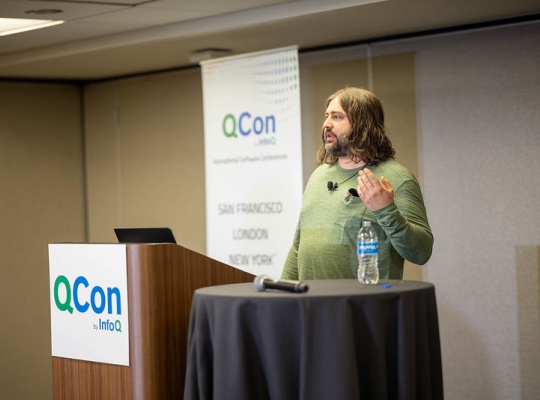
Instrumentation Without Compromise: Full Visibility, Zero Overhead
Observability shouldn't feel like a tax on your system. Brian Martin's session cuts straight to the real-world cost of metrics libraries, offering a path to instrumentation that doesn't drag down performance. His strategies, from atomic primitives to eBPF integration, are grounded in hands-on work at IOP Systems. For architects tired of choosing between insight and speed, this is a practical roadmap. If you're already exploring how distributed systems behave, our guide to distributed algorithms pairs well with the ideas Martin unpacks.

Visualizing Telemetry Data Beyond the Default Line Chart
Line charts have served observability well, but they were never designed to answer every question a modern systems engineer needs to ask. In her presentation, Yao Yue draws on 15 years of operating large-scale systems to challenge this default. She shows how moving beyond time-series basics can directly address critical capacity and fleet-sizing decisions. It is a practical, overdue call to rethink how we visualize telemetry. For those exploring how AI reshapes data work, our piece on Jev versus LLMs offers a useful companion.
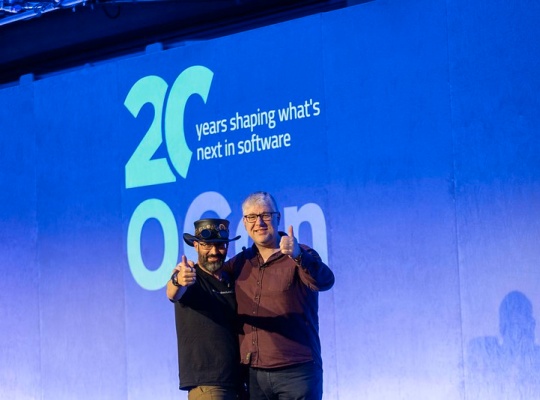
Smarter Prompts, Not Bigger Ones: Engineering Context That Works
Big context windows feel like the easy answer, but Baruch Sadogursky and Patrick Debois argue otherwise in their session, "The Right 300 Tokens Beat 100k Noisy Ones." They show why stuffed prompts drag coding agents down, then offer practical fixes like lazy-loaded skills and externalized memory banks. It is a grounded, useful take for engineering leaders wrestling with agentic workflows.