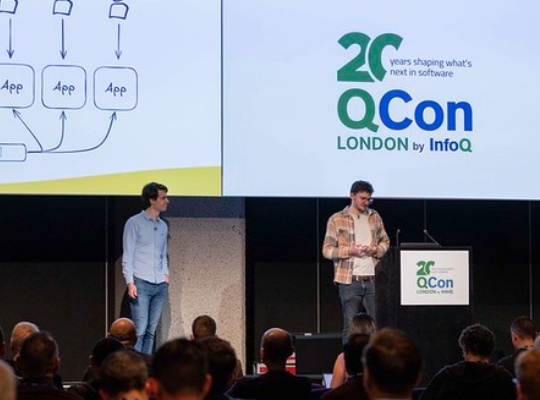
Gearset's move from guesswork to OpenTelemetry tracing is exactly the kind of practical shift that turns good engineering teams into great ones. Oli Lane and Julian Wreford have shared something genuinely useful: a clear account of why traditional metrics fail distributed asynchronous queues and how user-centric SLOs built on latency distributions actually fix the problem. For anyone wrestling with systems where work happens in the background, this is not theoretical. It is a blueprint for replacing frustration with insight.
The core insight is deceptively simple: when you monitor queues with averages or aggregate metrics, you miss the real story. A queue that looks healthy on paper can be silently degrading the experience for a subset of users. Gearset's approach, using OpenTelemetry to trace individual requests through the entire asynchronous flow, lets engineers see exactly where time is spent and where failures occur. This matters because debugging asynchronous code without tracing is like trying to find a leak in a pipe you cannot see. You rely on hunches, and hunches are expensive. The practical debugging tips Lane and Wreford offer, from correlating queue delays with user-facing latency to setting SLOs based on percentiles rather than means, give teams a repeatable method. This is how you move from "something feels slow" to "the payment confirmation job is blocking because of a database timeout at the 95th percentile." That specificity is what changes team culture from reactive firefighting to proactive improvement.
This story resonates even more when placed alongside other recent work on observability and performance. Consider how Open-source profiling scales across the internet with Pinterest and Intel extends the same principle, making invisible work visible, but at the level of CPU cycles rather than queue depths. Both projects share a conviction that engineers should not have to guess what their systems are doing. Similarly, the work on Cloudflare's new certificate authority speeds up post-quantum web security shows that even infrastructure as fundamental as certificate validation benefits from rethinking assumptions about measurement and performance. Gearset's contribution is distinct because it focuses on the asynchronous, event-driven patterns that increasingly define modern architectures. Tracing is not new, but applying it to queues with a user-centric lens, and documenting the results honestly, is valuable.
The specific takeaway for engineering leaders is this: stop treating queue debugging as a black art. Invest in the instrumentation that lets you trace work end to end, and define your SLOs around what users actually experience, not what your dashboard averages show. The open question that remains, and one worth watching, is how far this approach scales. Gearset's implementation works for their context, but the principles, distributed tracing, latency distribution SLOs, and a culture of empirical debugging, should generalize. The teams that adopt them now will be the ones that do not need to guess later.