software development
software development at Beyond Market Intelligence is a file of 93 stories. The newest of them: “Discover how strategic teams amplify AI for measurable software success”, “Your prompts need a safety net before one rename breaks production.”, and “Give an AI agent a browser with OpenAI SDK and Playwright MCP”. DORA's 2025 research makes one thing clear: AI amplifies whatever system it touches, so the real work is shaping the organization around it. One variable rename broke every live call. Acme AI is the next-generation, AI-powered spreadsheet platform built to replace Excel and redefine how analysts, data scientists, and enterprise teams work… The list below is every software development story on Beyond Market Intelligence, newest first.

Discover how strategic teams amplify AI for measurable software success
DORA's 2025 research makes one thing clear: AI amplifies whatever system it touches, so the real work is shaping the organization around it. Ben Linders breaks down team profiles and success capabilities that turn this insight into action. It's a practical read for anyone tired of chasing tools instead of outcomes. If you're still weighing the human side of AI, "Talking to My AI Clone Taught Me to Question the Tech" pairs well with this analysis.

Your prompts need a safety net before one rename breaks production.
One variable rename broke every live call. That's the failure mode prompt engineering can't solve. Writing better prompts matters, but managing them safely at scale is where production systems actually live. Treating prompts like contracts, backed by lightweight static analysis that catches breaking changes before they ship, prevents production failures. It's a practical, grounded take on a real operational gap. For a deeper look at how LLMs navigate structure, our related piece on paragraph token space pairs well here.

Give an AI agent a browser with OpenAI SDK and Playwright MCP
Giving an LLM agent a browser isn't about handing it a tool, it's about teaching it to navigate the web with purpose. This guide walks through building a browser-use agent with the OpenAI Agents SDK and Playwright MCP, turning a capable model into something that can actually click, scroll, and reason. It's a practical, grounded approach to a complex task. If you're curious about how far AI can go when given the right environment, this is a solid place to start.

Reid Hoffman's new lab bets on automating tasks, not just coding
Prentis is betting that the real AI breakthrough isn't smarter chatbots, but software smart enough to handle the busywork on your screen. Reid Hoffman and Mark Pincus are in talks to raise $100 million for this new lab, and the premise feels right: automating routine computer tasks will soon outpace coding as AI's primary use case. That's a future worth exploring, especially if you've ever wondered whether your own AI clone sees the world clearly.

Discover how personality makes AI assistants more effective collaborators
Cognition's acquisition of Poke signals something practical: how an AI assistant talks is becoming as decisive as the model underneath. Poke's conversational style will now shape Devin, the coding agent, because interaction design is where productivity either stalls or accelerates. We think that is the right bet. Users do not need louder claims about intelligence; they need tools that feel intuitive enough to trust. If you are curious how such models navigate structure, our related piece on paragraph structure offers a deeper look.
Two AI patterns emerge for autonomous code debugging and system design.
What happens when the thing building the code is also the thing testing it? In this experiment, a code assistant had to design an agentic system using LangChain4j documentation. The result was a framework that writes, tests, and debugs code on its own. The supervisor and workflow patterns each brought distinct trade-offs between flexibility and speed. It's a practical look at autonomous development. If you're exploring how AI designs its own systems, our piece on when AI designs its own hardware pairs well with this.

Voice meets action: OpenAI brings GPT-Live's full duplex to Codex and desktop
Two weeks after debuting GPT-Live, OpenAI has brought its full-duplex voice control into Codex and the ChatGPT desktop app on macOS and Windows. That means developers can now orchestrate multi-threaded coding jobs, review pull requests, and debug applications using natural speech, hands-free. The architecture decouples the voice layer from heavier reasoning models, letting conversations flow while agents work asynchronously.

Empower Your Workflow with an AI Agent That Writes and Executes Code
Watching an AI agent write code and execute it live is one thing, but building that workflow yourself is where the real insight lands. This walkthrough with the OpenAI Agents SDK and Docker shows exactly how to set up a system that moves from prompt to running code, and it does so with practical clarity. If you are ready to move beyond static outputs, this one is worth your time.

Explore How Android Studio Quail 2 Empowers Parallel AI Conversations
Android Studio's Quail 2 release is stable now, and it brings a meaningful upgrade: parallel AI conversations inside the IDE. That's a practical step toward making Gemini feel like a true coding partner rather than a one-off assistant. The enhanced debugging and profiling tools also deserve attention, as they target real workflow friction. If you're curious about the human side of AI interactions, our piece "Talking to My AI Clone Taught Me to Question the Tech" offers a thoughtful counterpoint worth exploring.

Rspack 2.0 delivers faster builds with a leaner, modern ESM core.
Rspack 2.0 strips away the weight of legacy dependencies to focus on what modern JavaScript needs: a pure ESM core. ByteDance's team delivered measurable build-time gains, with npm downloads now clearing 5 million weekly, a sign developers feel the difference. The improved static analysis and RSC support point to a tool built for today's workflows, not yesterday's assumptions. For a deeper look at how performance-focused tooling evolves, our piece on compiling TypeScript to native code offers a useful contrast.
Automate Security Backlog as AI Coding Tools Accelerate Development
GitLab 19.2 takes a pragmatic step forward by putting AI agents to work on the security backlog. As AI coding tools accelerate production, review work has piled up faster than human hands can manage. Four features now move out of beta, including Dependency Scanning Auto-Remediation and Security Review Flow. That's a sensible response to a real bottleneck. We're not talking about flashy promises here, just practical automation for work that matters.

Explore X's rebuilt Android app, designed for a smoother experience
After a year of rebuilding, X has rolled out its new Android app worldwide. That kind of patience matters when you are untangling years of technical debt, and the result feels like a genuine reset for users who have been waiting for the platform to catch up to its own ambitions. This is a move toward a more stable, thoughtful mobile experience. For more on how modern infrastructure choices are reshaping digital tools, our piece on Cloudflare's EmDash migration offers a useful parallel.
Explore the Latest Java Updates Shaping Smarter Data Workflows
Value Objects are back in the spotlight with this week's Java roundup, and that alone makes the July 13th edition worth your time. WildFly 41 reaches GA, while TornadoVM, LangChain4j, and Micronaut all see meaningful updates. Oracle's new AI Agent Studio for Fusion Applications also lands. These releases feel less about hype and more about practical momentum. If you're weighing how AI fits into your workflow, our piece on verifying an AI's understanding offers a useful counterpoint.

Unlock 24-Hour Coding Agents to Transform Your Engineering Workflow
Leaving a coding agent running overnight feels like a gamble. You set the task, walk away, and hope it doesn't spiral into a rabbit hole of broken tests or half-finished refactors. This guide tackles that exact anxiety, showing how to configure Claude Code for marathon sessions without hovering. It's practical, honest about the pitfalls, and focused on making long-running agents a reliable part of your workflow. If you're tired of treating automation as a sprint, the guide makes a strong case for endurance.

Build platforms people love by focusing on outcomes, not just code.
Platform engineering often fails before the code is written, and Max Körbächer knows why. In this session, he argues that successful internal developer platforms can't be built on infrastructure alone. He pushes back on that tech-first instinct, steering us toward a genuine product mindset and practical metrics like DevEx and SPACE to measure what actually matters. For anyone wrestling with adoption or tech debt, this talk offers a clear-eyed path forward.

From Python SDK to production harness: Scaling agents with model-driven architecture
Strands Agents has grown from a Python SDK into a full agent harness running in production, and that journey is worth examining closely. Thomas Betts sits down with Clare Liguori, the technical lead, to unpack what scaling agents actually teaches you. Her shift toward a model-driven architecture is a pragmatic response to real-world complexity, not theoretical posturing. As LLMs improve, the questions shift from "can we" to "how reliably." For deeper distributed systems context, our guide to distributed algorithms pairs well with this episode.
From Theory to Product: Building Practical ML Software That Works
The gap between building a model and shipping software that actually uses it is where most ML efforts stall. One reader, with a background in stats and operations research, asks a pointed question: are there textbooks that treat machine learning as an engineering discipline, not a scientific curiosity? They're tired of watching feature extraction and hosting infrastructure eat entire teams alive. Fair frustration. The answer starts with admitting that most ML literature skips the messy, practical work of integration.

Explore smarter Python patterns and real-world projects to transform your workflow
If-else chains slow you down, and this week we're showing you a cleaner path. The Registry Pattern in Python offers a smarter, more maintainable approach to dispatching logic, and we're glad to spotlight it. Alongside that, you'll find practical SQL projects to strengthen your portfolio and YouTube channels that keep your AI knowledge sharp. For a deeper reflection on where this technology leads, check out "Talking to My AI Clone Taught Me to Question the Tech" for a thoughtful counterpoint on human interaction with AI.
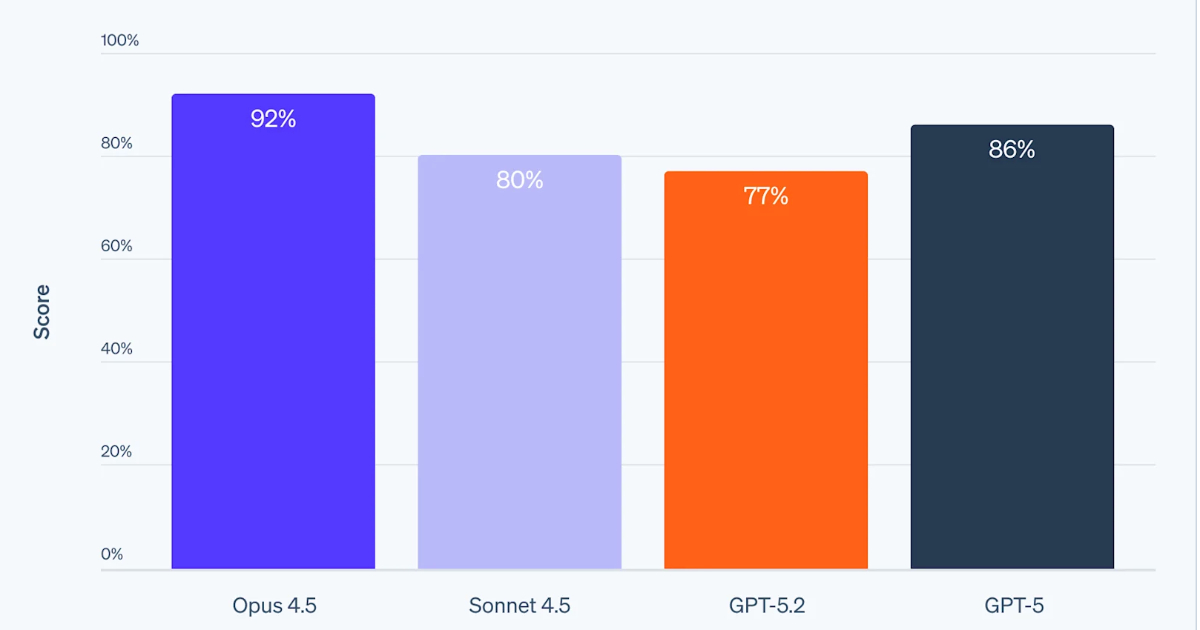
Stripe's New Benchmark Tests If AI Agents Can Actually Build Integrations
Stripe's new benchmark suite cuts straight to a hard truth: AI agents can build integrations, but they stumble when it's time to validate them. That gap between execution and testing is where real-world reliability lives, and Stripe is right to put it under the microscope. We're not talking about toy demos here; these are production-like constraints that expose weaknesses. It's a useful reality check for anyone convinced agents are ready to run unchecked.

Why a Second AI Lab's Review Outperforms Self-Grading Code
Claude grading its own PR is a comfortable trap. When the same model reviews its own output, blind spots echo back as confidence. A sharper path is cross-provider review with Codex in GitHub Actions, treating a second opinion from a different lab as the real checkpoint. It's a practical, human-centered fix for an AI problem. For more on questioning what AI tells you, "Talking to My AI Clone Taught Me to Question the Tech" pairs naturally with this.

Reflection AI secures $1 billion compute deal to advance open source models
Reflection AI's $1 billion compute deal with Nebius is a bold bet on open source AI, and it's one worth watching. The company, founded in 2024, is betting big on accessible infrastructure to power its work. That kind of scale signals confidence, not just in their own roadmap, but in the broader shift toward collaborative, transparent AI development. It's a reminder that progress isn't just about models, but the systems that run them.