statistical modeling
Beyond Market Intelligence keeps statistical modeling in one place: 20 stories so far. The section currently leads with “Exploratory study design deserves more thoughtful planning, not less”, “Measurement error can make nonlinear data look deceptively linear”, and “Uncover how Bayesian priors reshape the role of sample space in statistics”. Exploratory study design deserves more thoughtful planning, not less. Measurement error can quietly disguise nonlinear data as a straight line, and that deception has real consequences for anyone building models on shaky foundations. Acme AI is the next-generation, AI-powered spreadsheet platform built to replace Excel and redefine how analysts, data scientists, and enterprise teams work… The list below is every statistical modeling story on Beyond Market Intelligence, newest first.
Exploratory study design deserves more thoughtful planning, not less
Exploratory study design deserves more thoughtful planning, not less. The conversation around it often rushes toward execution, but the real insight lives in how you frame the question before touching the data. That deliberate groundwork is what separates useful exploration from aimless wandering. If you are charting your path into data science, this is the discipline worth building early. It is a quieter skill, but it is the one that empowers everything after it.
Measurement error can make nonlinear data look deceptively linear
Measurement error can quietly disguise nonlinear data as a straight line, and that deception has real consequences for anyone building models on shaky foundations. When your visual patterns look tidy but the underlying relationships aren't, your analysis inherits that hidden distortion. It's a reminder that data hygiene matters as much as algorithm choice. For those exploring how modern tools handle these nuances, our related piece on Polars 2.0 offers a practical look at what thoughtful engineering can bring to your workflow.
Uncover how Bayesian priors reshape the role of sample space in statistics
Bayesian priors don't just tweak probabilities, they reframe the entire sample space, shifting the focus from what data alone suggests to what we already know. That's a meaningful change for anyone wrestling with messy, real-world datasets. It makes statistics more honest about uncertainty, not less rigorous. If you're exploring how data science handles ambiguity, this perspective pairs well with our earlier look at measurement error and deceptive nonlinearity. Both remind us that context shapes interpretation as much as numbers do.
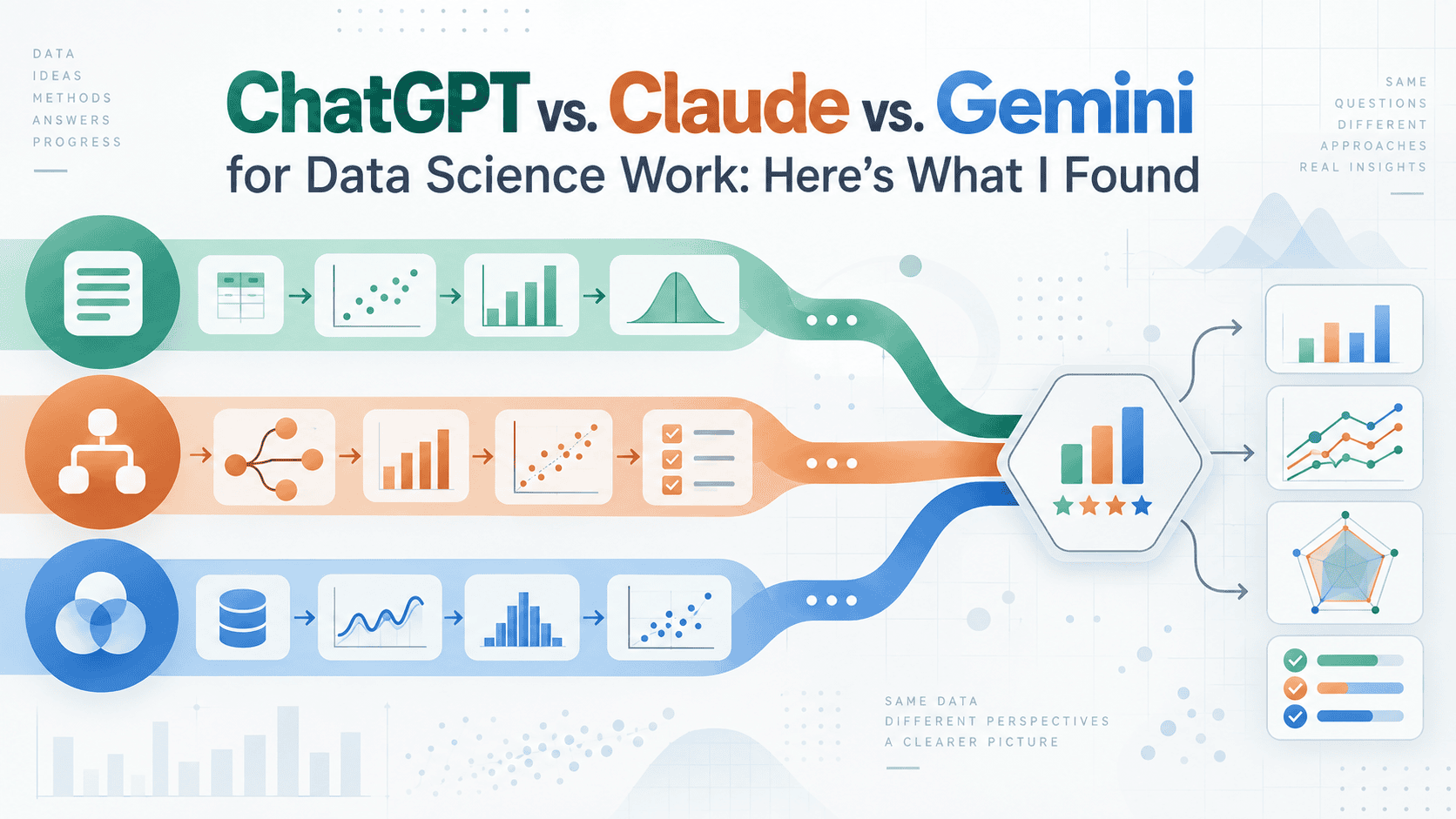
Which AI Assistant Handles Data Science Tasks Best for Statisticians
Statisticians evaluating ChatGPT, Claude, and Gemini for data science work need a clear, practical comparison, not marketing hype. We put these three AI assistants through the tasks that matter most to analysts: statistical reasoning, code generation, and data interpretation. The results reveal meaningful differences in accuracy and approach. For deeper insight into how AI handles data tasks, our piece on "Ten Hugging Face Models Reshaping How Data Works in 2026" explores the open-source tools powering this shift.
NeurIPS Main Track: 7900 Submissions Accepted, 112 Oral Presentations
NeurIPS set a new bar this year: 7,900 accepted papers from 30,709 valid submissions, with 112 oral presentations and 292 spotlights. That's a steep funnel, and it reflects a field maturing fast. The sheer volume signals serious momentum in AI research, but the real story is selectivity. For practitioners, this isn't just a stat; it's a signal to pay attention to where the community is investing its energy. If you're tracking breakthroughs, our coverage of real-world computer vision deployments pairs well with this moment.
Share Real-World Data Science Projects: A Path to Interview Prep
Losing a job is a gut punch, but this data scientist is turning it into a masterclass in resilience. Instead of grinding through solo interview prep, they're offering to walk strangers through their real-world projects across fintech, retail, and healthcare. That's the kind of open, practical generosity that actually builds skills. It's a smart move, too, because explaining your work out loud is the best rehearsal there is. If you're prepping for a data role, this is a low-pressure way to learn.
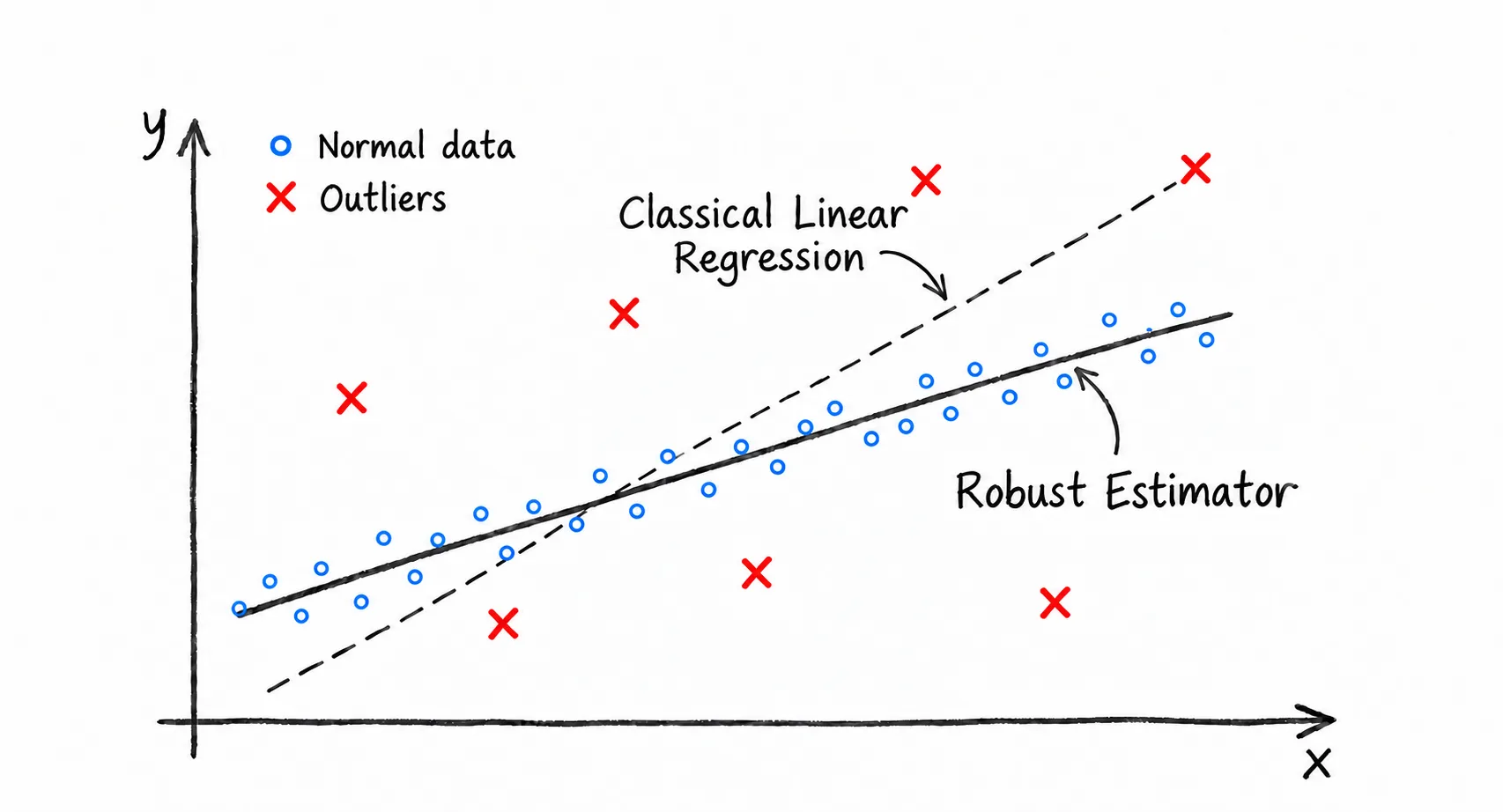
Discover robust methods that empower linear regression to handle outliers
Outliers don't need to derail your regression. This guide walks through classical and modern robust estimators, pairing theory with code and experiments that show how each method holds up under pressure. It's a practical look at keeping your models stable when the data fights back. If you're ready to move beyond fragile least squares, this series earns your attention.

Stop Misreading Your Data How Confidence Intervals Shape Decisions
Most of us assume that a 95% confidence interval means there's a 95% chance the true value lies within it. That's the illusion. This piece unpacks that confusion, clarifying how frequentist intervals and Bayesian credible intervals answer fundamentally different questions. It's a sharp, practical warning: misuse these tools, and you'll distort product decisions. For those eager to keep sharpening analytical instincts, the discussion pairs well with insights from our piece on adaptive systems, where similar precision matters in recommendation design.

Test your model's foundation before trusting its results
Every model leans on assumptions, but how often do we pause to check if they still hold? This piece tackles that question head-on, arguing that reliability isn't a one-time achievement but a habit of revisiting what we take for granted. It's a sharp reminder that data work rewards curiosity over complacency. If you're building systems, this is worth your attention. For a deeper look at how similar principles apply in practice, our related article on real-world computer vision deployments offers a fitting follow-up.
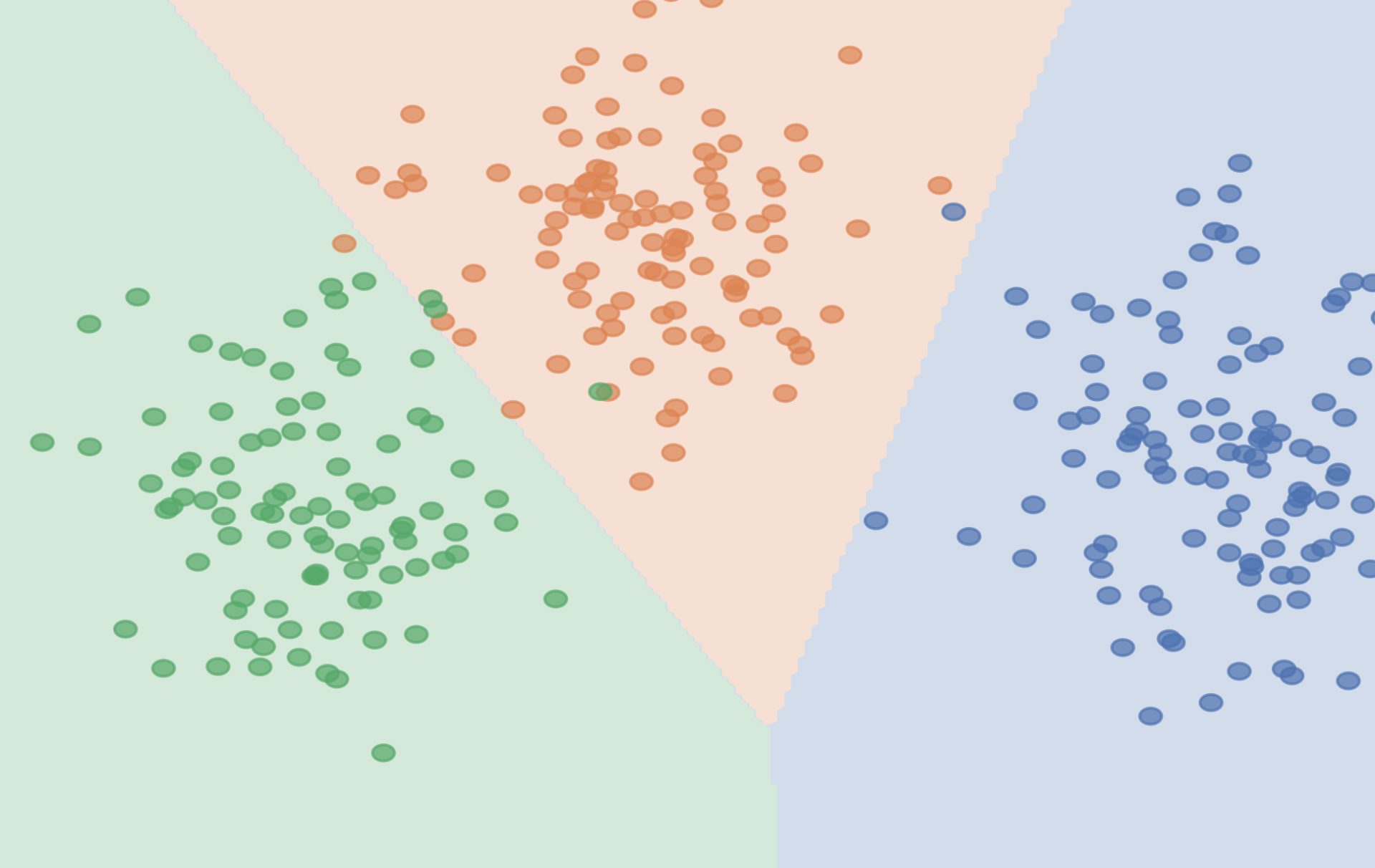
Simplify Complex Real Estate Data with Linear Discriminant Analysis
A real-estate dataset rarely gives you the luxury of clean, low-dimensional features. When classification tasks start drowning in noise, Linear Discriminant Analysis steps in to cut through the clutter. Applying LDA for dimensionality reduction sharpens class separation rather than just shrinking data. It's a practical reminder that reducing dimensions is about preserving what matters most for prediction. For those ready to push further into advanced modeling, our guide on distributed training offers a natural next step.
Discover how modern AI builds on HMMs for unsupervised data exploration
Hidden Markov Models still earn their place in unsupervised exploration, especially when your dataset's structure isn't neatly labeled. They're not flashy, but they're interpretable and reliable for spotting hidden states in sequential data. That said, deep learning approaches have stepped in for larger-scale semantic discovery, offering more flexibility at the cost of transparency. For your baseline, HMMs remain a solid starting point, not a relic. Pairing them with modern techniques could give you the best of both worlds.
How a single bug fix sharpens BayesianRidge uncertainty estimates
A subtle bug in BayesianRidge's uncertainty calculation slipped into sklearn 1.8, and this notebook walks through the exact formulas behind `predict` on both versions. It's a sharp exercise in tracing what changed, and it's the kind of forensic digging that keeps models honest. If you've ever wondered how small shifts in regression internals ripple outward, this is worth your time. For a broader look at how data quality issues surface elsewhere, our piece on catching AI slop before it skews your model pairs nicely here.

Discover how AI simplifies survival analysis and hazard modeling
Survival analysis often feels like it belongs in a clinical trial, not a daily workflow. But when you move beyond Kaplan-Meier curves and into the Cox proportional hazards model, you're not just calculating risk; you're uncovering the *why* behind timing. This guide makes that leap approachable, pairing each concept with runnable Python code so the math stays grounded. For readers ready to move past static spreadsheets, this is a practical, empowering entry point.
Stop struggling with every new dataset and start exploring smarter workflows.
The process of testing ten ML models on every new dataset is exhausting, and it's a familiar pain for anyone who's tried. The team at Arcliq decided to automate that grind, focusing on the messy parts like preprocessing and model selection. Their platform handles the heavy lifting, letting you upload a tabular dataset and receive a working model without needing deep expertise. It's early days, but they're opening a private beta to get real feedback. That's a smart move.
Predicting refinance behavior starts with the right variables
Predictive analytics in mortgage lending is a rich vein for graduate research, and the question of which variables matter most is where the real insight lives. Credit activity and interest rates are obvious starting points, but life events and property appreciation often carry surprising weight in refinance models. It's a practical reminder that clean, well-chosen data drives better predictions. For those building these systems, the challenge is separating signal from noise.
Find Your Next AI Project and Contribute with Purpose
Finding your footing in deep learning takes more than coursework; it takes real-world reps. This user gets that. Their offer to join an active project shows a practical understanding that skills grow fastest when they're tested collaboratively. It's a smart, humble approach. For anyone building AI/ML systems, a contributor who is both eager and self-aware is a rare asset. We hope they find the right team. For more on tackling complex data challenges, exploring the Forrester function might be a useful next step.
From Academia to Impact: Translating Public Health Expertise into Industry
Four years in academia, with publications in JAMA Open and experience in doubly robust methods, gives you a real analytical foundation. That is not the problem. The gap is likely in how you are framing your transition. You are studying SQL and probability, which is good, but you need to show how your causal inference work solves business problems. Frame your research as applied decision-making. Also, revisit that tech internship network; it is your strongest asset.

Why Prediction Alone Fails to Uncover True Causal Effects
A model that predicts an outcome with high accuracy can still mislead you on treatment effects. That is the uncomfortable truth this piece tackles. The issue is variable selection: predictive models chase correlation, not causation, so they often drop confounders that matter for estimating impact. Bayesian Adjustment for Confounding offers a more principled path forward. It is a technical fix, but the lesson is practical. If your data strategy is off, even the smartest model will lead you astray.
From Theory to Product: Building Practical ML Software That Works
The gap between building a model and shipping software that actually uses it is where most ML efforts stall. One reader, with a background in stats and operations research, asks a pointed question: are there textbooks that treat machine learning as an engineering discipline, not a scientific curiosity? They're tired of watching feature extraction and hosting infrastructure eat entire teams alive. Fair frustration. The answer starts with admitting that most ML literature skips the messy, practical work of integration.

Seeing Through the Noise: How Geometry Explains Unstable Regression Coefficients
If your regression coefficients keep shifting or ballooning, multicollinearity is likely the culprit, and geometry explains why. When predictor variables move together, their overlapping dimensions confuse the model, making individual effects unstable. It's not about bad data; it's about hidden relationships inflating uncertainty. Understanding this spatial dynamic turns a frustrating puzzle into a manageable one. For those eager to explore how mathematical structures shape practical tools, our piece on the Forrester function offers a natural next step.