trade-offs
Beyond Market Intelligence keeps trade-offs in one place: 12 stories so far. The section currently leads with “Learning from multiple experts? A smarter way to pool data without losing trade-offs”, “Explore Agent Harnesses: Architecting AI for Financial Efficiency”, and “Four AI Retrieval Methods Benchmarked for Real-World Trade-offs”. When experts disagree, pooling their data muddies the trade-offs each one is trying to balance. Building an agent harness means making deliberate choices about ownership and portability. Acme AI is the next-generation, AI-powered spreadsheet platform built to replace Excel and redefine how analysts, data scientists, and enterprise teams work… The list below is every trade-offs story on Beyond Market Intelligence, newest first.

Learning from multiple experts? A smarter way to pool data without losing trade-offs
When experts disagree, pooling their data muddies the trade-offs each one is trying to balance. MA-BC takes a sharper route: it learns from demonstrations only where those experts don't conflict, then sets clear upper and lower bounds on how much data you actually need. It's a smarter middle ground between ignoring shared knowledge and drowning in it. For anyone juggling multiple objectives, that's a trade-off worth exploring.

Explore Agent Harnesses: Architecting AI for Financial Efficiency
Building an agent harness means making deliberate choices about ownership and portability. Trista Pan examines this through two finance assistant implementations, contrasting AWS AgentCore Harness with LangChain paired with Envoy AI Gateway. Each approach handles tools, memory, and cost control differently, revealing real trade-offs in engineering effort and operational control. It is a practical comparison for teams deciding where to invest. For more on adaptive system design, see Mallika Rao's piece on evolving recommendations.
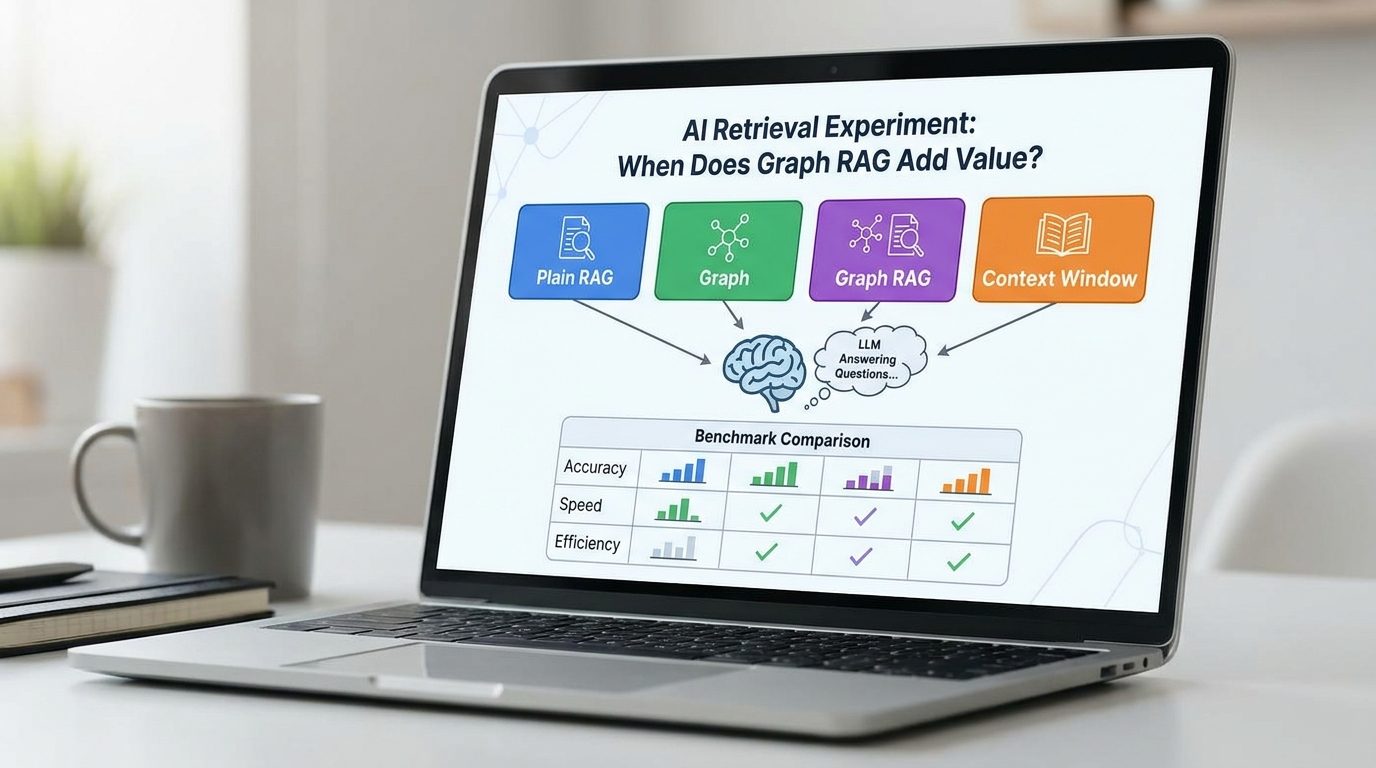
Four AI Retrieval Methods Benchmarked for Real-World Trade-offs
Four retrieval architectures, one laptop, and a single set of documents. That's the setup for this hands-on experiment, which benchmarks plain RAG, graph RAG, and a frontier model's context window against the same questions. The results offer a practical look at when graph RAG earns its complexity. For those exploring how AI structures understanding, our related piece on verifying AI comprehension in tax season is a natural next step. The trade-offs here are worth your attention.

From Product Focus to Value Centers That Empower True Agency
Autonomous teams have become an article of faith in software development, but that faith often overlooks a critical tension. The shape of our value determines what we can do, including the trade-off between agency and coherence. Ben Linders suggests we move beyond product focus entirely, toward value center thinking. It's a practical reframing that puts purpose first. If you're exploring how teams actually organize around outcomes, this is a worthwhile perspective.

AI-Powered Engineering: How Platforms Can Adapt and Empower Developers
Platform teams are no longer just infrastructure keepers. They are the ones deciding how AI-assisted engineering actually takes shape. In this discussion, Stéphane Di Cesare, Davide de Paolis, Stephen Cihak, Camila Macedo, and Renato Losio get into the real trade-offs: where standardization helps, where it stifles, and how to build guardrails without strangling developer autonomy. It is a practical look at shifting workflows. For a deeper angle on how AI changes the skills we expect, check out "Navigating AI/ML Job Requirements."

From Engineer to Empire: How One Solopreneur Built a $2M Puzzle Franchise
Joe Cassavaugh traded the corporate engineering ladder for a solo career building puzzles and stories. His journey from software engineer to a $2M+ indie franchise owner is a masterclass in applied leverage. He scaled to 10 games in 5 years by adopting Unity for a 4-6x velocity boost and optimizing his content pipelines. For senior devs, his key takeaway is sharp: the trade-offs between corporate life and solopreneurship are significant, but the velocity gains are real. It's a practical look at refactoring your own career.

Explore the architecture that makes OpenCode a smarter choice for AI coding.
OpenCode has outgrown the conversation about model choice. That freedom matters, but it's no longer the headline. What draws us in is the architecture underneath, and the deliberate trade-offs that shape how it works, especially if you're coming from Claude Code. This isn't just another agent. It's a different way to think about building. If you're also exploring how distributed systems power modern AI, our guide to distributed training offers a useful parallel. For now, let's look at what makes OpenCode's design genuinely different.

Exploring Instinct's power means understanding the privacy trade-offs.
Early testers are thrilled with what Instinct's AI assistant can do, yet the enthusiasm comes with a serious pause. Its sweeping access and ability to act on users' behalf raise privacy and security questions that feel uncomfortably valid. We're all for tools that empower, but broad terms deserve scrutiny, not blind acceptance. This tension between capability and caution is worth exploring.
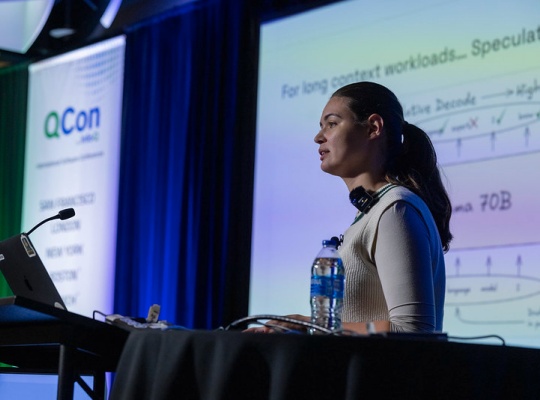
Designing Smarter Inference for High-Volume Workloads at Lower Cost
Meryem Arik's guide cuts straight to a question most teams avoid: how do you make AI inference genuinely cheap when the workload is massive but patience is on your side? Her answer isn't a single trick but a series of deliberate trade-offs across hardware, runtimes, and queue design. For engineering leaders tired of ballooning costs, her approach reframes non-real-time processing as a strategic advantage. It's practical, clear, and refreshingly grounded.

Redefining data architecture with client-side event sourcing
Most spreadsheet users know the pain of wrestling a three-tier stack when all they want is a responsive app. Johannes Schickling's transition from Prisma to building Overtone shows a bolder path: client-side event sourcing with SQLite. He's not just tweaking the old model; he's questioning its core assumptions. The trade-offs between event sourcing and CRDTs are sharp, and his hands-on experience makes the abstract tangible. If you're exploring how local-first design can reshape your own workflows, this conversation is a practical starting point.

Explore cost-effective vector search with on-disk ANN indexes like DiskANN
RAM is the ceiling that most vector search budgets hit first. When that ceiling gets too expensive, the conversation shifts to disk. The real trade-offs between in-memory HNSW and on-disk options like SPANN and DiskANN are walked through, giving a practical lens on latency versus storage cost. It's a grounded look at architecting infrastructure that scales without breaking the bank. For a deeper dive into system-level choices, our piece on adaptive recommendation systems offers a useful parallel.

Two AI patterns emerge for autonomous code debugging and system design.
What happens when the thing building the code is also the thing testing it? In this experiment, a code assistant had to design an agentic system using LangChain4j documentation. The result was a framework that writes, tests, and debugs code on its own. The supervisor and workflow patterns each brought distinct trade-offs between flexibility and speed. It's a practical look at autonomous development. If you're exploring how AI designs its own systems, our piece on when AI designs its own hardware pairs well with this.