training data
17 stories filed under training data on Beyond Market Intelligence. The newest of them: “A budget GPU runs real-time neural weather in Minecraft at 30 FPS”, “How to benchmark online AI models without losing your data to training”, and “Is Overlapping Training Data Impacting Your Student ML Results?”. A Minecraft mod now runs real-time neural weather at 30 FPS on a budget GPU. Protecting your benchmark data from becoming training data is a real problem, especially for low-resource languages where every example is precious. Acme AI is the next-generation, AI-powered spreadsheet platform built to replace Excel and redefine how analysts, data scientists, and enterprise teams work… The list below is every training data story on Beyond Market Intelligence, newest first.

A budget GPU runs real-time neural weather in Minecraft at 30 FPS
A Minecraft mod now runs real-time neural weather at 30 FPS on a budget GPU. A teacher model paints roughly 3,000 frames of snow, wet surfaces, and night scenes, while a tiny 1.4M-parameter student U-Net applies them at 26 milliseconds per frame. The key insight? Pixel loss alone produced washed-out results, but a PatchGAN fine-tune delivered fat snow and convincing reflections. Night scenes and snowy biomes remain tricky.
How to benchmark online AI models without losing your data to training
Protecting your benchmark data from becoming training data is a real problem, especially for low-resource languages where every example is precious. The trust gap with API-only models is legitimate, and a paid account is not a guarantee of privacy. You are right to be cautious. The practical answer is that there is no foolproof method, only risk mitigation.
Is Overlapping Training Data Impacting Your Student ML Results?
Finding a validation set that isn't fully independent of your training data can feel like a quiet flaw in an otherwise solid experiment. For a student project, it's a meaningful issue, but it doesn't have to sink the whole effort. The comparisons between experimental conditions remain useful because you applied the same evaluation procedure across the board. What suffers is the absolute performance numbers, not the relative differences.

Fueling AI Innovation: Snorkel AI Secures $350M Series E
Snorkel AI has raised $350 million in a Series E round, a clear signal that the market is ready for a more practical path to AI development. The seven-year-old startup is betting its future on a data-as-a-service model, which speaks to a core truth: models are only as powerful as the data fueling them. This funding validates that approach. For anyone wrestling with messy datasets, this is worth watching.
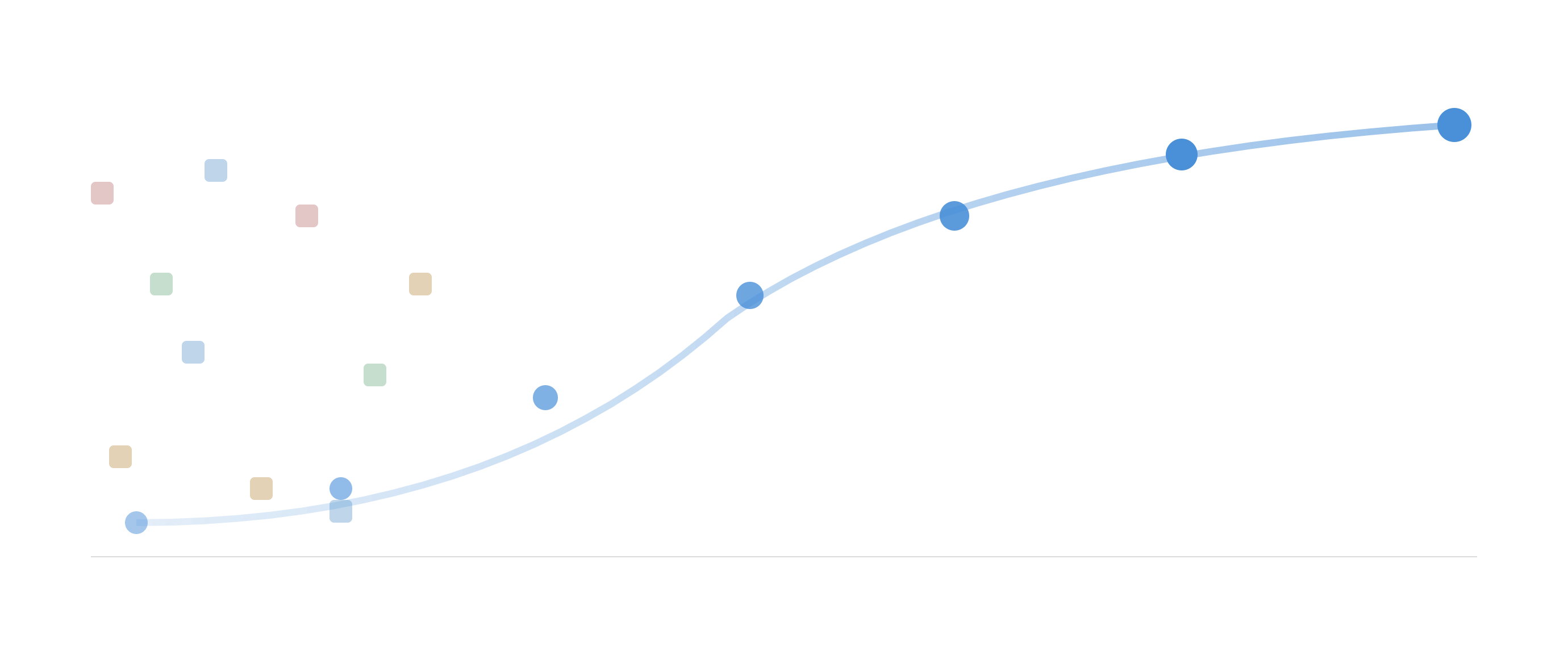
Explore how many labeled examples your text classifier truly needs before scaling up.
Before you default to an LLM API for every text classification problem, consider what a decades-old baseline can already accomplish with the labeled data you have on hand. This piece measures exactly how much more data buys you, turning guesswork into a clear, practical equation. It's a grounded, refreshingly honest look at efficiency. For those ready to move beyond theory, it pairs well with our guide on real-world computer vision deployments, where similar trade-offs shape every decision.
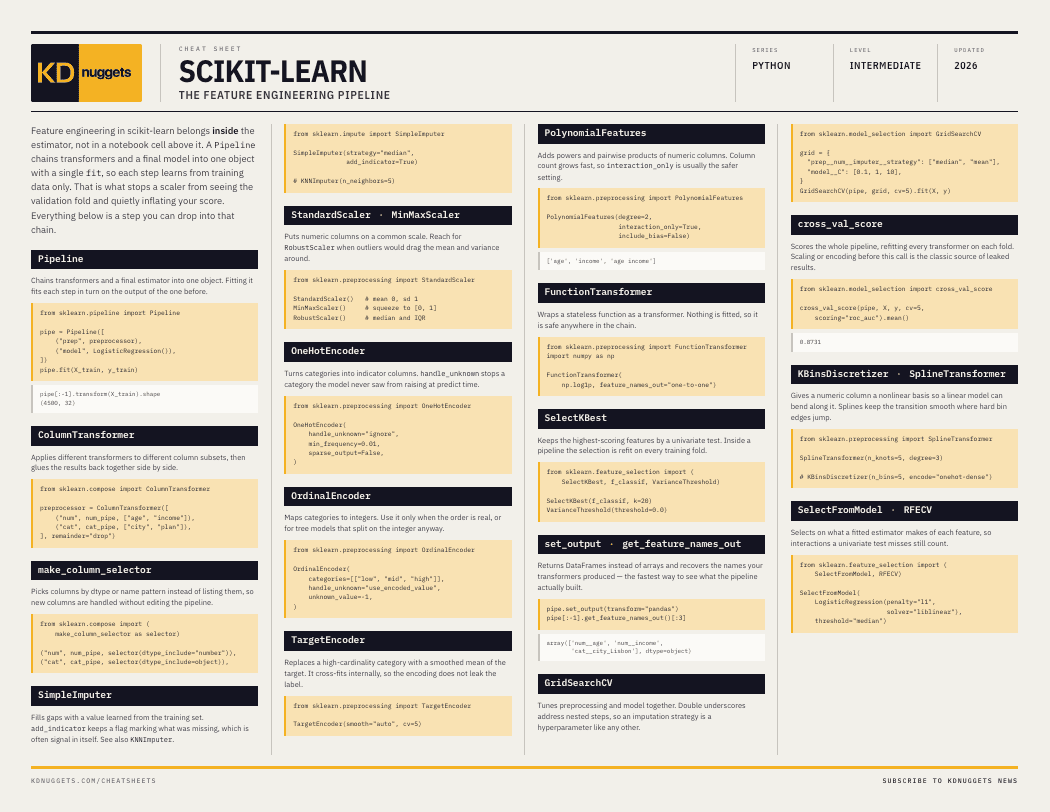
Master Your Feature Engineering Pipeline with This Practical Guide
Feature engineering often breaks down when steps leak information from the test set. That is why this new KDnuggets cheat sheet centers on a simple truth: once feature engineering lives inside a Pipeline, each step is fitted on training data only, and the model is scored on what it actually earned. It is practical, direct, and refreshingly grounded. For a deeper look at how structure shapes machine learning, our guide to paragraph structure in LLMs offers a useful parallel.

Suno shifts to licensed music training as copyright challenges mount
Suno's new model, v6, is trained entirely on licensed music, a direct response to the copyright lawsuits that have shadowed its earlier work. That's a meaningful step, even if the legal questions aren't fully settled. It's the kind of move that shows a company listening to the pressure around it, not just pushing forward blindly. For users, it signals a more sustainable path forward, one where AI's potential doesn't come at the cost of creators' rights.

Empowering officers with AI trained on the laws they actually enforce
A Harvard Law dropout just raised $6 million for Blue Voice, an AI trained on department-specific laws and protocols that general-purpose tools can't reach. That's the kind of focus officers need, and it's a smart bet on accessibility over hype. We're tired of vague promises; this is concrete. If you're curious how AI handles such precise constraints, our piece on verifying AI understanding offers a practical starting point. Blue Voice points to a simpler path forward.

Meta's settlement trades kids' data for age-detection privacy tools
Tucked inside Meta's $18 billion settlement with 29 states sits a clause that deserves a closer look: a legal pass allowing the company to keep certain data from children under 13, specifically to train and test its age-detection models. That is a trade-off worth pausing over. Protecting kids while quietly retaining their information for model refinement feels less like a clean win and more like a compromise with sharp edges. For anyone tracking how AI companies navigate consent, this deal sets a revealing precedent.

When Authors Become Unwitting Trainers for AI
Every published author has unknowingly fed the machines now competing with their own work. That tension sits at the heart of a messy legal question: can AI companies train on copyrighted books without permission? It feels like infringement, but the law hasn't caught up to the reality. We dig into the nuance, and if you're curious how similar data problems skew models, our piece on catching AI slop offers a practical parallel.
When Grouping Classes in Multiclass Models Hurts More Than It Helps
Grouping rare classes into a catch-all category like "Other breed" feels practical, but it often forces the model to draw messy boundaries around visually dissimilar samples. That intuition is sound: the hyperplanes get distorted, and the model wastes capacity on artificial splits. Treating the long tail as out-of-distribution detection, as the original poster suggests, is a cleaner approach. Keep the well-represented classes, drop the rest, and let the model focus on meaningful distinctions.

Explore 20,000 Starfield fauna images to train your own AI model
Extracting 20,000 images from video capture is a clever way to build a dataset, and the attention to balance here is what makes it useful. The creator shot both day and night footage across biomes, then filtered out blurry frames and other species to keep the focus on the 50 categories. This is a thoughtful, practical resource for anyone wanting to train a vision model on game assets. It is worth exploring if you are working with synthetic imagery.

Unlocking Data Potential by Combining Labelled and Unlabelled Insights
Most of your data sits unlabeled, and that's not a problem to solve, it's an opportunity to leverage. Semi-supervised learning sits between the fully labeled and the entirely unlabeled, using a small amount of guidance to make sense of the larger, messier whole. This primer walks through the algorithms that make that possible and, just as importantly, where they stumble. It's a practical read for anyone who wants to get more from their data without drowning in annotation costs.
Small open models match top AI on Swedish medical exams
A 4-billion-parameter model just hit 87% on Swedish medical licensing questions, matching what o3 scored months ago. That's worth pausing over. The gap between open-weight models and frontier systems is closing faster than most expected. Qwen3.5-4B, with reasoning enabled and no post-training, nearly matches a model that was state of the art in 2025. The early exit trick from the S-GRPO paper is a smart fix for those looping reasoning traces, and it works.

Patreon enlists Cloudflare to block unauthorized AI scraping of creators
Patreon is done asking nicely. Instead of relying on robots.txt to keep AI bots out, it's now actively blocking them with Cloudflare's help. That's a smart move. Politeness was never going to stop the scramble for creators' work, and leaving the door open for scrapers only punished the people who make the platform worth visiting. Blocking unauthorized training is the right call, and it's good to see a platform take real action.

Hacked code reveals Suno pulled decades of audio from YouTube.
A hacker's stolen credentials opened the door to Suno's source code, exposing how the AI music generator scraped decades of audio for training. It's a stark reminder that access is only as secure as the people holding it. The find raises hard questions about consent and credit in AI's creative boom. For more on how messy AI's data habits can get, our piece "Clean Data Starts With Catching AI Slop Before It Skews Your Model" digs into the fallout.

Major publishers challenge Google over AI training on copyrighted works
Another major publisher is taking Google to task over AI training data. Hachette, Cengage, Elsevier, and others allege the tech giant used copyrighted works without permission to build its models. It's a familiar friction point: the line between learning from the open web and repurposing protected material remains unsettled. For anyone watching how these cases unfold, the stakes go beyond one company's bottom line. They touch on how we define fair use in an AI-native era.