training
59 stories filed under training on Beyond Market Intelligence. The newest of them: “Demystifying the math behind the algorithms powering modern LLMs”, “Rethink your AI strategy for real competitive advantage”, and “Explore practical resources to master small language models”. If you've been following the technical reports from Kimi, DeepSeek, Qwen, and GLM, you've likely noticed how much on-policy distillation and GRPO-style algorithms now power the frontier. Most teams race to build bigger models or chase flashier features, yet they overlook the real advantage: how they frame the problem itself. Acme AI is the next-generation, AI-powered spreadsheet platform built to replace Excel and redefine how analysts, data scientists, and enterprise teams work… The list below is every training story on Beyond Market Intelligence, newest first.
Demystifying the math behind the algorithms powering modern LLMs
If you've been following the technical reports from Kimi, DeepSeek, Qwen, and GLM, you've likely noticed how much on-policy distillation and GRPO-style algorithms now power the frontier. That's why this deep dive is so timely. It unpacks the maths and code behind these methods, then connects them back to pretraining and supervised fine-tuning. It's a practical resource for anyone wanting to move beyond the hype and actually understand how modern LLMs are trained.
Rethink your AI strategy for real competitive advantage
Most teams race to build bigger models or chase flashier features, yet they overlook the real advantage: how they frame the problem itself. In this piece, we explore why competing on raw capability misses the point. Instead, focus on what your data actually needs, not what the hype demands. It's a practical reframe. If you're questioning how deeply to trust AI outputs, our piece on verifying your AI's understanding offers a timely companion. The path forward is simpler than the noise suggests.
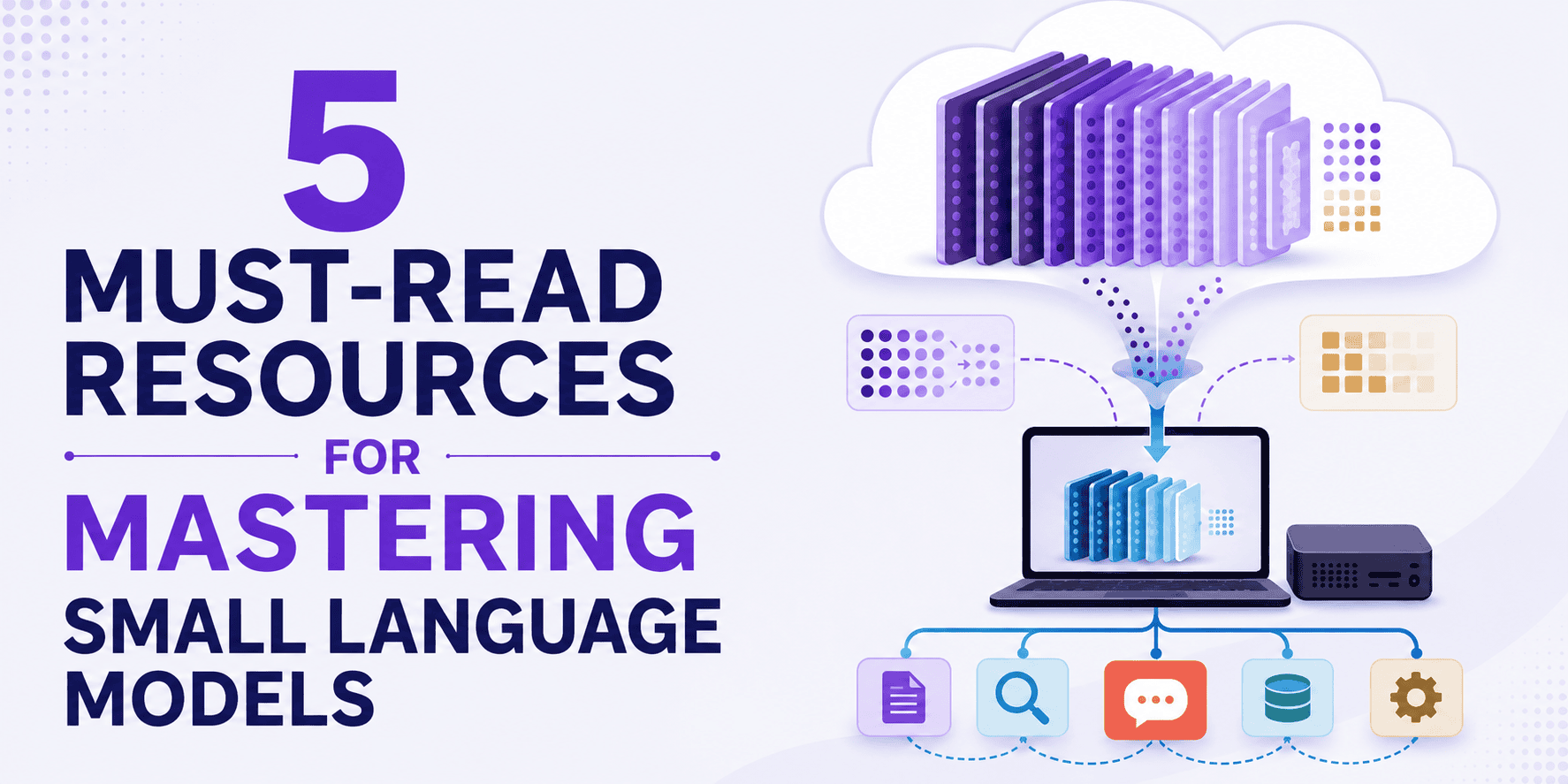
Explore practical resources to master small language models
Small language models are quietly reshaping what's possible for data professionals, and this guide cuts straight to the resources that matter. We've curated five essential reads that cover architecture, fine-tuning, agentic workflows, and local deployment, giving you a practical path forward without the fluff. If you're ready to move beyond theory, these picks will help you build real skills. For a deeper look at how AI systems truly behave, our piece on talking to an AI clone offers a thought-provoking companion.

Discover the core insight that makes backpropagation truly work.
If you've ever watched a neural network struggle through training, you know the feeling: there has to be a better way. This second part of our beginner's guide gets to the heart of that intuition, unpacking the core idea that makes backpropagation possible. The guide offers a clear, accessible look at a concept that often feels abstract, and it does a fine job keeping the explanation grounded. For those ready to push further, our guide on distributed algorithms offers a natural next step.
From Python to weights: a compiler proves what transformers can express
Most people assume a transformer's capabilities come from training. Rob's compiler challenges that assumption directly. He built a tool that takes a computation graph written in ordinary Python and outputs the weights for a standard Phi-3 model, loadable in vanilla Hugging Face with zero training involved. It's a clever way to isolate what these architectures can express, separate from what they can learn. For a deeper look at how he constructs these proofs, the write-up is worth your time.

Open-Sourcing Tri-Net v2 for Reproducible Monkeypox Detection Research
Open-sourcing a research project is one thing; making it reproducible is another. With Tri-Net v2, the team behind the Scientific Reports paper on unified monkeypox detection has done both. They didn't just drop training scripts. They rebuilt the framework with leakage-free pipelines, multiple backbones, and Docker support built in. That is how you invite validation. The over 1,100 article accesses suggest real interest, and now the community can test, break, and improve the work.
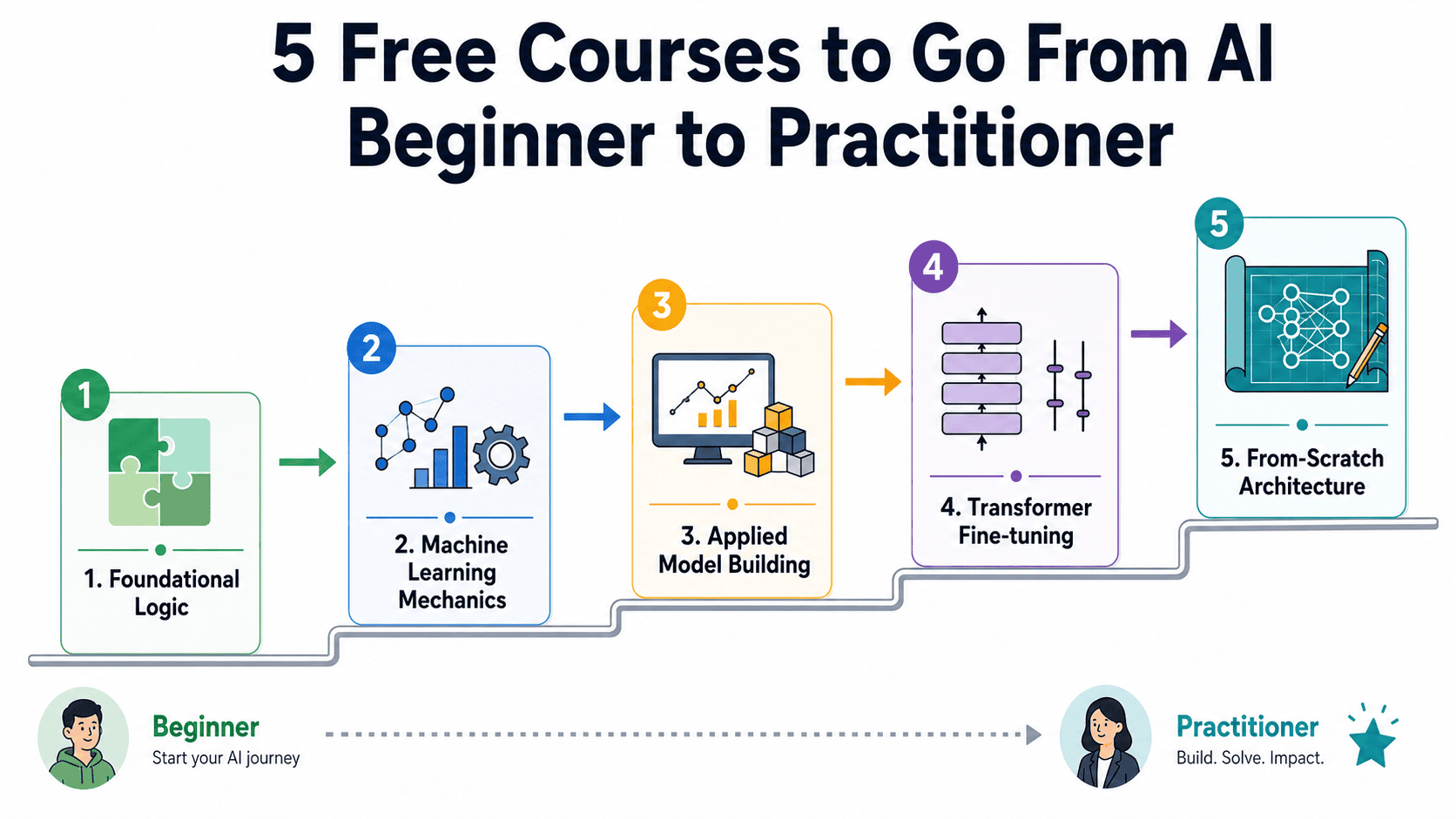
From AI fundamentals to LLMs: a free five-course roadmap
A five-course roadmap won't just hand you theory; it walks you from classical algorithms to training LLMs from scratch. That's the kind of practical progression that turns curiosity into real capability. If you've been hesitant about where to start, this is your entry point. And once you grasp the mechanics, you might find our piece on questioning AI clones a useful counterweight to the technical rush. Explore the courses, build the skills, and let the work speak for itself.

Anthropic's $1.5B settlement approved, but copyright questions remain.
Anthropic's $1.5 billion copyright settlement has received final approval, marking a significant moment in the ongoing debate over AI training data. This approval settles one case, yet the broader question remains unresolved: how should copyrighted works be used to teach models? It's a conversation that demands clarity, not just legal maneuvering. For those exploring the human side of these technologies, our piece on talking to an AI clone offers a thoughtful counterpoint.

Explore GPT-2's vocabulary through a flyable hyperbolic tree of 32,070 tokens
Somewhere in the internet's endless sprawl, a reddit user got tired of flat maps. So they built a better one. This isn't another 2D projection of GPT-2's vocabulary. It's a hyperbolic tree, housing all 32,070 tokens inside a Poincaré ball you can actually fly through. The layout is constructed exactly, with no optimisation or training involved. Trees don't fit well in flat space, but they embed naturally here. Drag, pinch, and tap to explore.

How Neural Networks Learn: Building Intuition for Backpropagation
Backpropagation often feels like a black box, but this guide pulls back the curtain without drowning you in math. The author builds intuition step by step, showing how neural networks learn by adjusting weights through error feedback. It's a practical starting point for anyone ready to move past surface-level understanding. If you're curious about how these concepts scale, our related guide, "Unlock LLM Training: A Practical Guide to Distributed Algorithms," offers a natural next step.

Discover how Microsoft positions its AI models for smarter, more cost-effective work.
Microsoft is reportedly coaching its salesforce to position its in-house AI models as the leaner, more cost-effective choice against OpenAI and Anthropic. That is a bold play, and an interesting one. It suggests the company believes efficiency will win over brand recognition in the enterprise market. We are watching a turf war over who owns the AI stack, and this move reframes the conversation from capability to cost.