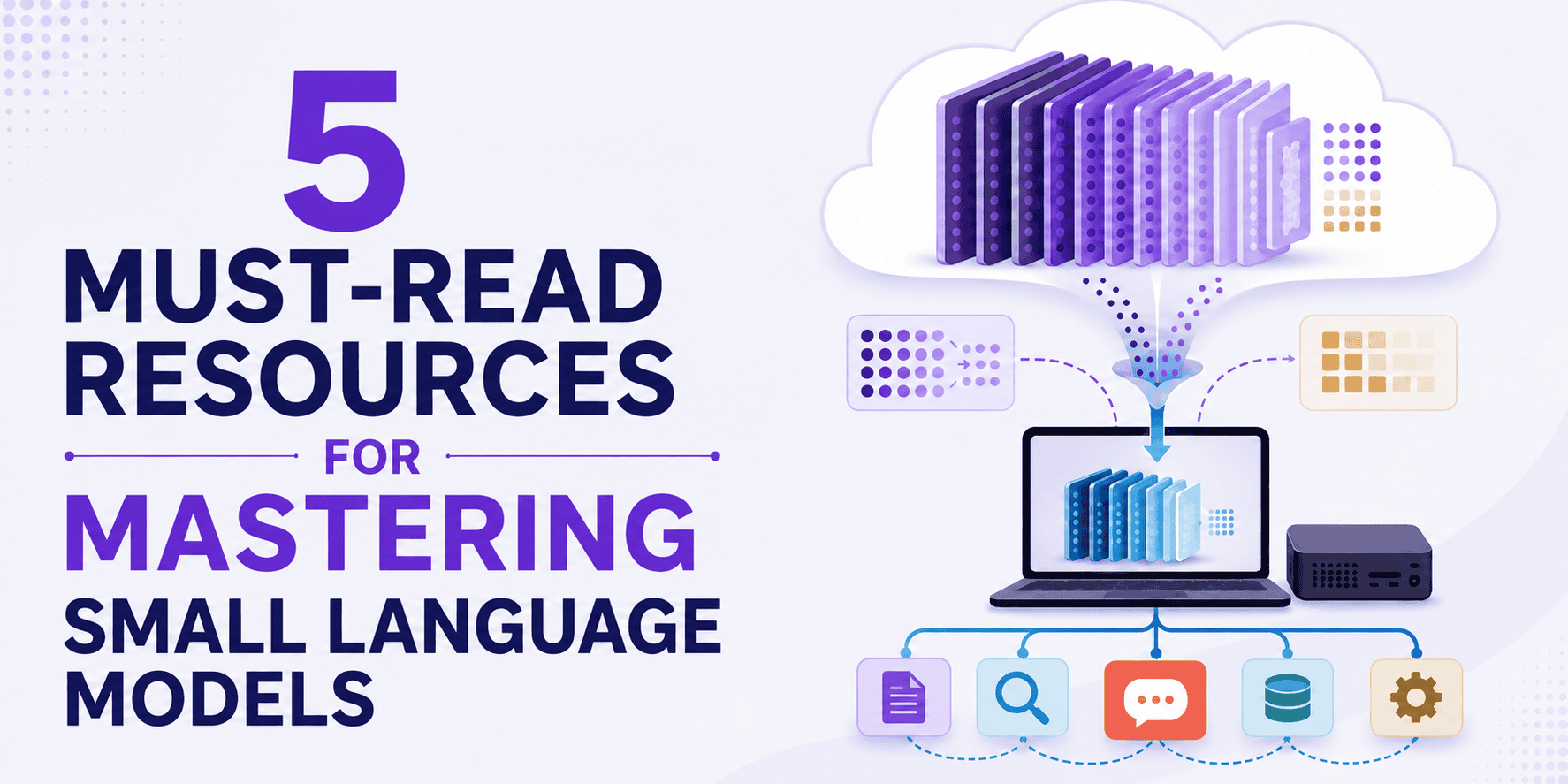
The shift toward small language models is one of the more pragmatic turns in AI, and this roundup of five resources for data professionals lands at exactly the right moment. For too long, the conversation has been dominated by scale, with bigger models and larger parameter counts treated as the default answer to every problem. That framing has left many capable teams feeling like they are falling behind unless they can access massive compute budgets. Talking to My AI Clone Taught Me to Question the Tech reminds us that the human element of AI adoption is just as important as the underlying architecture, and it is worth carrying that skepticism into the small model space. Smaller isn't simply a compromise; it is a different set of tradeoffs, and the resources highlighted here are a solid entry point for teams that want to stop treating model size as a proxy for capability.
What stands out about these resources is their practical focus. Architecture, fine-tuning, agentic workflows, and local deployment are not abstract research topics. They are the concrete decisions that determine whether a model works in production or stays stuck in a notebook. For data professionals, the real value here is the permission to think smaller. A small language model can be fine-tuned on proprietary data, deployed on local infrastructure, and run with far less energy and cost than a general-purpose behemoth. That opens the door to use cases that were previously impractical, especially in regulated industries where sending data to an external API is not an option. The Unlock LLM Training: A Practical Guide to Distributed Algorithms piece we published earlier reinforces this point: understanding how models are trained and distributed matters more than chasing the largest available checkpoint.
Our take is simple. If you are a data professional who has felt stuck between the promise of AI and the reality of your infrastructure, these resources are worth your time. They point toward a more deliberate approach, one where you understand what is under the hood rather than treating the model as a black box. The Verify Your AI's Understanding: A Simple Check for Tax Season article we ran earlier shows how easy it is to overestimate what a model actually knows, and that lesson applies directly to small models. They are not simpler in the sense of being less capable; they are simpler in the sense of being more inspectable. You can trace why a model makes a decision, which is something that is often lost when you are dealing with a system too large to fully understand.
The one thing we would tell a reader who asks about this is to stop waiting for permission to go small. The resources in this roundup are not a signal that you are settling for less. They are an invitation to be more intentional about what you build. Watch for the deployment stories that emerge from teams who try this path, particularly around how they measure success. The models that win will not be the ones with the most parameters. They will be the ones that solve a real problem without requiring a data center to run.