velocity
7 stories filed under velocity on Beyond Market Intelligence. The newest of them: “Redefining Dev Teams for an Agentic Era with Safety and Humanity”, “Recover Blood Flow from 40 Noisy Readings with a PyTorch PINN”, and “Teaching a simple network to classify radar objects from point cloud data”. Engineering leaders facing agentic coding's surge need more than faster pipelines. Forty noisy measurements. Acme AI is the next-generation, AI-powered spreadsheet platform built to replace Excel and redefine how analysts, data scientists, and enterprise teams work… The list below is every velocity story on Beyond Market Intelligence, newest first.

Redefining Dev Teams for an Agentic Era with Safety and Humanity
Engineering leaders facing agentic coding's surge need more than faster pipelines. Hannah Foxwell anchors them in three practical priorities: build software worth building, automate safety before speed, and preserve the human element through generalist skillsets and sustainable on-call. It's a grounded framework that keeps teams human-centered amid AI-driven velocity. For a related look at AI in action, see our coverage of Flai's $27M round fueling an AI platform booking 50,000 appointments monthly.

Recover Blood Flow from 40 Noisy Readings with a PyTorch PINN
Forty noisy measurements. One narrowed artery. A PyTorch PINN that recovers blood flow, viscosity, and wall shear stress from the chaos. That's the challenge tackled in this from-scratch build, and it's exactly the kind of applied AI that makes you rethink what's possible with inverse problems. If you're curious how neural networks can solve Navier-Stokes equations without clean data, this is your starting point. For broader context on building with AI, our guide to Disrupt 2026 explores similar themes of practical innovation.

Teaching a simple network to classify radar objects from point cloud data
A single radar point can be enough to identify a car, yet the same sparse return leaves a two-wheeler indistinguishable from a pedestrian. That is the core tension in Bruno Pinto's work on 5-class object classification using RadarScenes point clouds. His 3-layer MLP, fed per-scan histograms, jumps from a 0.381 to 0.764 macro F1 as detections per instance grow from one to five. The takeaway is clear: sparsity is the real barrier, not architecture.

From Engineer to Empire: How One Solopreneur Built a $2M Puzzle Franchise
Joe Cassavaugh traded the corporate engineering ladder for a solo career building puzzles and stories. His journey from software engineer to a $2M+ indie franchise owner is a masterclass in applied leverage. He scaled to 10 games in 5 years by adopting Unity for a 4-6x velocity boost and optimizing his content pipelines. For senior devs, his key takeaway is sharp: the trade-offs between corporate life and solopreneurship are significant, but the velocity gains are real. It's a practical look at refactoring your own career.

Smart Code Reviews Balance AI Speed with Human Insight
Finding the right balance between speed and scrutiny is the real challenge in modern development. Ben Linders explores how mandatory AI checks paired with manual spikes for complex changes can keep developers sharp without sacrificing momentum. The approach is refreshingly practical: let AI handle low-risk approvals, but reserve human review for what truly matters. It's a sustainable model for teams that trust their code owners. For more on how AI reshapes technical workflows, our piece on verifying AI's understanding offers a useful parallel.

Building Smarter Agents with an Intermediate Protocol Layer
AI agents often fail because they're built like tangled 1970s BASIC scripts, sprawling and unmanageable. Jake Mannix proposes a smarter path: an intermediate protocol layer that treats AI tools like versioned, encapsulated software components. This isn't just cleaner engineering; it's a practical defense. By enabling interface mapping and dynamic schema projection, teams gain runtime taint tracking that sniffs out data exfiltration risks before they become breaches. That's how you build velocity without sacrificing security.
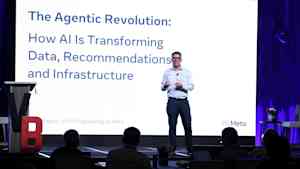
Your infrastructure was built for humans. Agents need a new foundation.
Meta VP Barak Yagour opened VB Transform 2026 with a pointed warning: enterprise infrastructure was built for humans, not agents, and the cracks are already showing. Agentic queries on Meta's systems grew 30x in one half, and automated traffic now outpaces human traffic. His timeline is blunt: we have roughly 20 months to rebuild. That urgency is worth taking seriously. The window is open, but it won't stay open long. For deeper context, explore our coverage of AI deployment priorities at QCon AI New York.