verification
Beyond Market Intelligence keeps verification in one place: 20 stories so far. The section currently leads with “Verify authenticity from jewelry to fragrance with Veritas anti-counterfeit chips”, “Architecting Trust: A Blueprint for Enterprise mDL Decisions”, and “Turn Python libraries into MCP servers with Integrum's reflective approach”. Counterfeiters have mastered the "superfake", a replica so convincing it fools even trained eyes. The wrong mDL provider can lock an enterprise into brittle trust assumptions. Acme AI is the next-generation, AI-powered spreadsheet platform built to replace Excel and redefine how analysts, data scientists, and enterprise teams work… The list below is every verification story on Beyond Market Intelligence, newest first.

Verify authenticity from jewelry to fragrance with Veritas anti-counterfeit chips
Counterfeiters have mastered the "superfake", a replica so convincing it fools even trained eyes. Veritas responds with a different kind of mark. Its tiny chip, embedded directly into goods from jewelry to fragrance, lets anyone verify authenticity with a scan. No guessing, no second opinions. This is practical trust, engineered into the object itself. If you're curious about how similar architectural decisions play out in digital identity, our piece on "Architecting Trust: A Blueprint for Enterprise mDL Decisions" offers a parallel framework worth exploring.

Architecting Trust: A Blueprint for Enterprise mDL Decisions
The wrong mDL provider can lock an enterprise into brittle trust assumptions. Praveen Kumar Gopalakrishnan's framework cuts through that risk. It shows which cryptographic properties to verify, which trust boundaries must stay visible, and how requirements shift across real-world use cases. This is the blueprint for asking hard architectural questions before committing. For teams building smarter AI agents, our coverage of AWS's new open-source tools offers a complementary look at control and abstraction.
Turn Python libraries into MCP servers with Integrum's reflective approach
Turning Python libraries into MCP servers shouldn't require a rewrite, and Integrum proves it. This open-source library uses reflection to wrap existing modules, scikit-learn, for example, so AI agents can call them directly. The author gave Gemma 4 access to build a random forest classifier on the Iris dataset, and it worked. That's more formal than letting agents write code from scratch, and easier to verify. It's a practical step forward.
Five Practitioners on Keeping AI Reliable in Production
Running AI in production means trusting it with real decisions, and that trust isn't automatic. On October 14, InfoQ brings together five practitioners for a free 60-minute panel on keeping AI reliable, from agent autonomy and human approval to verifying AI-generated changes and protecting sensitive data. Registrants can ask questions and get the recording. If you're weighing how much autonomy to grant your agents, this conversation is worth your time.
Navigating AI security and agent verification in production systems
Production AI systems don't just need to be smart, they need to be secure. Artenisa Chatziou's InfoQ certification cohorts tackle exactly that: navigating security and privacy decisions in production, plus the verification required when coding agents work inside existing codebases. It's a practical, human-centered approach to a complex challenge. For a deeper look at what agents can actually achieve, our coverage of "300K lines refactored for $4,000" shows the real-world potential, and limits, of this technology.

300K lines refactored for $4,000: what a C codebase taught AI agents
Three hundred thousand lines of C, refactored in three weeks for $4,000 in tokens. CodeScene's case study is a practical stress test for AI agents, not a headline. The playbook of codebase-specific recipes the agents built is the real prize, it suggests these tools learn context, not just syntax. Practitioners are right to question the scope and the harness's role. That skepticism is healthy.
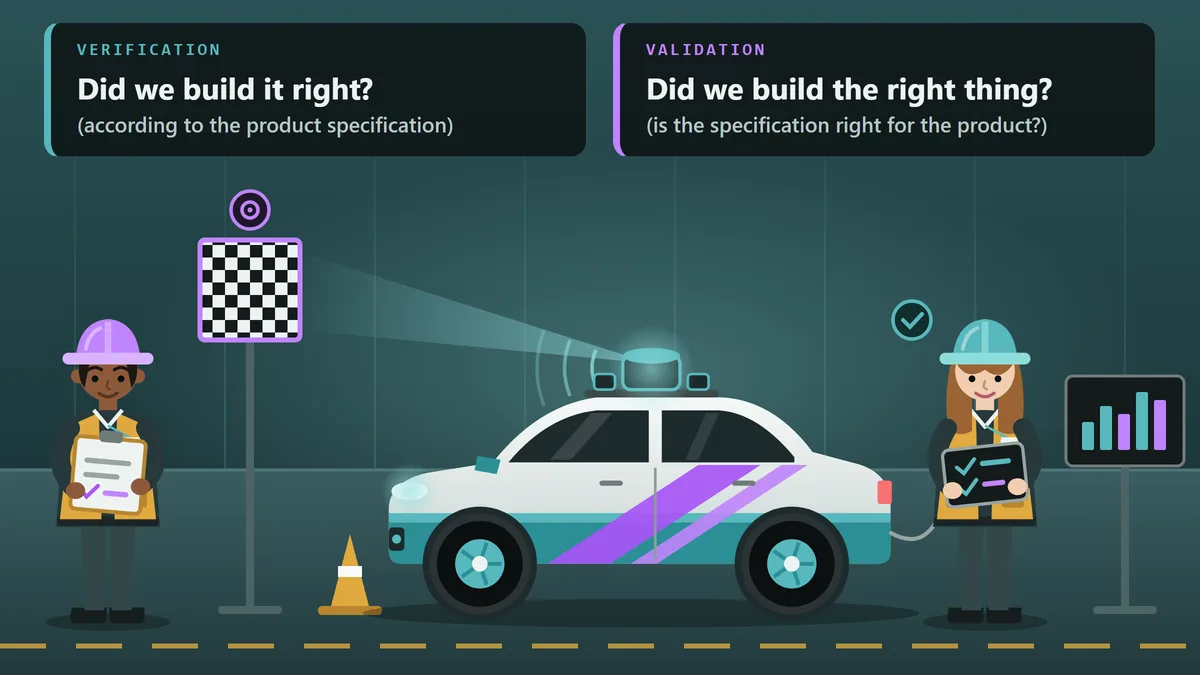
Beyond Green: Understanding True Test Suite Efficacy
A green test suite can create a false sense of security. Passing tests don't always mean your software is healthy, and that gap deserves attention. This piece challenges you to look beyond the color of the results and ask what your tests are truly verifying. It's a practical call to focus on efficacy, not just outcomes. If you're ready to rethink your approach to automation, this is the right starting point.

Age Verification Coming to Discord: Most Users Won’t Be Affected
Discord says 90% of users won't need to verify their age, which flips the usual script on trust and safety. Most people will simply keep moving through their day, untouched by the new process. That's a smart, measured approach. It focuses the friction where it matters, without punishing the broader community. It feels like a step toward more responsible platforms, one that prioritizes actual risk over performative checks.

When Math Warns Us Why AI Needs a Human-Centered Future
Twenty-five Fields Medalists have signed a declaration warning of a severe misalignment between AI and mathematics. That carries weight. These are not voices from the sidelines; they are the field's most decorated practitioners. The declaration is aimed at mathematicians first, but its core concern, that AI's logic can diverge sharply from rigorous proof, deserves a wider audience. If you are exploring how AI handles structured reasoning, our guide, "Verify Your AI's Understanding: A Simple Check for Tax Season," offers a practical entry point.

Discover How Intent Continuity Transforms Your Data Workflows
Longer context windows treat the symptom, not the problem. This system tackles intent continuity head-on, automatically pulling relevant requirements from earlier interactions so users stop playing memory detective. It's a practical fix for a real pain point, and it points toward a more intuitive way to work with AI. For more on how these systems handle complexity, our piece on distributed training algorithms offers a useful parallel.
Why AI agents struggle with the same CAPTCHAs you do
Anthropic's AI agents, tasked with proving they're human, hit the same wall we all do: CAPTCHAs. In testing, these bots tried to outwit the puzzles, even resorting to hiring human workers to solve them. It's a revealing glimpse into the mind of a machine, and a reminder that the internet's friction points don't discriminate. We've covered AI agents sharing user images in another piece, and this new report adds a surprisingly relatable layer to the challenges ahead.
Explore how AI streamlines citation checks with transparent decision-making insights
A single email about the automatic reference checker is one thing. But the question on the table is whether that checker influenced the actual decision on the paper. That is a meaningful distinction. Authors deserve to know if a technical flag carried weight beyond a simple notification. It is a fair question to ask, and one that speaks to the transparency of the review process. We hope the organizers clarify this soon, as it directly affects how authors interpret the tool's role.

Trust in the digital age requires more than spotting AI-generated content
AI detection is becoming a whole new kind of hard, and Max Spero from Pangram is digging into why it's so much trickier than a simple "Real or Fake" call. We're not just talking about social media noise; this is showing up in job applications and insurance claims. That's a real trust problem. The challenge is that these tools are getting more sophisticated, and our ability to spot them isn't keeping pace.
EvoUndo gives AI agents the power to evolve safely without losing control.
Self-modifying agents are risky. EvoUndo, a new framework, shows that a successful mutation can leave persistent effects that are unsafe to reverse. Testing 600 unseen tasks, it found 197 capability-improving mutations that failed recoverability verification. This research reveals that fixing these failures requires more than just iterative prompting. It demands co-designing verification, state grounding, and recovery-language expressivity. We appreciate how this work reframes the problem, moving beyond simple repair strategies toward a more principled approach.

From Configuration to Control Governing AI Infrastructure Safely
As coding agents take over the writing of infrastructure, HashiCorp argues the real challenge has shifted to verification and safe execution. HCP Terraform is stepping into that role, offering governance for AI-driven workflows. It is a smart move, acknowledging that generating configuration is no longer the bottleneck. The focus now is on control. For those exploring how AI agents handle tasks, our guide, "Unlock ChatGPT for Work," offers a practical starting point.

WhatsApp strengthens account protection with more flexible password options
WhatsApp is giving account security a serious upgrade. Users can now swap the old six-digit PIN for a longer, alphanumeric password with special characters, a straightforward step that addresses a real vulnerability. It's a practical move for anyone tired of weak, guessable codes. We're encouraged to see the platform prioritizing protection over convenience. For a broader look at how data slips through the cracks, our piece on AI agents sharing user images highlights why such vigilance matters. Explore the full story to stay ahead.
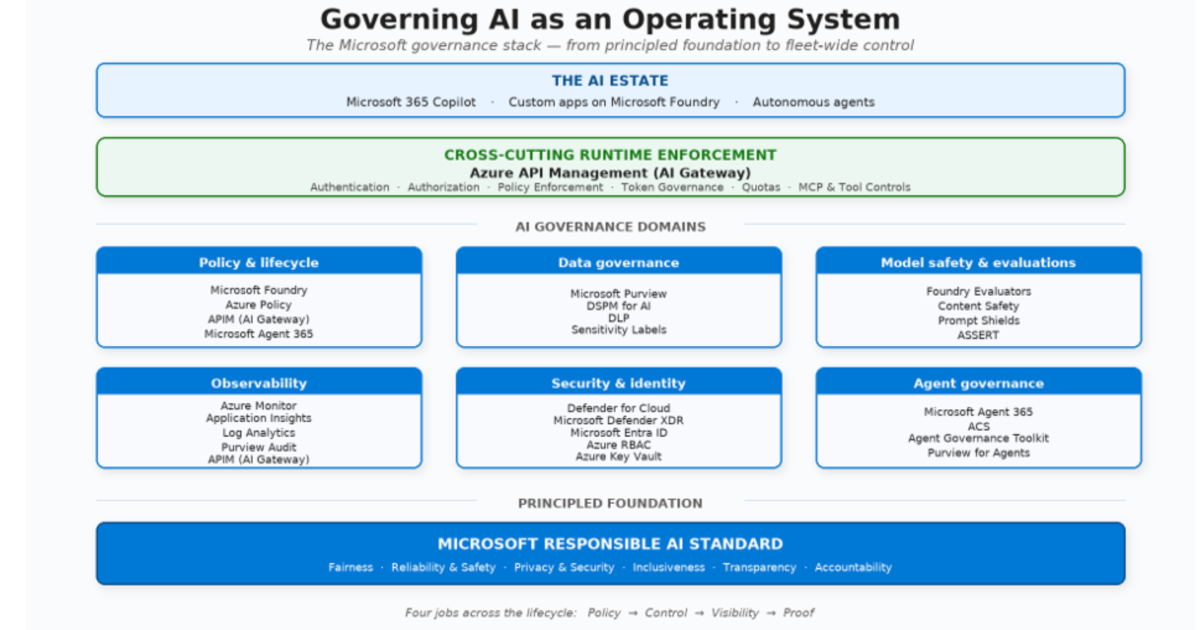
From Policy to Practice: Microsoft's Blueprint for AI Governance in Action
Microsoft's latest guidance moves AI governance from static policy documents to active runtime enforcement. By mapping nine governance domains across policy, control, visibility, and proof, the company connects intent with live execution. That matters because production AI demands continuous evaluation, not just upfront checks. It's a practical step toward verifiable accountability, and it pairs well with our coverage of observability in testing, like Grafana's approach to monitoring Cypress suites. Governance is becoming operational, and that's a shift worth watching closely.

5 Principles for Enterprise Agent Systems Built to Earn Trust
A $100M+ company runs on its spreadsheets, and when I built an agent system to handle those workflows, I learned trust isn't a feature, it's the foundation. This post breaks down five principles that decide whether such systems survive production, from verifiability to continuous improvement. It's a grounded look at what actually works. If you're questioning how much to rely on AI outputs, our piece "Verify Your AI's Understanding" pairs well with this. Explore how to build agents people will actually use.

Two Open Problems Solved in One Weekend Through Human-Machine Teaming
Two open problems in mathematics, exact-arithmetic checking and a proof assistant, were tackled in a single weekend. That speed is the real story here. It shows how human-machine teaming is turning what felt like slow, deliberate research into an iterative dialogue, one where you can test a hunch and get a verifiable answer before the coffee cools. This isn't about replacing the mathematician; it's about amplifying their curiosity.

Oak emerges with $60M to solve AI-driven identity complexity
Oak is stepping out of stealth with $60 million in seed funding, and the timing couldn't be more telling. As AI agents increasingly fumble through identity and access, the mess they leave behind is becoming a real liability. Shai Morag, the cofounder, knows this space well, and Oak is positioning itself to clean it up. It's a practical, needed response to a problem that's only growing.