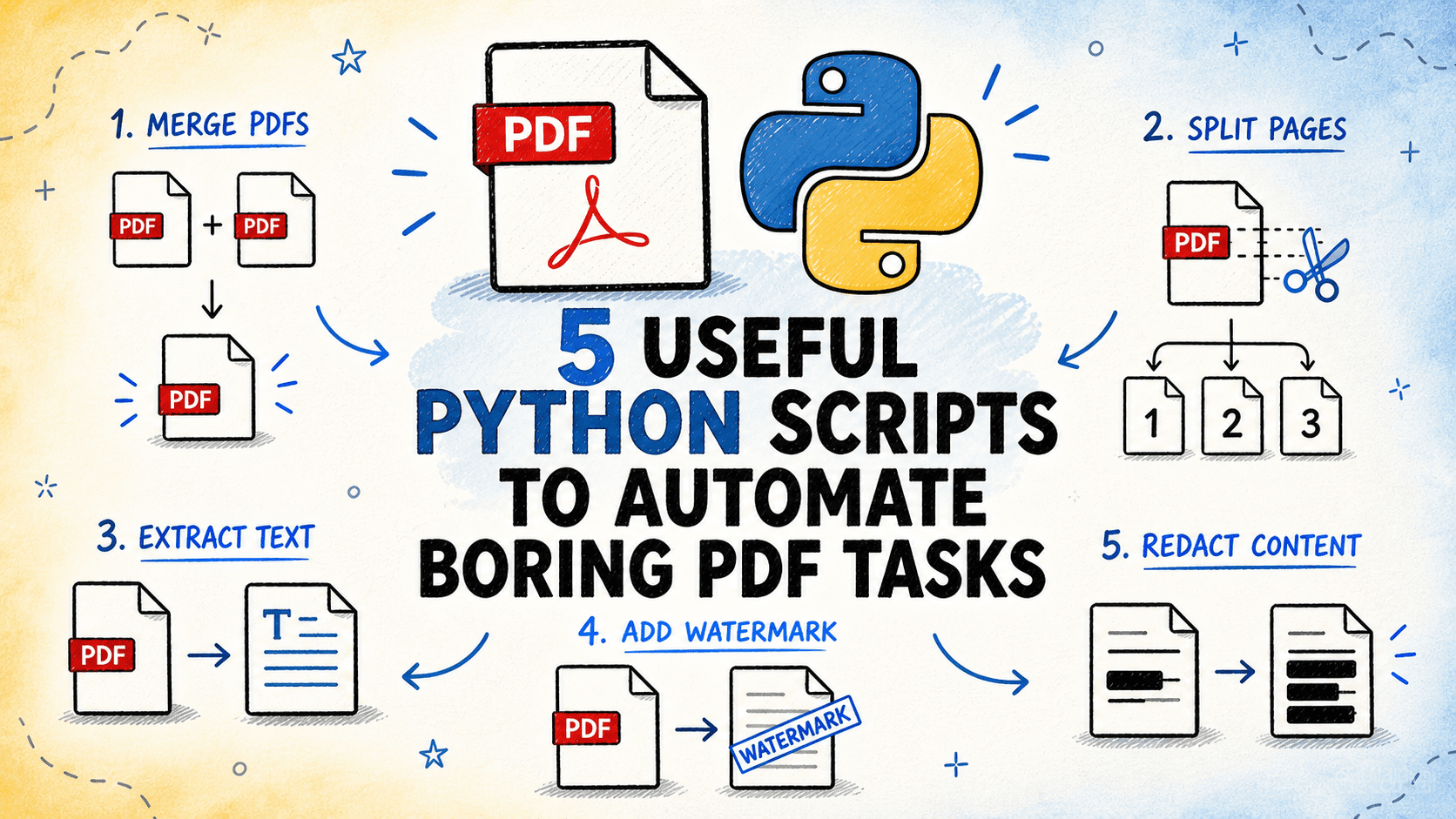
The ubiquity of PDFs is undeniable. They’ve become the de facto standard for document exchange, a necessity across industries, and a frequent source of tedious, repetitive tasks. The recent article highlighting five Python scripts to automate common PDF operations taps into a very real pain point for countless professionals. While many might initially reach for manual workarounds or cumbersome desktop applications, the rise of accessible scripting languages like Python offers a powerful, future-focused alternative. It’s a shift from reactive document management to proactive data handling, and a signal of how AI-native tools are increasingly accessible to a broader audience. This mirrors a trend we’ve seen towards more intelligent automation – moving beyond simple rule-based systems to embrace more adaptable solutions; consider how we’ve explored [Stop Picking Between Claude Code and Codex | Do This Instead], where intelligently combining different AI tools offers a more robust solution than relying on a single, specialized service.
The beauty of this approach isn’t just in the automation itself, but in the empowerment it provides. Individuals and teams can reclaim valuable time previously spent on tasks like extracting data from PDFs, splitting large files, or converting formats. This newfound efficiency can then be redirected towards higher-value activities – analysis, strategic thinking, and ultimately, driving better outcomes. It’s a practical demonstration of how code, often perceived as intimidating, can be a surprisingly accessible tool for improving productivity. This resonates with our focus on simplifying complex workflows; a recent piece detailing how to [Track Construction Field Expenses in Real Time with AI] demonstrates a similar principle – leveraging technology to streamline processes that were previously manual and error-prone. The ability to manipulate PDF data programmatically opens doors to integrating this information with other systems, creating a more cohesive and data-driven workflow.
However, it’s important to acknowledge the learning curve, albeit a manageable one. While Python itself is relatively easy to pick up, mastering the necessary libraries and crafting effective scripts requires some initial investment. This isn't necessarily a barrier, particularly for those already comfortable with basic coding concepts. For others, it represents an opportunity to expand their skillset and unlock new levels of productivity. The key is to start small, focusing on automating the most time-consuming and repetitive tasks first. The broader implications extend beyond individual users; organizations can leverage these scripts to build custom automation pipelines, improving operational efficiency and reducing the risk of human error. The shift represents a move towards a more data-centric approach to document management, where information is treated as a valuable asset that can be readily extracted, transformed, and utilized.
Ultimately, the rise of Python-based PDF automation reflects a larger trend: the democratization of AI-powered tools. It’s no longer necessary to be a data scientist or a software engineer to harness the power of automation. Accessible scripting languages and readily available libraries empower users of all skill levels to tackle complex challenges and unlock new levels of productivity. As AI continues to evolve, we can expect to see even more accessible and user-friendly tools emerge, further blurring the lines between human and machine capabilities. The question is, as these tools become increasingly prevalent, how will we ensure that data privacy and security remain paramount in this new era of automated data handling?