5 Ways Small Language Models Are Powering Next-Gen Agents
Our take
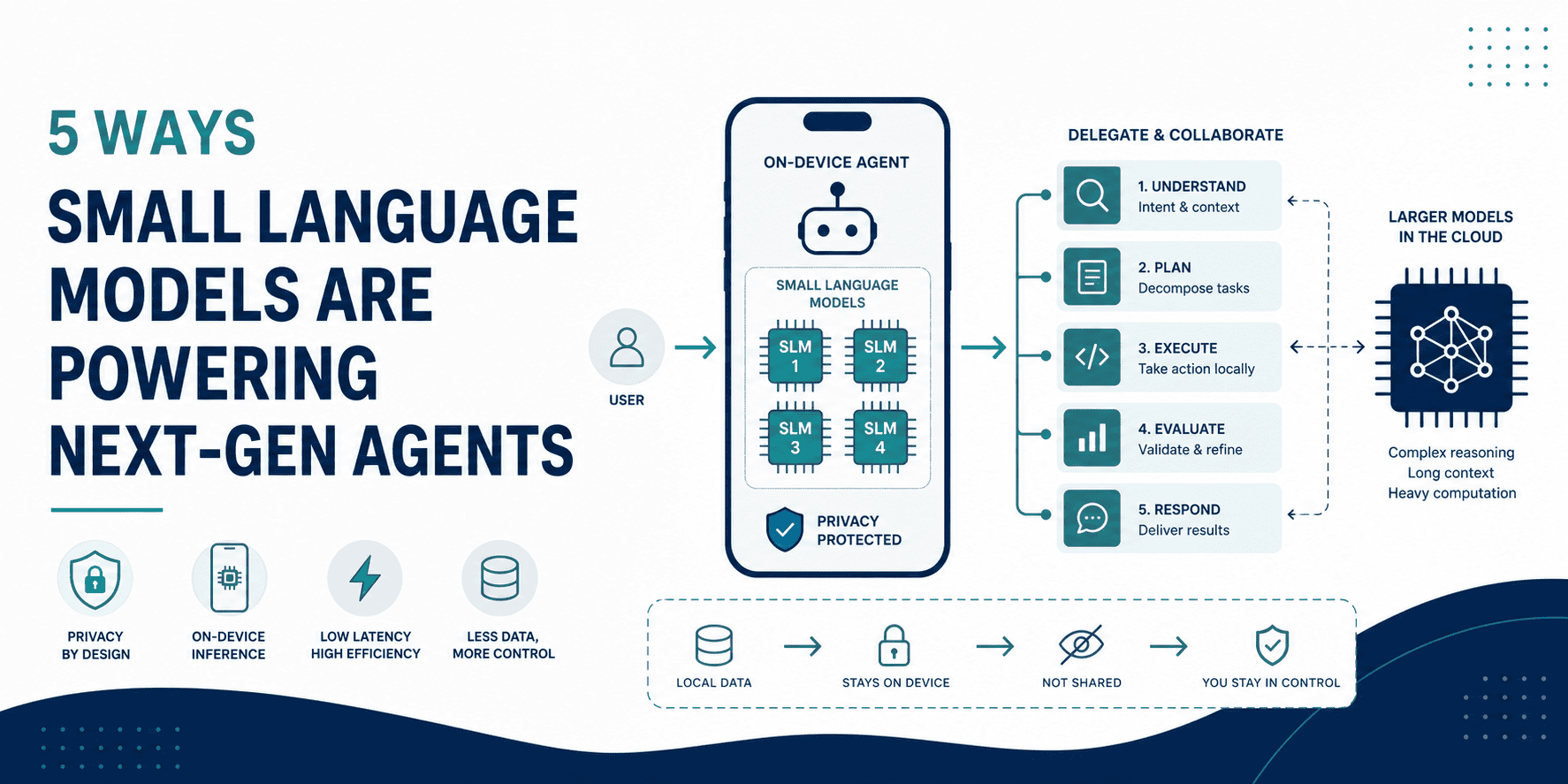
The recent surge in interest surrounding Small Language Models (SLMs) and their application within next-generation agents is a fascinating development, and the article “5 Ways Small Language Models Are Powering Next-Gen Agents” provides a valuable snapshot of the current landscape. For a while, the narrative has been dominated by the pursuit of ever-larger, frontier models, but this piece rightly highlights the growing practicality and effectiveness of SLMs, particularly when integrated thoughtfully into agent architectures. It’s a shift that aligns with a broader trend we’re seeing – the increasing importance of AI management over pure model building, as explored in [Data Scientists Are Becoming AI Managers, Not Model Builders]. The ability to leverage smaller, more efficient models for specific tasks within an agent’s workflow represents a significant step towards building more robust, scalable, and cost-effective AI solutions. The focus on concrete examples and quantifiable metrics—the 'tools and numbers worth knowing'—is particularly welcome, as it moves beyond the hype and provides a grounded perspective for those considering this architectural shift.
The fundamental advantage of SLMs, as the article demonstrates, isn't necessarily about matching the raw generative power of frontier models. Instead, it’s about precision and efficiency. By utilizing SLMs for tasks like intent recognition, knowledge retrieval, and prompt engineering, agents can offload these computationally intensive operations from larger models, freeing them to focus on higher-level reasoning and decision-making. This modular approach, effectively distributing intelligence across different model sizes, allows for greater control over agent behavior and facilitates easier updates and improvements. Consider, for example, the predictive maintenance applications detailed in [Predictive analysis of rotating equipment]— SLMs could be instrumental in analyzing sensor data and triggering alerts based on specific patterns, while a larger model handles more complex diagnostic reasoning. This targeted application of SLMs underscores their potential to complement, rather than replace, frontier models, creating a more balanced and adaptable AI ecosystem.
The rise of SLMs also speaks to a growing awareness of the challenges associated with deploying and maintaining large language models. The cost of inference, the need for specialized hardware, and the potential for unpredictable behavior are all significant concerns. By strategically incorporating SLMs, organizations can mitigate these risks while still benefiting from the capabilities of advanced AI. Furthermore, the increased focus on "Safe AI" and the potential for post-release vulnerabilities, as discussed in [What does "Safe AI" look like? [D]], makes the controlled environment offered by SLMs even more attractive. Smaller models are, by their nature, easier to audit, fine-tune, and secure, reducing the risk of unintended consequences. The ability to compartmentalize critical functions within SLMs enhances the overall resilience and trustworthiness of AI agents.
Looking ahead, the integration of SLMs into agent architectures will likely accelerate as tooling and infrastructure continue to mature. We can anticipate a greater emphasis on techniques like model distillation and adapter tuning, which enable the transfer of knowledge from larger models to smaller ones. The real opportunity lies in developing frameworks that can dynamically allocate tasks to the most appropriate model—whether it's a frontier model for complex reasoning or an SLM for a specific utility function. The question becomes not *if* SLMs will play a crucial role in the future of AI agents, but *how* we can best harness their capabilities to build systems that are not only powerful but also efficient, reliable, and safe.
Read on the original site
Open the publisher's page for the full experience