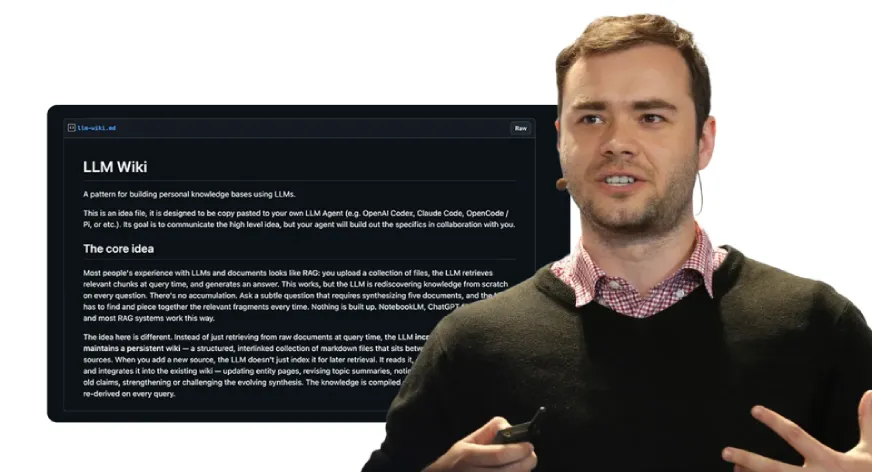
Most AI workflows share a quiet flaw: they treat every conversation like a fresh start. You upload files, ask a question, get an answer, and then the context evaporates. For large codebases or sprawling research collections, this means the model never learns from its own prior reasoning. Andrej Karpathy's concept of an LLM wiki points toward something better, and the emergence of tools like Graphify turns that idea into a practical reality. The static spreadsheet, long the backbone of data work, is becoming a living repository of accumulated insight rather than a flat container for raw numbers.
What matters here is not the novelty of the technology but the shift in how we think about data persistence. When memory layers are added to a spreadsheet, every query, every correction, every follow-up question builds a layer of context that persists across sessions. You no longer need to re-explain your dataset's quirks or re-establish your analytical frame each time you open the file. The model remembers, not in a vague sense, but in a structured way that mirrors how a human analyst would carry context from one meeting to the next. That is a meaningful upgrade, not a gimmick.
For users, the practical payoff is straightforward: less repetition, fewer errors, and a faster path from raw data to decision. If you manage a growing codebase, a research archive, or a financial model that gets updated weekly, the ability to build on prior context changes your workflow from a series of disconnected tasks into a continuous conversation with your data. The spreadsheet stops being a passive record and becomes an active participant in your analysis. That is not hype; it is the logical next step for anyone who has ever felt the frustration of redoing work because the system forgot what you already told it.
The takeaway is simple. If your tools reset every time you close a tab, you are not using them to their full potential. Memory layers are not about making spreadsheets smarter in the abstract. They are about making your process smarter by ensuring that every insight, correction, and question contributes to a growing base of knowledge. Start experimenting with tools that support this pattern, and pay attention to whether your workflow feels more continuous. The future of data work belongs to systems that remember, and the sooner you adopt that mindset, the less time you will spend rebuilding what you already knew.