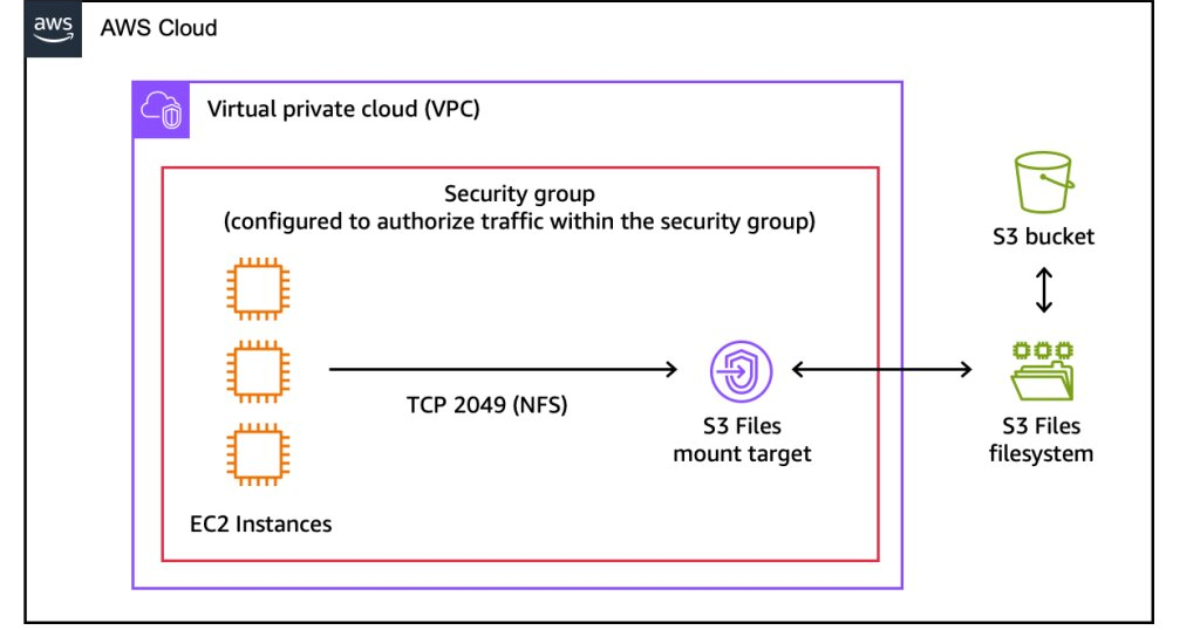
AWS S3 Files is a quiet step toward the future of cloud data management, and it deserves more attention than it's getting. By letting users mount an S3 bucket as a standard file system, AWS has removed a stubborn barrier between object storage and the compute jobs that need to read and write data. This isn't about hype; it's about making the cloud feel less like a collection of APIs and more like a workspace.
For anyone who has wrestled with the gap between S3's object model and the file-based expectations of many applications, this changes the calculus. You no longer need to stage data into a separate file system or maintain a custom translation layer just to run a workload that expects standard file operations. The system handles the translation automatically, which means your compute services can work directly with data in S3. That's not a small convenience. It's the kind of friction that has historically pushed teams toward more complex architectures than they actually needed.
What makes this notable is not the novelty of the idea, but the maturity of its execution. Mounting an S3 bucket as a file system has been attempted before, often with performance penalties or awkward workarounds. S3 Files appears to treat the problem as a first-class concern, not an afterthought. For teams already invested in AWS, this could reduce the number of moving parts in their pipelines. For those evaluating cloud options, it removes a reason to hesitate. The practical takeaway is straightforward: if your application speaks file I/O, you can now point it at S3 and move on.
The broader implication is that AWS is listening to the way people actually build systems. They're not asking you to abandon the tools that work or to learn a new mental model overnight. Instead, they're making the storage layer more flexible, so you can keep your code simple while your data scales. That's the kind of progress that matters. We'd suggest you take a close look at S3 Files for your next workload that needs direct file access. The less time you spend translating between storage paradigms, the more time you have for the problems that actually move your business forward.