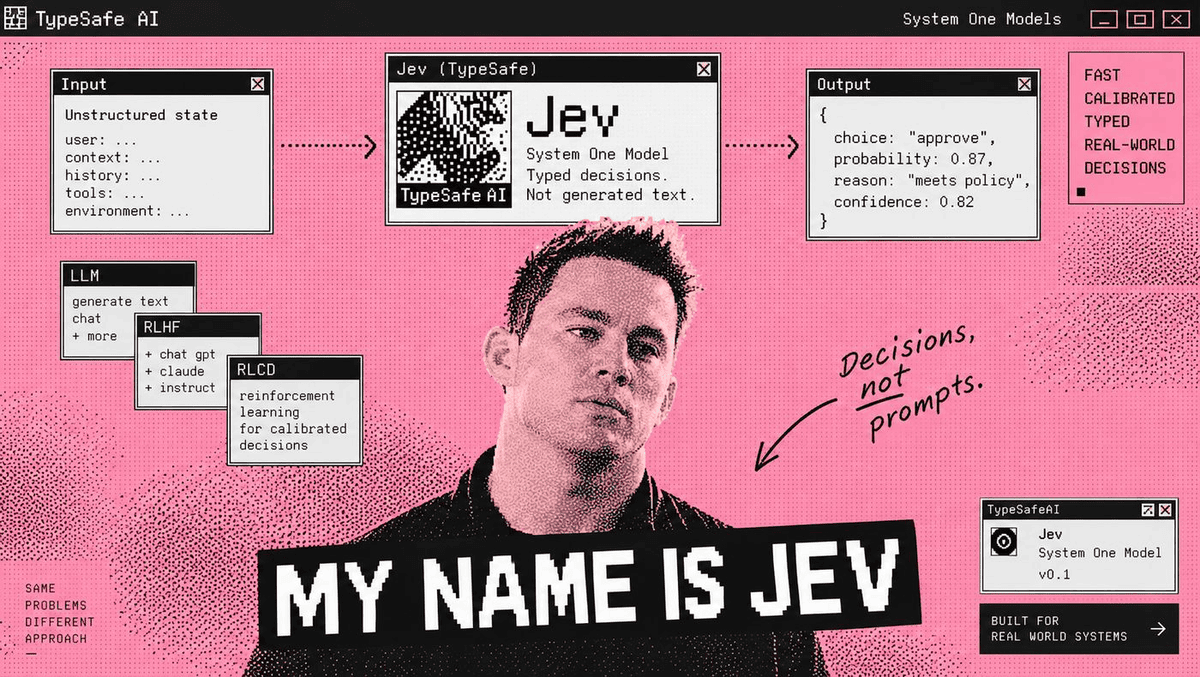
There is a specific kind of fatigue that sets in when you read about AI tools, a sense that the demo is always more impressive than the daily reality. TypeSafe AI's Jev invites that skepticism, and it is the right place to start. On its face, Jev is another assistant promising to make your spreadsheet behave, but the closer you look, the more you realize the actual innovation is not in the prompt box. It is in how the tool reframes the relationship between the user and the grid. We have seen the legacy players bolt on a chat window and call it progress. Jev, by contrast, appears to be built from the ground up around the idea that you should not have to know the function name to get the result you want. That is a subtle but significant difference, and it is worth exploring before you judge it against the noise.
What is genuinely new here is not the natural language processing, which is table stakes now, but the way Jev treats intent as something that can be expressed in fragments, not just full sentences. The article rightly points out that the hype has a tendency to obscure the mechanics. We would tell you to ignore the marketing and focus on the workflow. In practical terms, this means you can start with a messy data set and a vague question like "show me the trend," and Jev will not just run a formula. It will make a judgment call about what you meant, surface the assumption, and let you correct it without rebuilding the whole thing. That is the part that matters for your daily work. It is not about replacing your expertise; it is about removing the friction between the thought and the output. For anyone who has spent thirty minutes fighting a pivot table, that is not a luxury. That is a reprieve.
Our honest take is that Jev is more significant for what it signals than for any single feature. The article correctly notes that the danger is in overstating what it can do. We would agree, but we would also push back on the cynicism. The real test is whether TypeSafe AI can resist the temptation to add complexity in the name of a roadmap. If they keep it focused on the core promise, which is making the spreadsheet feel less like a database and more like a conversational partner, they have something worth watching. If they start bolting on collaboration suites and project management modules, it will collapse under its own weight. The open question is whether they have the discipline to stay lean. We hope they do, because the alternative is another tool that gathers dust next to the other "smart" assistants you tried once.
The concrete point to watch is how Jev handles the edge cases, specifically the messy, ambiguous data that lives in every real business. The demo always works with clean columns and clear labels. The moment of truth is when you feed it a column of mixed dates, currency symbols, and the occasional typo. If Jev can recover from that with a simple follow-up question instead of a blank stare, then TypeSafe AI has earned the right to be called progressive. If it stumbles, you have learned the most valuable lesson: the grid still belongs to you. That is the detail we will be watching, and the one that separates a useful tool from another press release.