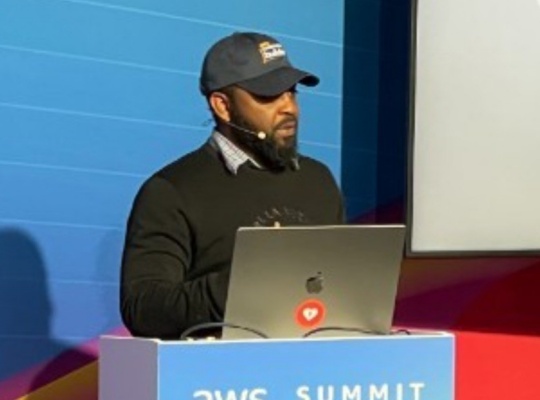
The most interesting thing about Kennedy Torkura's approach to GenAI red teaming isn't the attack simulation itself. It's the bridge he builds between the old world of cloud security and the new frontier of large language models. For too long, these have existed as separate disciplines with separate tools and separate teams. That separation is no longer viable. When your knowledge base is the attack surface, and when a prompt injection can turn a trusted assistant into a data exfiltration tool, you need a unified threat model. Torkura's argument is that MITRE ATLAS gives us the bridge, and that's the right call.
This matters because most engineering leaders are not starting from zero. They are starting from chaos. They have legacy cloud infrastructure, a few AI experiments in production, and a vague sense that LLM threats are somehow different. They are. Data poisoning and LLMjacking don't look like SQL injection or a misconfigured S3 bucket. They are subtler, more adversarial, and often target the trust layer that the model represents. What Torkura is really saying is that you don't need a new security paradigm to handle these. You need to extend the one you already have, using adversary emulation to test the guardrails you think you've built. That is a practical, actionable stance. It also means the hard part is not understanding the threat. The hard part is mapping it to your existing AWS environment and deciding where the guardrails actually sit.
We would tell a reader who asked about this: stop treating AI security as a separate project. Start treating it as an extension of your cloud security program. The MITRE ATLAS framework is not a checklist; it's a way to structure your thinking about how an adversary would specifically target your model, your prompts, and your retrieval pipelines. The value here is in the proactive identification of vulnerabilities before they are exploited, not in the reactive cleanup after an incident. That's why this presentation is more than a technical walkthrough. It's a management framework for how to think about risk when the software you rely on can be manipulated by a well-crafted sentence. The specific takeaway? If you are an engineering leader, your next security review should include a red team exercise that uses ATLAS techniques against your own GenAI stack. Not next quarter. Not after the next breach. Now.
The open question this leaves us with is about operationalizing the findings. Knowing that your model is vulnerable to prompt injection is one thing. Knowing how to fix it across a complex RAG pipeline, with multiple data sources and model versions, is another. Torkura's approach gives you the map, but the territory is yours to manage. The concrete detail to watch is whether your team can translate the red team findings into actual guardrail updates within a sprint, or whether the report just sits in a shared drive. That distinction is the difference between security theater and a real defense. We would push our readers to define that translation process before they run the exercise. Because in AI security, the gap between identifying a flaw and fixing it is where the damage happens.