benchmark
49 stories filed under benchmark on Beyond Market Intelligence. The newest of them: “Benchmark's founding partners stay grounded while steering a storied Valley firm”, “A test of 17 AI agents across 7,700 poker hands shows what local models can do”, and “Pinpoint the bug: Odin reads your report and shows the file to fix”. Benchmark's five founding partners stood onstage, and it was clear these are friends who happen to run one of the Valley's most storied firms. Seventeen AI agents went head-to-head across 7,700 poker hands, and the results reveal exactly what local models can achieve today. Acme AI is the next-generation, AI-powered spreadsheet platform built to replace Excel and redefine how analysts, data scientists, and enterprise teams work… The list below is every benchmark story on Beyond Market Intelligence, newest first.

Benchmark's founding partners stay grounded while steering a storied Valley firm
Benchmark's five founding partners stood onstage, and it was clear these are friends who happen to run one of the Valley's most storied firms. Their grounded rapport, even as the firm has grown funds and swapped partners, speaks to a rare stability. For deeper context on how venture norms are shifting, our piece on Benchmark acknowledging the old rule against funding rivals is fading offers a useful companion.

A test of 17 AI agents across 7,700 poker hands shows what local models can do
Seventeen AI agents went head-to-head across 7,700 poker hands, and the results reveal exactly what local models can achieve today. This kind of test moves beyond theory, showing real performance where it matters. For anyone weighing the trade-offs between local and cloud-based AI, the findings are worth exploring. Deeper context awaits in our related piece, "Finding Your Balance Between AI Effort and Real Results."
Pinpoint the bug: Odin reads your report and shows the file to fix
Paste a bug report into Odin and it pinpoints the exact file, 93% of the time, and the specific function, 79.4% of the time. This isn't another cloud-dependent AI tool. It runs mostly in your browser using local models, keeping your code private while matching the accuracy of far heavier agents. That efficiency is what stands out. If you've ever felt buried by debugging, this is worth exploring.

Benchmark acknowledges the old venture rule against funding rivals is fading
Benchmark's admission that Silicon Valley's old rule against funding rivals is fading signals a pragmatic shift in venture strategy. The firm acknowledges the constraint is getting harder to keep, and they're not wrong. As competition for promising startups intensifies, rigid prohibitions give way to more nuanced portfolio thinking. For deeper context on how innovative companies are reshaping their industries, see our coverage of Intero Biosystems winning the Disrupt 2026 Startup Battlefield. The old guard is learning to adapt.
Precision scoring models that skip text generation for faster decisions
Precision scoring models that skip text generation are making faster decisions possible, and the latest v2.1 updates to the 27B and 9B Jebadiah models show real progress. Treating a decision as a closed-set scoring problem eliminates parsing and sampling entirely. The results speak clearly: the 27B jumped to 57.03 on the Decision Index, with strong gains in knowledge, language, and retrieval. The tool-use regression on When2Call is worth investigating, though.

Android Bench 2.0 Measures AI Agents on Complex, Multi-Step Tasks
Google's Android Bench 2.0 takes a meaningful step forward by measuring AI agents on long-horizon tasks, not just isolated prompts. That shift matters. Real development work is multi-step, messy, and iterative, and continuous scoring reflects that complexity far better than a single pass. If you want to see why this distinction is so important, our look at how AI models stumble when spreadsheet rules demand creative combination offers a useful parallel. Benchmarking is finally catching up to the work itself.
AI models stumble when spreadsheet rules demand creative combination
In 2024, MIT and Virginia Tech researchers set three state-of-the-art multimodal models against the deceptively simple puzzles of Baba Is You, requiring creative rule manipulation. The models failed dramatically. Fast forward to 2026, and our agentic swarms confidently ace ARC-AGI-3 and crack theorems. Yet if these key-door puzzles still trip up tera-parameter systems, they deserve a direct line to François Chollet. This is a benchmark candidate we should be exploring, not ignoring.

Why one successful agent run doesn't mean the database agrees
A single successful agent run can hide a uncomfortable truth: the database may never have agreed with what the agent claimed to do. Microsoft's ThinkingBox benchmark, spanning 507 business workflows, reveals that models ranked by discovering a solution at least once look nearly reversed when you demand consistent success across all 20 attempts. Kimi-K3 solves 93.89% of tasks once, but only 13.41% every time. That gap deserves attention.
Train a neural network with 57x fewer parameters using this new PyTorch library
MaRN takes a different path to parameter efficiency: instead of training every weight directly, it optimizes a compact latent representation that maps to the full network. The numbers are striking, a 57.7× reduction on an MNIST CNN, but the honesty about trade-offs is what makes this worth attention. Slower training and task-dependent performance are real constraints, not footnotes. For exploratory benchmarks, that transparency matters more than the headline reductions. The library's global and layer-wise mappings give researchers room to test where this approach genuinely fits.
How to benchmark online AI models without losing your data to training
Protecting your benchmark data from becoming training data is a real problem, especially for low-resource languages where every example is precious. The trust gap with API-only models is legitimate, and a paid account is not a guarantee of privacy. You are right to be cautious. The practical answer is that there is no foolproof method, only risk mitigation.
Gemini Argon Tops the Charts but Skips the Test That Counts
Gemini Argon tops the charts, yet it skips the test that counts. That distinction matters. Benchmarks can dazzle, but real-world validation is where trust is built. We see this pattern across the industry, from physics solvers to distributed databases. The lesson is consistent: look past the headline numbers. Explore what a tool does when the pressure is on, not just when it's performing for a score. That's the metric that empowers your actual work.
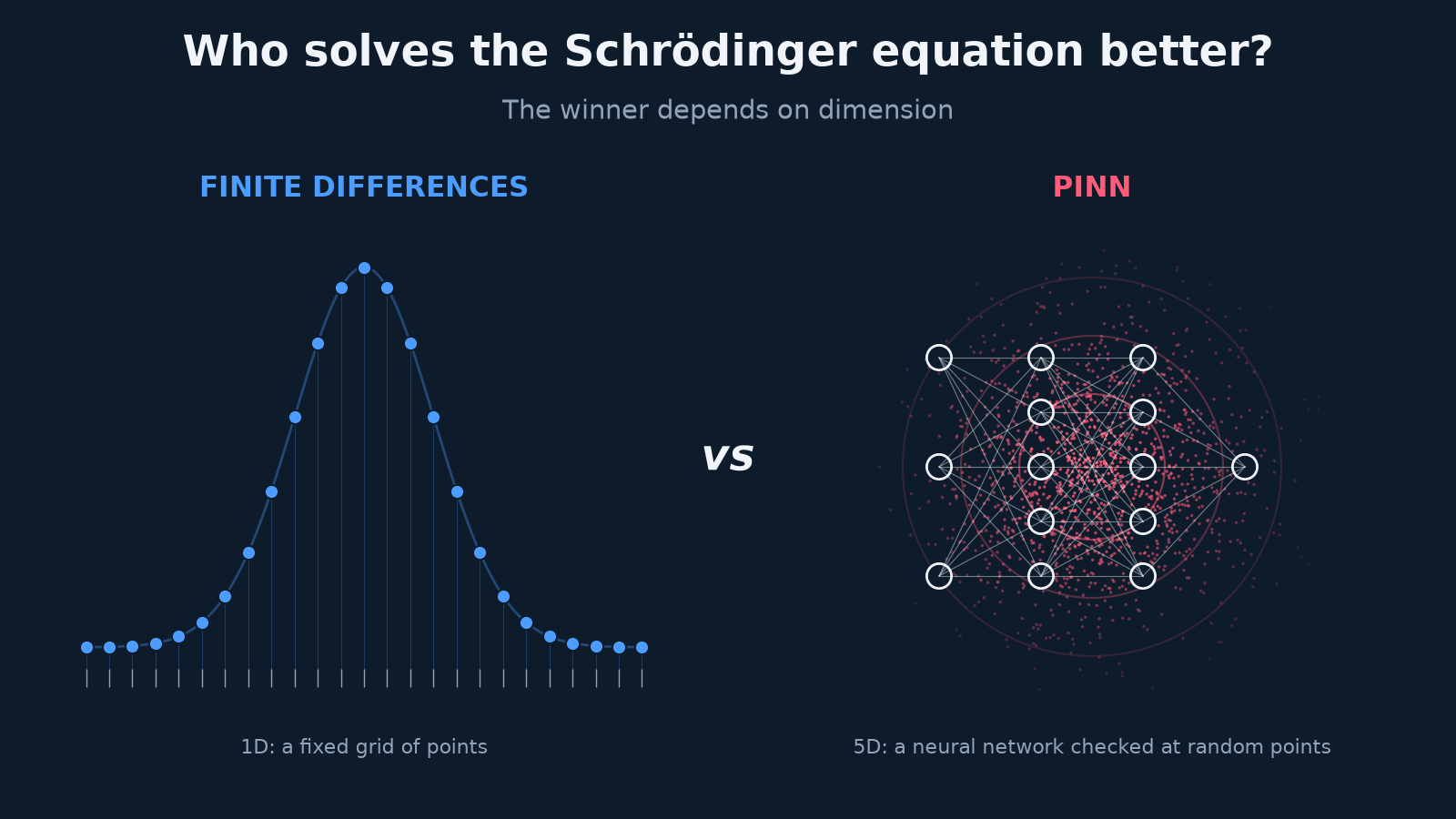
A 1D physics solver wins, but neural networks take the lead in 5D
A 1D physics solver wins; in 5D, neural networks take the lead. We put a physics-informed neural network against a plain finite-difference solver twice, and the winner changed. That shift tells us something important about when AI-powered methods actually outperform classical numerical approaches. It's not a blanket victory, it's conditional, and understanding those conditions matters. For more on how AI adapts to complex environments, see our piece on two AI copies keeping drones in sync with 94% less data.

Benchmark places its first defense bet on Furientis and low-cost interceptors
Benchmark has placed its first pure defense bet, backing Furientis and its low-cost interceptors. It's a telling move from a storied Silicon Valley firm that has long avoided the sector. The bet isn't on flashy hardware, it's on affordability and scale, which feels both pragmatic and forward-looking. For readers tracking innovation in capital-intensive fields, our coverage of Type One Energy's lean fusion timeline offers a similar story of efficiency over extravagance.

Real concurrency bugs, real fixes: a new benchmark for AI coding agents
Real concurrency bugs from merged PRs in 100 Python projects, race conditions, deadlocks, cancellation issues, now form a new benchmark for AI coding agents. Each task is graded by the project's own tests in a networkless container, with the repo cut to a single commit so agents cannot cheat from git history. The results reveal where models actually differ: on the hard half of tasks, scores drop to 50%, 45%, and 23%.
TypeSafe AI's Jev Delivers Focused Utility Without Hallucinations
Jev, TypeSafe AI's new model, promises frontier-class reasoning without hallucinations, and it's built by a co-inventor of ChatGPT. We put that claim to the test, running it live on over 16,000 benchmark requests. What we found is a smaller, humbler model that delivers focused utility at near-zero cost. It serves a specific job nobody else quite fills. For deeper context on where AI logic still struggles, see our piece on Nonograms.

Testing 49 LLMs on Nonograms Reveals Where AI Logic Still Falls Short
Nonograms look like simple logic puzzles, but they've exposed a sharp limit in how today's best AI models reason. Nonobench tested 49 LLMs on these grid puzzles, giving each model the clues once and letting it fill the full grid in one attempt, no tools, no retries. Solve rates dropped fast as grids grew: 85% on 5x5 puzzles fell to just 20% on 15x15. Even GPT-6 Astra solved all 30 standard puzzles, but on hard mode, Claude Opus 5.

How small AI models closed the gap on a test built for humans
For the first time, small local AI models have matched average human performance on a benchmark built specifically to prove human superiority, and it happened in just the last 30 days. Kagglers, limited to modest hardware, are now seeing their models beat the human baseline in a controlled harness. That's not hype; it's a measured shift. For a deeper look at how AI is redefining productivity tools, see our coverage of "How We Built IQRAX to Give AI Models Both Freedom and Verifiable Authority."

OpenAPPA Turns the Tables on Prompt Injection With a Perfect Security Record
OpenAPPA is turning the tables on prompt injection with a perfect security record. While enterprise workflows remain prime targets for data exfiltration, this open-source engine reports zero successful attacks across rigorous benchmarks. That contrasts sharply with a 10% failure rate for Claude Code's auto mode and 31% for Microsoft FIDES. For teams weary of AI hallucinations handing over the keys, OpenAPPA offers a grounded, practical defense. It's a quiet but confident step toward making AI agents safe to trust with real work.
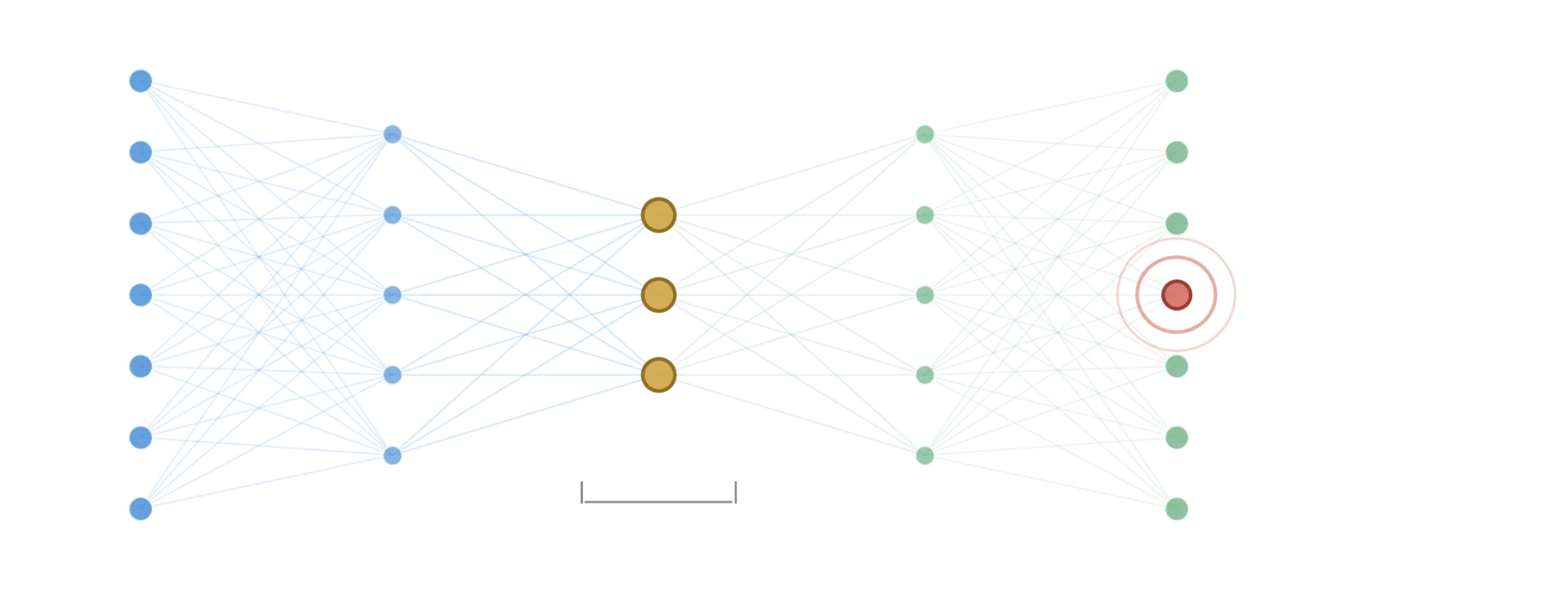
When a benchmark was stacked against PCA, the classic technique still outperformed
It's refreshing to see a benchmark humble the hype. When a test pit autoencoders against PCA, the classic technique won, not on theory, but on real-world performance. That's a result worth pausing over. The author rigged the test to favor the newer approach, and PCA still held its ground. Sometimes the simplest tool is the right one. If you're rethinking your data workflow, our piece on "File Compaction's Real Impact on Query Speed" explores another quiet efficiency worth your attention.

How We Built IQRAX to Give AI Models Both Freedom and Verifiable Authority
IQRAX separates probabilistic intelligence from deterministic authority, a distinction that matters when AI must be both free to explore and accountable for its work. Built for regulatory environments, this architecture lets models reason while external controls verify qualifications, enforce standards, and hash every input and output. The benchmark results are striking: 11.5× lower cost and 48.3× faster completion. Rather than ask for trust, the team invites direct testing. For deeper context on how we think about benchmarks, see our piece on "Opus 5.
Opus 5.5 redefines what a spreadsheet benchmark should look like
Most spreadsheet benchmarks measure speed on predictable tasks. Opus 5.5 challenges that assumption. It redefines what a benchmark should look like by prioritizing accuracy and real-world relevance over raw throughput. That shift matters for anyone who has watched automated tests pass while actual workflows stumble. For a deeper look at how practical reasoning changes outcomes, our piece on *Smarter reasoning with fewer tokens* explores a similar philosophy applied to model training.
Open-sourcing RightWayUp to solve camera rotation detection
ORTUS AI needed to know, from a single CCTV frame, whether a camera was installed upside-down. Existing models fell short, low accuracy, too many false positives, restrictive licenses. So they trained their own. The result is RightWayUp, now open-sourced under Apache-2.0. It estimates rotation across all 360 degrees and knows when to abstain. On held-out tests, the largest version hit 93.0% accuracy within 10 degrees, outperforming alternatives.

Meet Intern-Decision: Smarter choices, 30 FPS, and multimodal by design
The Intern-Decision model family lands with a clear message: smarter choices shouldn't require a supercomputer. At 0.8B, 2B, and 4B parameters, the 4B model edges out Jev 1.13.0, and on an RTX 4090, it hits roughly 30 FPS for decision calls. That speed opens real room for interactive applications. What stands out is the calibration work. The team built a benchmark around classic probability problems, like the Monty-Hall dilemma, and found their model tracks the golden distribution more closely than the competition.
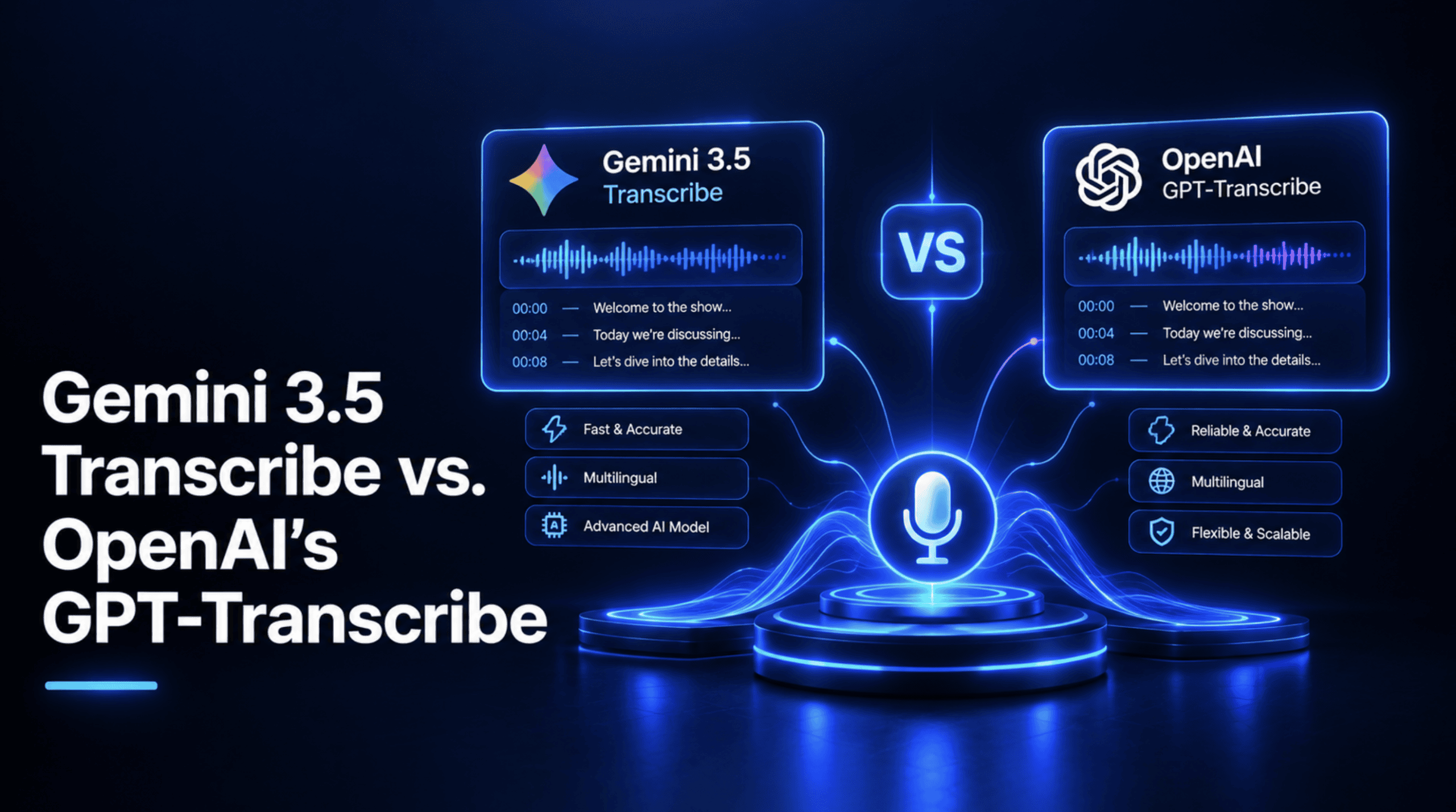
Two AI transcribers compared: real performance where the numbers count
You've read the benchmarks, but what happens when two AI transcribers face real-world data? We pushed them past marketing claims to see where the numbers actually land. The comparison walks through each model's background, a concrete use case with working code, and a side-by-side comparison of the metrics that determine productivity. If you appreciated our breakdown of Qwen3-VL's struggles with dates, this follow-up answers a practical question: which tool earns its place in your workflow?