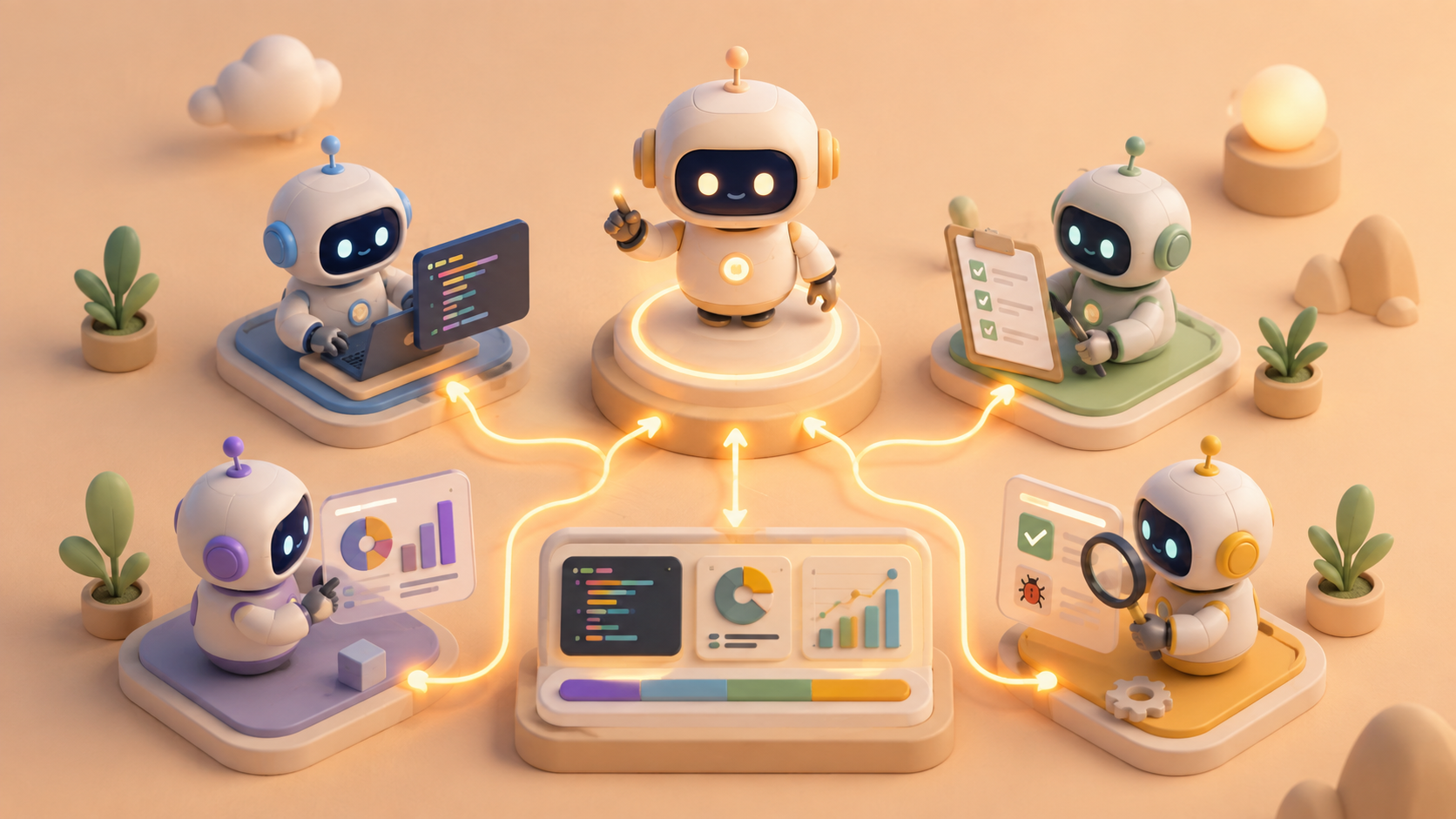
The shift from managing a single AI assistant to orchestrating an entire team of specialist subagents is where the real productivity gains begin, and the recent guide on Codex Subagents captures that transition with the clarity the topic deserves. Defining distinct roles within the Codex CLI has its mechanics, but the underlying message is what resonates: the future of data work is not about one powerful tool, it is about how you delegate. For readers who have grown accustomed to treating AI as a solo collaborator, this represents a fundamental change in workflow design. You are no longer asking for a single answer; you are building a small organization where each agent handles a specific slice of the problem, from data cleaning to code review. That is not just a technical upgrade, it is a new way of thinking about your own process.
Our honest take is that this approach aligns with where the industry is heading, but it also demands more from the user upfront. The guide is hands-on, which means it expects you to invest time in defining those specialist roles clearly. That is the trade-off. You trade the simplicity of a single prompt for the control and precision of a coordinated system. For someone who is overwhelmed by the complexity of modern spreadsheets or data pipelines, this might feel like a step backward at first. But the practical benefit is that you stop fighting the tool and start directing it. You are not just automating tasks; you are designing a workflow that mirrors how a real team would operate, with each agent accountable for a specific outcome. This is where the Toward Data Science community has been pushing readers for a while, and this guide fits neatly into that ongoing conversation about moving from prompt engineering to system design.
If a reader asked us whether this is worth their time, we would say yes, but with a caveat about scope. Do not start by trying to build a five-agent workflow for a simple analysis. Begin with two. Define one agent that fetches and validates data, and another that handles the transformation logic. See where the friction is. The guide is useful because it shows you the syntax and the coordination points, but the real lesson is about modularity. You are learning to break down a task into discrete, testable units, which is a skill that outlasts any single tool. We would also caution against the temptation to over-specialize. The purpose of a subagent is not to create busywork; it is to reduce cognitive load. If you find yourself spending more time writing instructions than you would doing the task yourself, you have missed the point.
The specific detail to watch for is how error handling and handoffs between agents are handled. That is where most multi-agent systems fall apart, and the guide does not shy away from it. The takeaway you can quote is this: *The value of Codex Subagents is not in the individual agents, it is in the seams between them, where clear instructions and defined handoffs turn a collection of tools into a coherent team.* That is the insight that separates a curious experiment from a sustainable workflow. As you explore this, pay attention to how the agents share context and what happens when one of them fails. The next step for you is to pick a small, repetitive task you already do in your spreadsheet and try assigning it to a subagent. The guide gives you the map, but the real learning happens when you hit your first unexpected error and have to debug the coordination, not just the code.