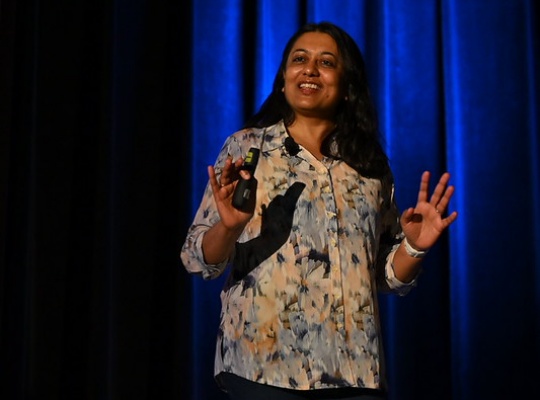
Engineering principles that have guided reliable software for decades are now being re-applied to one of the most unpredictable frontiers in technology: autonomous AI agents. Nimisha Asthagiri's approach, building a "bounded canvas" that gives agents constrained autonomy, continuous drift detection, and persistent decision records, is a welcome dose of pragmatism in a field that often chases hype over reliability. This isn't about letting agents run wild; it's about giving them enough room to act while keeping their outputs verifiable and safe. For anyone who has watched an AI prototype spiral into unpredictable behavior, that distinction matters.
The contrast with other recent developments in the AI agent space is instructive. Consider how Garry Tan spends $200K a year on AI agents and barely sleeps, treating his fleet of automated workers as a personal productivity experiment that borders on the extreme. Tan's approach pushes the boundary of what agents can do without much guardrails. Asthagiri's model suggests a more sustainable path: instead of throwing more agents at a problem and hoping for the best, she advocates for designing the container they operate within. That container, the bounded canvas, is where drift detection and decision records live. It turns agents from black boxes into observable, auditable tools. Meanwhile, Anthropic signals AI may soon be able to improve itself, pointing toward recursive self-improvement that could accelerate capabilities dramatically. If that future arrives, having a proven engineering framework to contain and audit agent behavior won't be optional, it will be essential.
What makes Asthagiri's contribution stand out is its focus on resilience rather than raw capability. Bounded autonomy means the agent can make decisions within a defined scope, but it cannot exceed those boundaries without human intervention. Continuous drift detection catches when the agent's behavior starts to deviate from expected patterns, a critical safeguard as agents become more complex. And decision records create an auditable trail, so when something goes wrong, you can trace exactly what happened and why. These are not flashy features; they are the scaffolding that makes agents trustworthy enough to deploy in production environments. For teams that have struggled with the "black box" problem of AI outputs, this framework offers a concrete way to regain visibility and control.
The practical takeaway is direct: if you are building or deploying AI agents, start with the boundaries, not the capabilities. Define the canvas before you let the agent paint. Drift detection and decision records are not nice-to-haves, they are the difference between a tool you can rely on and a liability you cannot explain. As the industry races toward self-improving systems and ever-more-autonomous agents, the teams that prioritize engineering discipline over speed will be the ones whose agents actually scale.