Cloudflare Tests Cache Transcoding to Reduce Storage Requirements
Our take
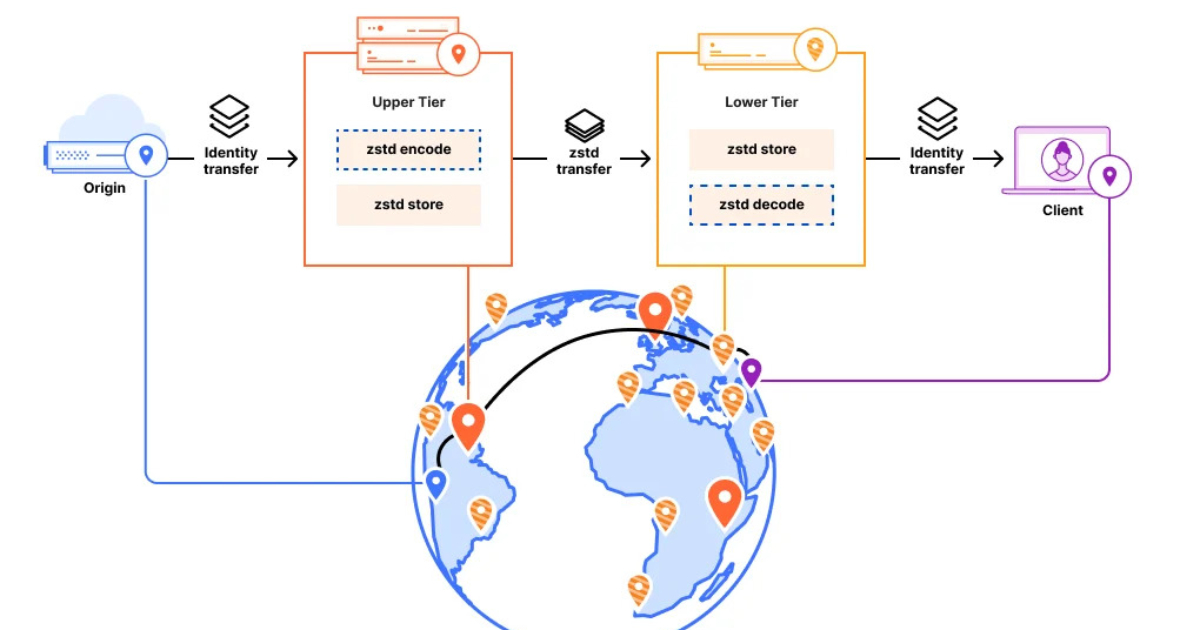
Cloudflare’s exploration of Cache Transcoding, utilizing Zstandard compression for cached content like HTML, JSON, and JavaScript, represents a significant, albeit quietly impactful, step in the ongoing battle for efficient data storage and delivery. The potential to unlock petabytes of additional cache capacity is compelling, particularly as content sizes continue to balloon and user expectations for speed and responsiveness escalate. This approach isn't about reinventing the wheel; rather, it’s a pragmatic optimization of existing infrastructure, addressing a growing pain point for CDNs and content providers alike. The broader context here is the escalating cost of storage and bandwidth, factors that directly impact the profitability of serving content globally. It's also fascinating to consider this alongside efforts like vlt 1.0 Ships as a Drop-in npm Replacement with Phased Installs, Graph Queries, and Malware-Blocking, which demonstrates a parallel drive for efficiency and security in software dependency management – both areas wrestling with similar challenges of scale and resource optimization. The meticulous model validation processes discussed in "The Model Validation Playbook for GenAI: Lessons from Banking" also highlight the need for rigorous testing and optimization as systems grow in complexity, a lesson that clearly applies here as well.
The beauty of Cache Transcoding lies in its relative simplicity and targeted application. It's not a wholesale compression of all cached assets, but rather a selective application of Zstandard to text-based content, which often benefits significantly from compression. This minimizes the computational overhead while maximizing the storage gains. The fact that Cloudflare is piloting this internally speaks volumes about the increasing pressure on infrastructure providers to find innovative ways to reduce costs without sacrificing performance. We’ve seen various approaches to edge caching and content optimization over the years, but this feels particularly relevant given the current economic climate and the relentless growth in data volume. The reliance on Zstandard, a widely adopted and highly efficient compression algorithm, further reduces the risk and complexity of implementation. It’s a testament to the power of incremental improvements; seemingly small optimizations, when applied at Cloudflare’s scale, can yield massive results.
Beyond the immediate cost savings, Cache Transcoding could also have positive implications for environmental sustainability. Reducing the amount of data stored and transmitted directly translates to lower energy consumption in data centers and network infrastructure. While the impact may be modest on a per-request basis, the cumulative effect across Cloudflare's vast network could be substantial. This aligns with a growing trend in the tech industry towards more environmentally conscious practices. Moreover, increased cache efficiency can lead to improved application performance, resulting in a better user experience and potentially reducing the need for users to refresh pages or re-download content. This is a win-win scenario, benefiting both the provider and the consumer. The careful regression testing practices outlined in "One Capital Letter Was Silently Breaking My AI Support Bot, and It Wasn't in the New Model" further underscore the need for thorough validation as Cloudflare rolls this out, ensuring no unintended consequences impact service reliability.
The success of Cache Transcoding will ultimately depend on the results of broader testing, but the initial findings are encouraging. It represents a practical and scalable solution to a pressing challenge in the content delivery space. As data volumes continue to grow exponentially, and the demand for faster, more efficient content delivery intensifies, we can expect to see more innovative approaches like this emerge. The question now is: will other CDN providers adopt similar techniques, and how quickly will we see Cache Transcoding – or variations of it – become a standard practice in the industry? The future of caching likely involves a more intelligent and dynamic approach to compression, adapting to the specific characteristics of content and the demands of users in real time.
Cloudflare recently described a prototype called Cache Transcoding that compresses eligible cache content, mainly uncompressed text such as HTML, JSON, CSS, and JavaScript, using Zstandard before storing it on disk. The hyperscaler estimates that the approach could provide petabytes of additional effective cache capacity, although broader testing is still needed.
By Renato LosioRead on the original site
Open the publisher's page for the full experience