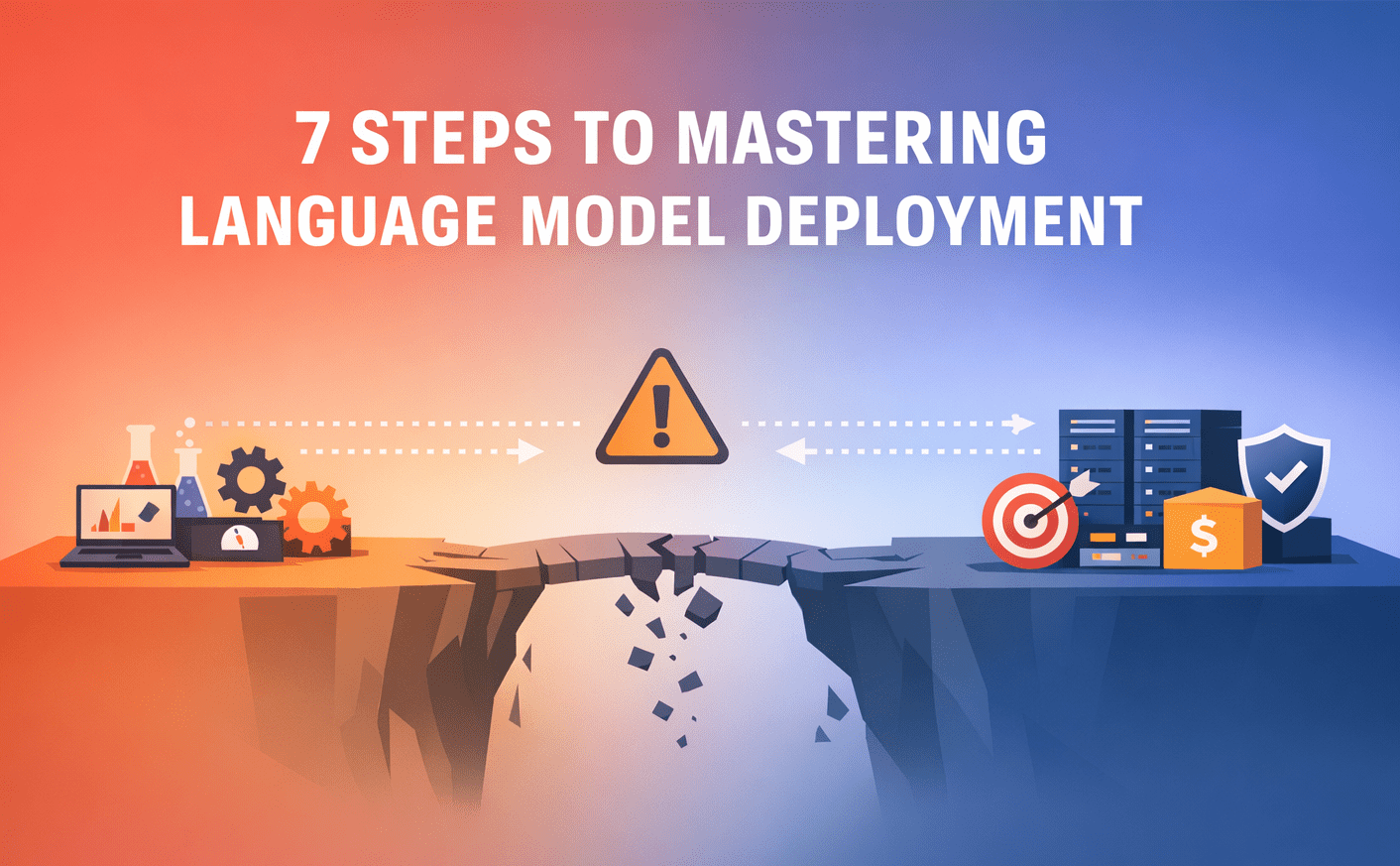
The decision to deploy a language model is not a single choice but a series of trade-offs, and treating it as a simple call to an API or a server spin-up is a mistake. We think the real work begins when you map your specific constraints against the model's capabilities, because that is where most projects either gain traction or stall. The material makes this clear: architecture, cost, latency, safety, and monitoring are not afterthoughts; they are the actual substance of deployment, and each one forces a question that has no universal answer.
For your team, this means moving past the allure of a single benchmark score or a vendor's demo video. Practical deployment starts with defining what "good enough" looks like for your users. If you are building a customer-facing chatbot, latency might trump raw accuracy, so a smaller, faster model could serve you better than a larger one that adds seconds to every response. If you are processing sensitive internal documents, safety and monitoring become non-negotiable, and you may need to invest in self-hosting or a private cloud even if it raises your cost per token. The point is not to chase the most capable model, but to match the model's strengths to your operational reality, and that requires a clear-eyed audit of your own infrastructure before you write a single line of integration code.
We also believe the cost conversation is often oversimplified. It is not just about the price per million tokens on a pricing page; it is about the total cost of ownership across the model's lifecycle. Retraining or fine-tuning, ongoing evaluation, and the engineering hours spent on prompt engineering or guardrails all count. The material implies this, and we agree: a model that is cheap per call but requires constant human oversight to avoid harmful outputs is not actually cheap. Your budget should include the cost of failure, not just the cost of inference, because a single bad output in a high-stakes setting can erase months of savings.
Here is the concrete point you should walk away with: start with a small pilot that measures latency, cost, and safety in your real environment, not in a sandbox. Use that data to decide whether you need to adjust your architecture, such as adding a caching layer or switching to a hybrid approach that routes simple queries to a small model and complex ones to a larger one. The teams that deploy smarter are the ones that treat these decisions as iterative, revisiting them as usage patterns evolve. Do not wait for the perfect model; build a system that lets you swap models as your needs change. That is the practical, human-centered path forward, and it is well within reach if you stop treating deployment as an endpoint and start treating it as a discipline.