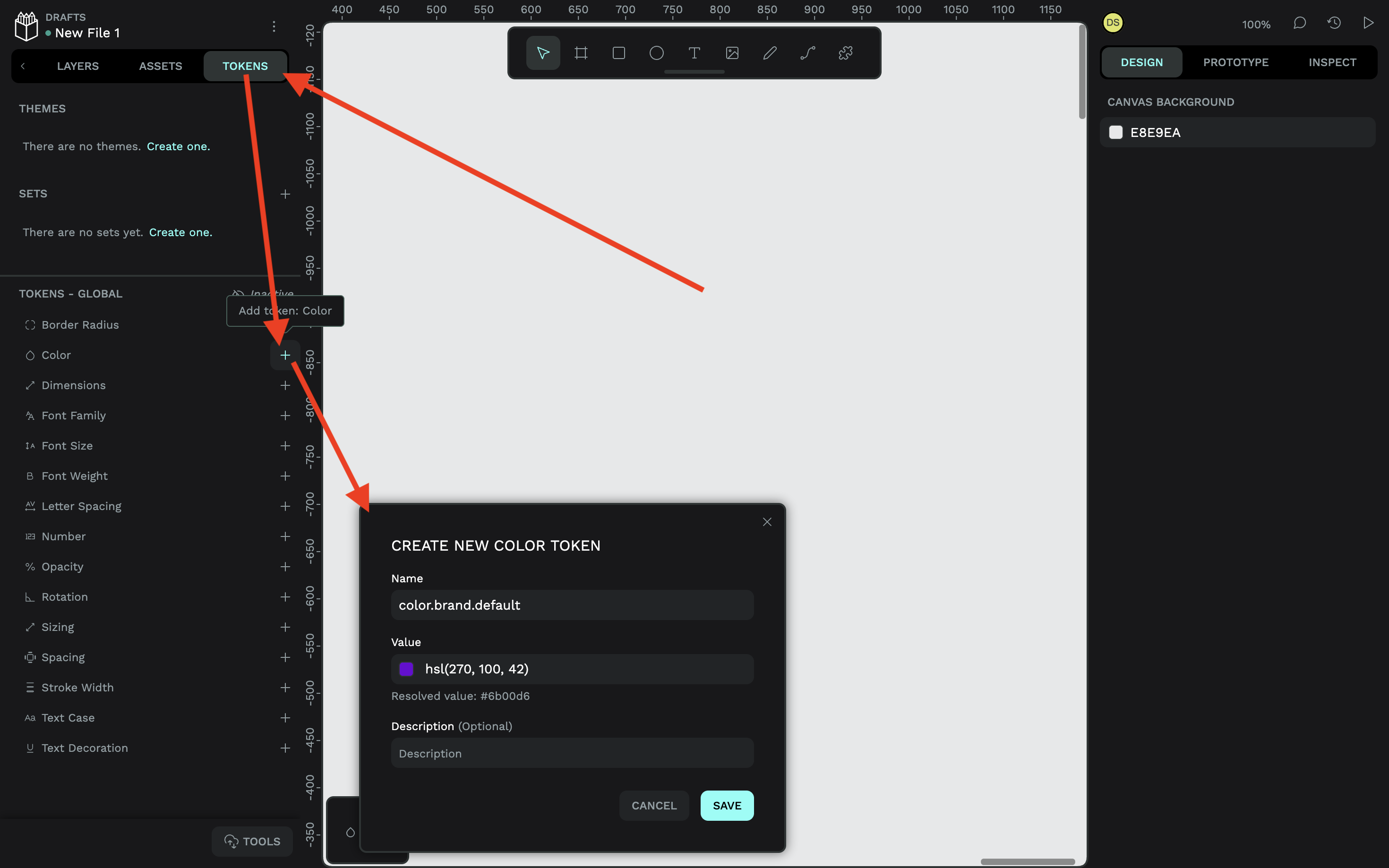
Design systems have become essential for maintaining consistency at scale, but too often they trade flexibility for control. Daniel Schwarz's demonstration of using tokens to manage component variants in Penpot offers a smarter path forward. The real insight here is that design tokens let you decouple a component's visual properties from its structure, so you can adapt a button, card, or input field without creating a dozen near-identical copies. That's not just a workflow improvement; it's a fundamental shift in how we think about reuse.
For designers and developers who have felt the friction of maintaining sprawling component libraries, this approach is practical relief. Instead of manually tracking which variant has a different border radius or hover state, tokens centralize those values. Change a single token, say, for primary button color, and every component that references it updates automatically. Schwarz shows how this works inside Penpot, but the principle applies broadly: tokens make your design system more resilient because they separate the "what" (the token's value) from the "where" (the component's usage). The result is consistency without rigidity, and that's exactly what teams need when moving from static mockups to living products.
What stands out is how this reframes a common pain point into an opportunity. Many design systems grow brittle because they treat variants as fixed states rather than expressions of a shared language. Tokens invert that logic. They let you define a component's range of expression, its color, spacing, typography, through a small set of variables, then compose those variables into any variant you need. This isn't about adding complexity; it's about reducing it. When your design system can adapt without multiplying components, you spend less time maintaining files and more time solving real user problems.
The practical takeaway is straightforward: if you manage a design system, start experimenting with tokens for your most-used components. Schwarz's walkthrough with Penpot gives you a concrete starting point, but the mindset applies anywhere. Identify the three or four visual properties that change most often across your components, color, border radius, shadow depth, and turn them into tokens. Then watch how much easier it becomes to generate new variants without rebuilding from scratch. That's the kind of small structural change that pays back in every future project.