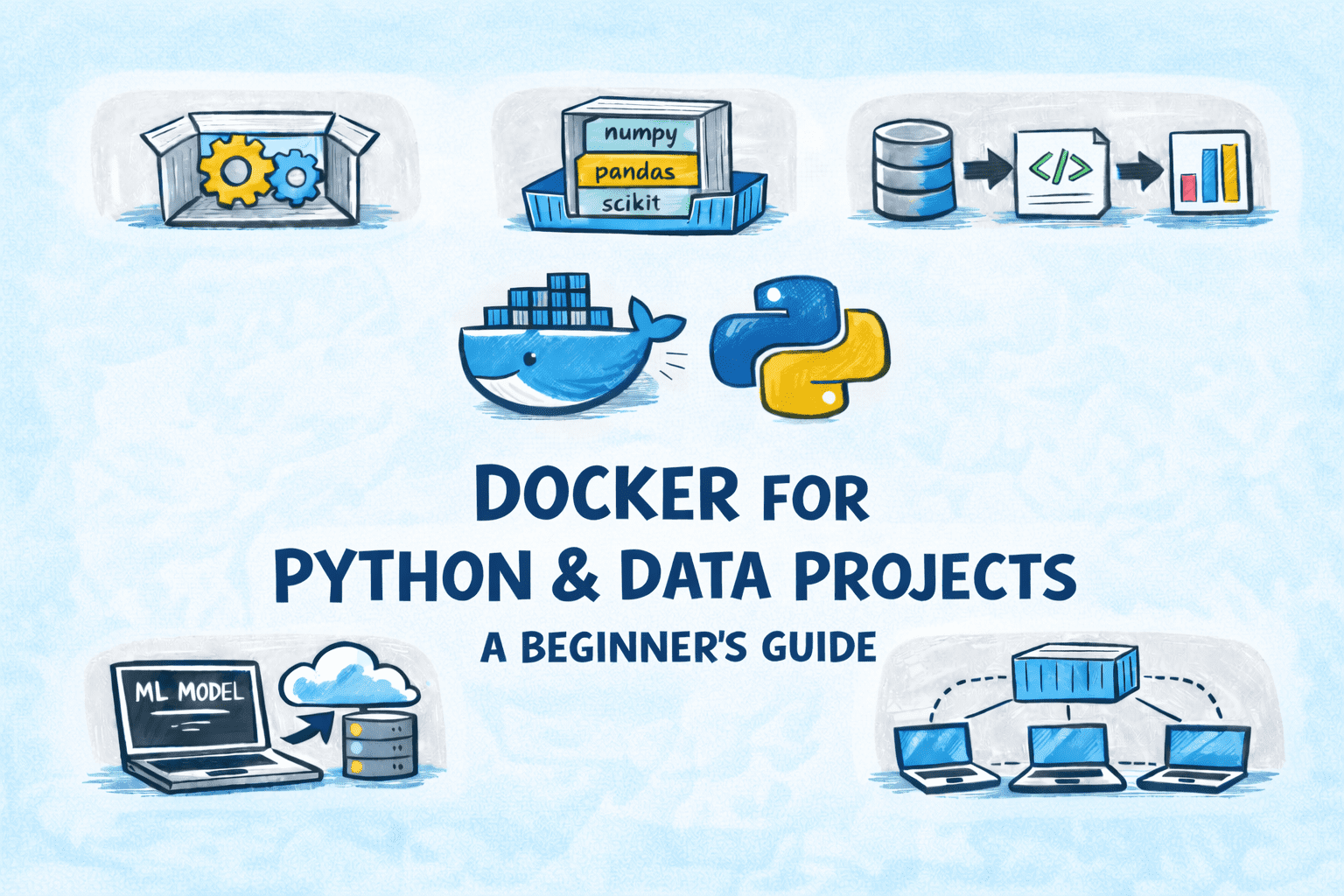
If you've spent any time wrestling with Python data projects, you already know the pain. It's rarely the code itself that breaks you, it's the environment. One teammate has Python 3.9, another is on 3.11, and somewhere in between, a dependency version silently shifts and your once-working script starts throwing errors that make no sense. Docker doesn't wave a magic wand over that mess, but it does something better: it gives you a way to freeze the chaos into a repeatable, shareable container. That's not just a nice-to-have. For anyone who's ever uttered the phrase "it works on my machine," it's the difference between a project that moves forward and one that stalls in a swamp of version conflicts.
What makes Docker practical here isn't the abstract idea of containers, it's the consistency they deliver to your actual workflow. When you define your environment in a Dockerfile, you're not just documenting your dependencies; you're encoding them. The same image that runs on your laptop runs on a colleague's machine, a CI pipeline, or a cloud server. No more setup rituals. No more "did you try upgrading pip?" as a first response. For data work specifically, where the stack can include everything from pandas to obscure geospatial libraries, this is transformative in a quiet, unglamorous way. It doesn't make your analysis more brilliant, but it removes the friction that keeps brilliant analysis from being reproduced.
Now, we'll be direct: Docker isn't the only tool in this space, and it's not always the first thing you reach for on a quick script. But the framing that Docker brings simplicity and consistency to data workflows is exactly right. Simplicity here doesn't mean you never think about dependencies again. It means you think about them once, deliberately, and then move on. The build, share, and deploy cycle is straightforward because the environment is defined alongside the code. That's a shift in mindset from treating your setup as an afterthought to treating it as a first-class artifact. For teams, that's a practical gain in velocity. For solo practitioners, it's the difference between revisiting a project in six months with dread versus with confidence.
Here's the concrete point: if you're still relying on manual setup instructions or a hastily written requirements.txt, you're leaving reproducibility to chance. Docker doesn't require you to abandon your existing Python skills or rewrite your code from scratch. It asks you to invest a little upfront effort in defining your environment, and in return, it gives you the freedom to focus on the data, not the setup. Start with one project. Containerize it. Share it with a colleague or deploy it to a server. The consistency you get will speak for itself, not because it's flashy, but because it removes the single most common source of friction in data work. That's a trade worth making.