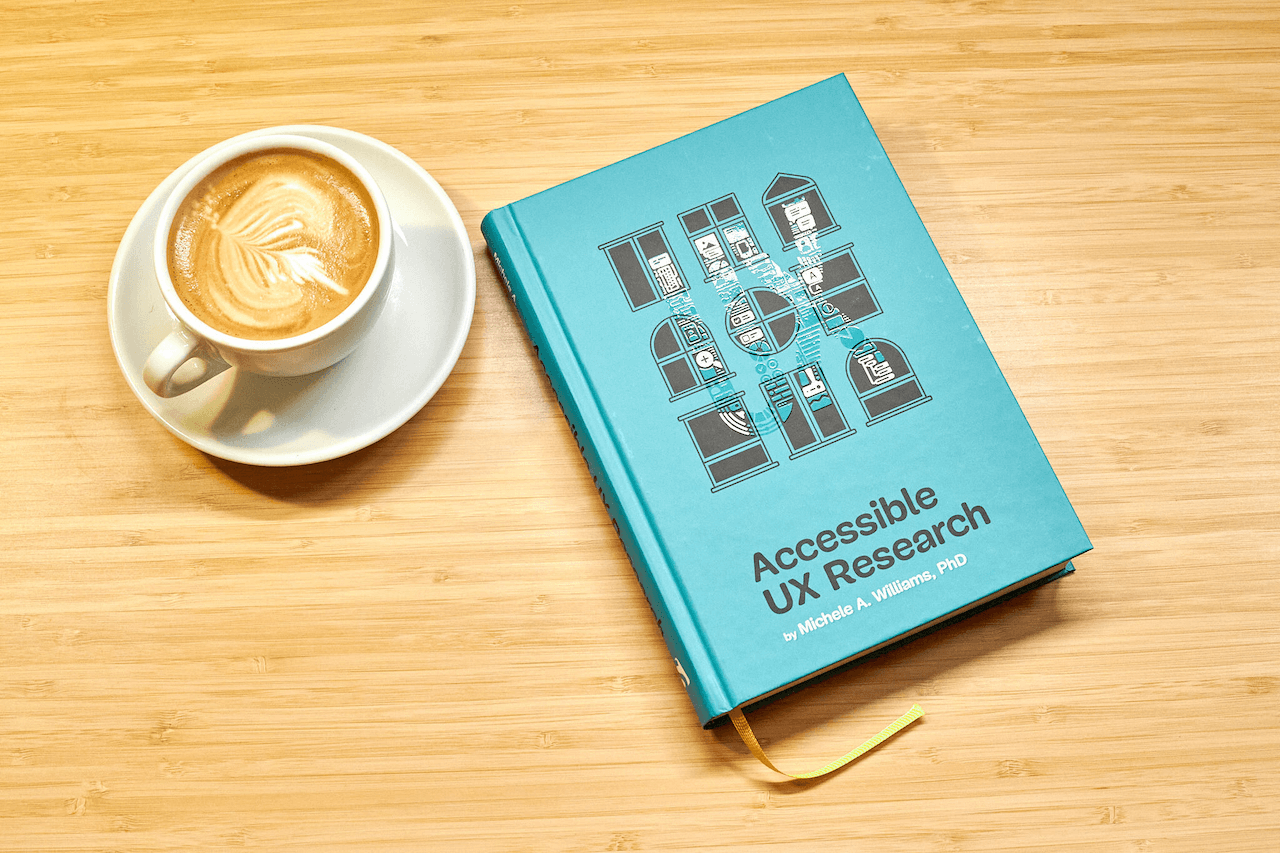
Good UX research is the foundation of great products, and inclusive methods make that foundation stronger. We believe Michele Williams's *Accessible UX Research* delivers exactly what the field needs: a practical, no-nonsense guide that treats accessibility not as an afterthought but as a core research practice. This book matters because it meets teams where they are, whether they have a generous budget or a tight timeline. It shows that inclusive research is not a luxury, it is a smarter way to build.
What this means for you is a clear path forward. Williams draws on years of experience to explain how assistive technology works, what different types of disability mean for testing, and how to weave accessibility into every phase of design. You do not need to be an expert to follow her roadmap. The book is structured to help you plan research that includes users with varied needs, from the initial recruitment stage to the final synthesis of feedback. For anyone who has felt stuck using the same narrow participant pool, this is a direct answer: here is how to broaden your approach without blowing your timeline.
The practical value here is that you stop guessing. When you test with a more diverse set of users, you catch problems before they become expensive fixes. Williams does not just argue for inclusion in the abstract, she provides methods that work in real-world constraints. You learn to adapt your research tools, ask better questions, and interpret feedback from people who experience digital products differently. The result is research that produces more reliable insights and products that serve more people.
Our opinion is plain: this book should be on every design team's shelf. It is not a theoretical treatise, it is a working handbook. If you want your research to be thorough and your designs to be genuinely usable, start here. Read it, apply the methods, and watch your research improve from the ground up.