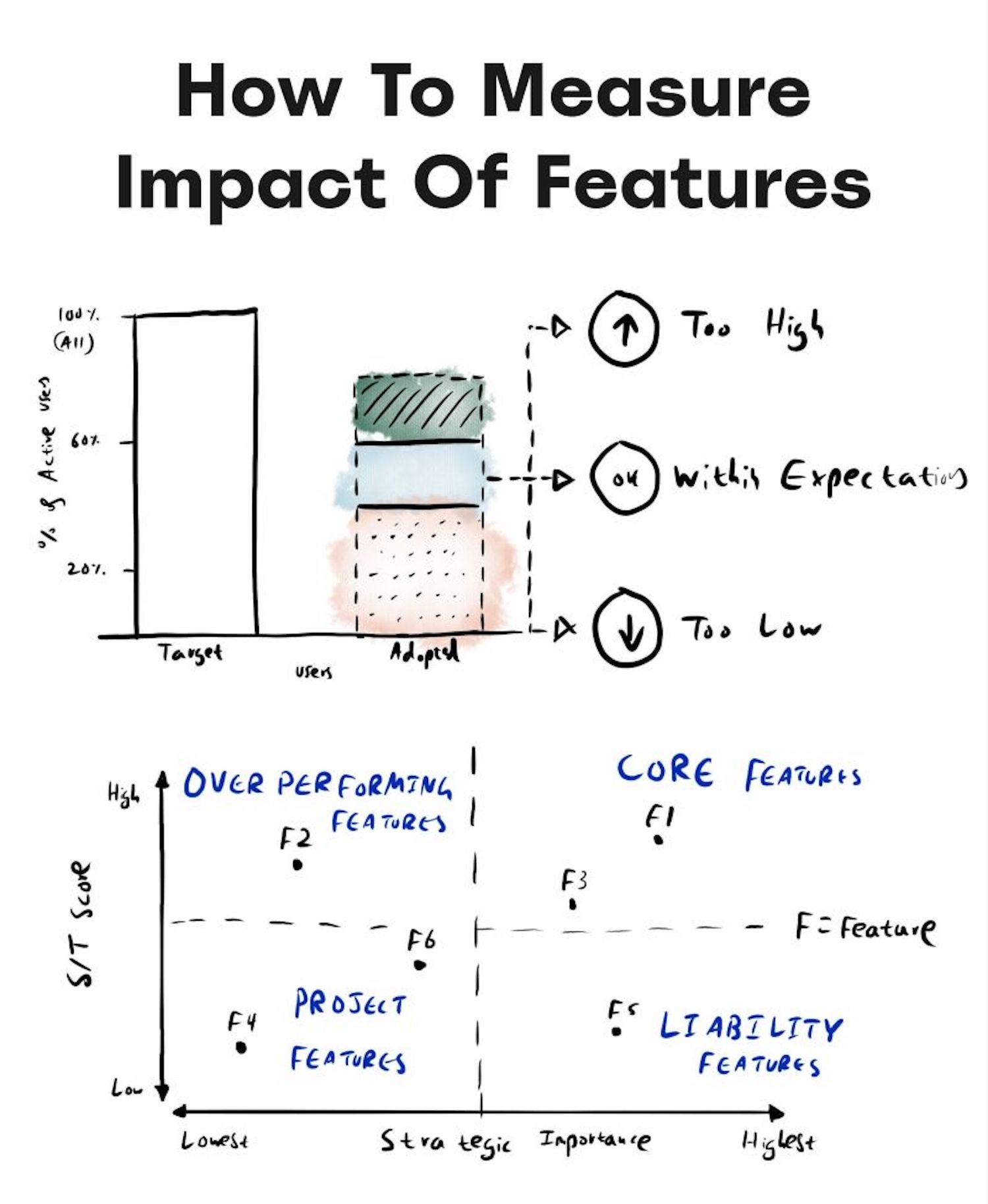
TARS is exactly the kind of metric the product world has been needing, and we mean that as a direct compliment to Adrian H. for framing it. For too long, teams have relied on vanity metrics or complex, one-off studies to determine if a feature actually matters. TARS offers a simple, repeatable, and meaningful way to track feature impact, and that clarity is its real power. It strips away the noise and gives teams a consistent language to discuss what is working and what is not.
For readers who spend their days shipping features and then guessing at their value, this framework is a practical lifeline. You do not need a dedicated research lab to implement it. You need a repeatable process that you can apply to every feature you launch. TARS provides that structure without demanding a PhD in statistics. It moves the conversation from "we shipped it" to "we know it is delivering value," which is the only conversation that matters when you are trying to build a product people actually use. The beauty is in its simplicity: a metric that any team member can understand and use to make decisions.
We also appreciate that this approach does not pretend to be the only metric you will ever need. It is a tool for a specific job, and it does that job well. The editorial correctly points out that there is no shortage of UX metrics, but what has been missing is a focused, feature-level measurement that is both easy to adopt and genuinely useful. TARS fills that gap. It respects the reality that teams are busy and need actionable data, not another dashboard to ignore.
If you are looking for a way to move beyond gut feelings and anecdotal feedback, start here. Adopt TARS for your next feature launch. Run it once, then run it again. The repeatability is what builds confidence, and confidence is what allows you to ship faster and with greater purpose. That is a concrete outcome worth pursuing.