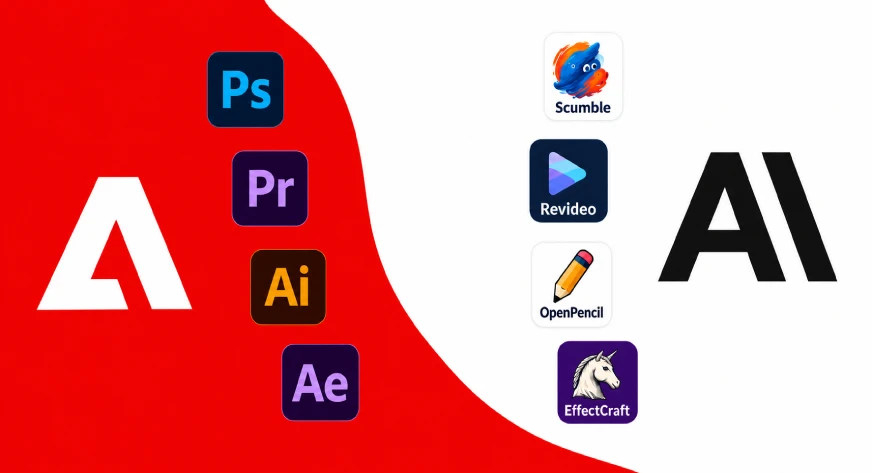
The subscription model has quietly turned our software stack into a monthly tax on productivity, and it's worth asking why we keep paying it. The growing catalog of free, open-source alternatives for image editing, project management, and document signing isn't just a budget hack; it's a statement about ownership and control. As AI tools become more embedded in our daily workflows, the same logic applies: if you don't control the tool, you don't truly control the process. That's the thread that connects this practical list of free software to the bigger conversation about Why your next insider threat might come from an AI agent and the choices we make about which systems we trust with our data.
For most users, the barrier to open-source adoption isn't capability; it's familiarity. We stick with paid tools because they're comfortable, not because they're irreplaceable. The alternatives highlighted here offer greater flexibility and fewer recurring bills, but the real advantage is transparency. When you can inspect the code, you understand exactly what your software does, a level of clarity that becomes increasingly valuable as AI agents start making decisions on your behalf. This matters more than ever when you consider the guidance in How to choose the right AI tool by asking what keeps your LLM in check, where the focus is on accountability and oversight rather than flashy features.
The practical takeaway is straightforward: you don't need to abandon your current stack overnight, but you should start evaluating where open-source options genuinely outperform their paid counterparts. For a solo freelancer or a small team, replacing a $20-per-month image editor with a free alternative that does 90% of the job frees up capital for tools that actually matter, like specialized AI services or better infrastructure. The flexibility argument is even stronger. Proprietary software often dictates how you work, while open-source tools adapt to your workflow, not the other way around. This is the same principle behind the rise of AI agents that call restaurants for you or handle routine tasks, as seen with Yelp's AI now calls restaurants for you to get real-time wait times: automation is only useful when it fits into your life, not when it forces you to change your habits.
What we're really talking about is agency. Open-source software gives you the freedom to modify, share, and understand the tools you depend on, and that's a form of empowerment that no paid subscription can match. The question to watch is whether the broader market responds by making proprietary tools more flexible or by doubling down on lock-in. For now, the smart move is to test one open-source alternative this quarter, not as a replacement, but as a benchmark. Measure how it performs, how much you save, and whether you feel more in control. The answer will tell you more about your software needs than any feature comparison ever could.