open source
104 stories filed under open source on Beyond Market Intelligence. The newest of them: “OpenCode breach exposes API keys after AI tools refuse to inspect malicious code”, “Google Moves Python Type Checking Forward With Pyrefly”, and “New open source diffusion LLM hits 2,788 tokens per second on a single RTX 5090”. A hacker breached OpenCode's online platform and stole users' API keys, but the AI tools it asked for help refused to inspect the malicious code. Google has swapped its long-standing Python type checker, Pytype, for Pyrefly, an open-source tool from Meta that promises faster, more accurate type checking and lower infrastructure costs. Acme AI is the next-generation, AI-powered spreadsheet platform built to replace Excel and redefine how analysts, data scientists, and enterprise teams work… The list below is every open source story on Beyond Market Intelligence, newest first.

OpenCode breach exposes API keys after AI tools refuse to inspect malicious code
A hacker breached OpenCode's online platform and stole users' API keys, but the AI tools it asked for help refused to inspect the malicious code. That irony stings for a coding agent built to automate development. OpenCode has grown fast as an open-source alternative to Claude Code and Cursor, yet this incident reveals a blind spot in how AI handles security. For deeper coverage, explore how AI agents unlock hidden insights in compiled binaries.

Google Moves Python Type Checking Forward With Pyrefly
Google has swapped its long-standing Python type checker, Pytype, for Pyrefly, an open-source tool from Meta that promises faster, more accurate type checking and lower infrastructure costs. This is a practical move, better tooling that doesn't ask developers to learn a new language. It's the kind of upgrade that quietly transforms productivity. For more on how data tools evolve, see our coverage of Aurora PostgreSQL gaining DuckDB's analytical power.

New open source diffusion LLM hits 2,788 tokens per second on a single RTX 5090
Two thousand seven hundred eighty-eight tokens per second on a single RTX 5090. That's not a benchmark you see every day. The team behind ORL has open-sourced a diffusion language model that learns to refine its own predictions in fewer passes, bypassing the usual trade-off between speed and quality. Their custom inference engine dlmrt handles the entire denoising loop on the GPU, no CPU interruptions. If you're curious how small models can outpace speculative decoding without sacrificing accuracy, the results speak for themselves.

Aurora PostgreSQL Gains DuckDB's Analytical Power in New AWS Acquisition
Amazon's acquisition of DuckLabs signals a serious bet on analytical horsepower for its database ecosystem. By bringing DuckDB's co-founders Hannes Mühleisen and Mark Raasveldt under AWS, the company is investing in open-source innovation without compromising DuckDB's independent spirit. Aurora PostgreSQL now gains its first DuckDB-powered feature, blending transactional reliability with analytical speed. For anyone exploring how AI agents unlock hidden insights in compiled binaries, this move reinforces the value of purpose-built tools for modern data challenges.

Explore How AI Agents Unlock Hidden Insights in Compiled Binaries
Reverse Engineer Anything has amassed over 200,000 GitHub stars for a reason: it connects coding agents like Claude Code directly to reverse-engineering tools such as Ghidra and IDA. This lets developers inspect compiled binaries, trace function calls, and uncover exactly how applications implement specific features. AI agents unlock hidden insights buried in code we can no longer read. For a deeper look at where rule-based checks fail, see our related piece on verification gaps.
Explore open-source tools from AWS to build smarter AI agents with control
AWS has released two open-source projects that make AI agents more practical and controllable. Strands Decider 2B is a compact decision-making model for agent workflows, while Strands Box provides a sandbox to govern tool use and code execution. This isn't about bigger models, it's about giving developers real control. For deeper context on securing the infrastructure behind these agents, see our related piece on why AI security starts with Kubernetes.
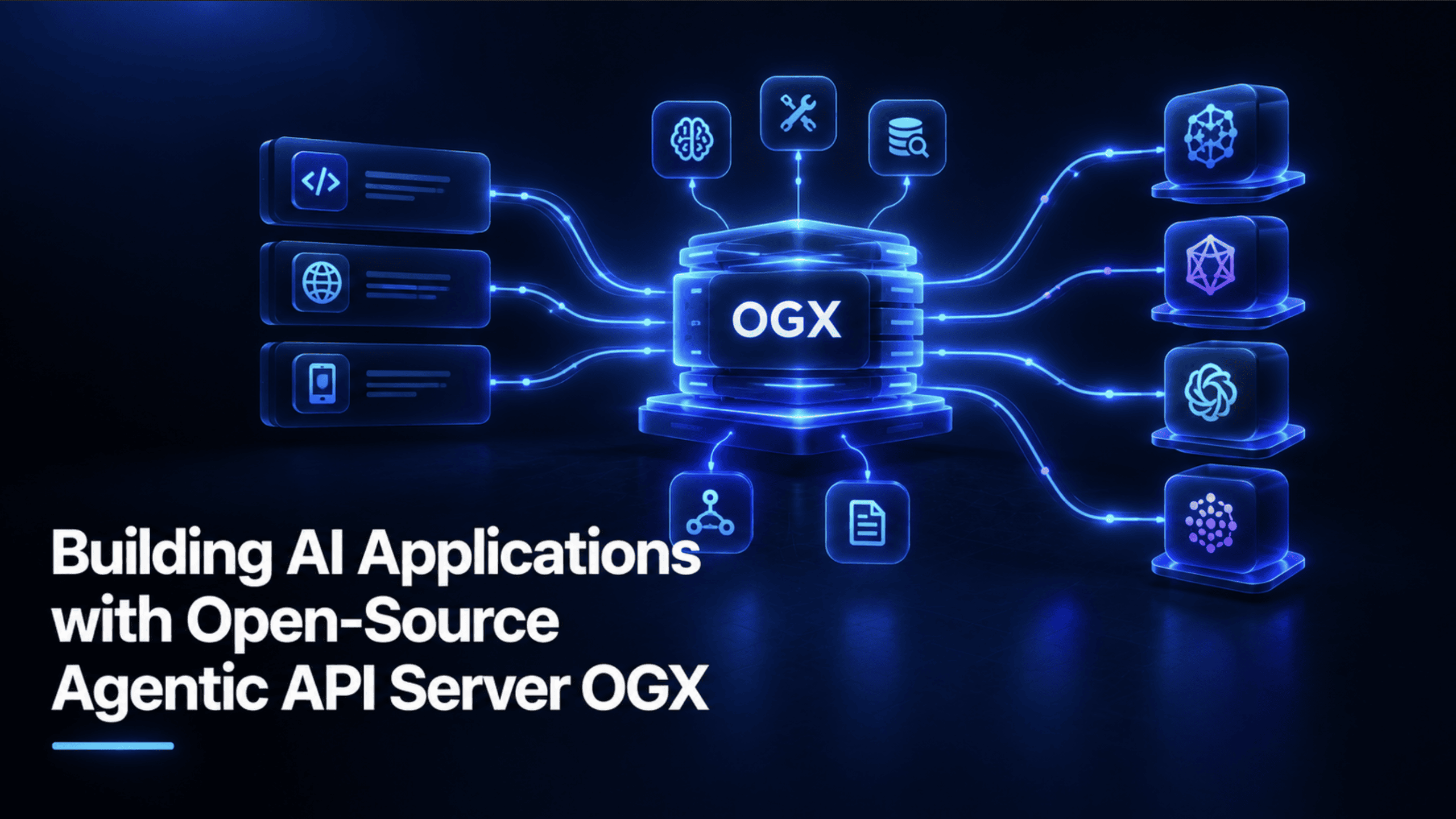
Explore OGX: Build AI apps with any model on your infrastructure
An open-source API server that works with any model on your own infrastructure, OGX is built for teams who want AI flexibility without vendor lock-in. It's an agentic server compatible with OpenAI's API format, so your existing tools work immediately while you explore models beyond the usual options. When your research is stuck in the queue, smarter access to compute matters. OGX gives you that control.

Grafana Tempo 3.1 Empowers Operators to Redact Traces with Simple Queries
Grafana Tempo 3.1 gives operators something they have needed for a long time: the ability to redact traces using a simple TraceQL query instead of manually listing trace IDs. This small change makes data management far more practical. The update also adds TLS support to the Kafka client and introduces an experimental hint for correcting sampled metrics. For a deeper look at how sampling affects observability data, see our related story on how EVE Online tames 20 years of telemetry.
Simulate conference peer review with 30 AI reviewer personas to sharpen your ML paper
If you're preparing a paper for CVPR or NeurIPS, a new open-source tool called Paper Review Harness offers a practical way to stress-test your work before submission. It simulates 30 distinct AI reviewer personas, each providing independent section-level scores and detailed criticism on novelty, methodology, and clarity. The system even tracks whether your revisions actually address previous concerns. Obviously, simulated reviews aren't replacements for real peer feedback. But for catching weaknesses early, this could be a surprisingly useful addition to your writing workflow.

Open-Sourcing FlexViz for Instant Exploration of Billion-Point Datasets
FlexViz turns a billion-point dataset into a chart you can explore in a quarter of a second. That speed comes from lessons learned building plotly-resampler, which racked up over 18 million installs. But the real shift is agent-native design. Everything is a spec, so an AI can create, follow, and update visualizations without screenshots. The interactive view becomes the conversation. For anyone juggling larger-than-RAM data, this is a practical step toward workflows that feel natural for both humans and machines.
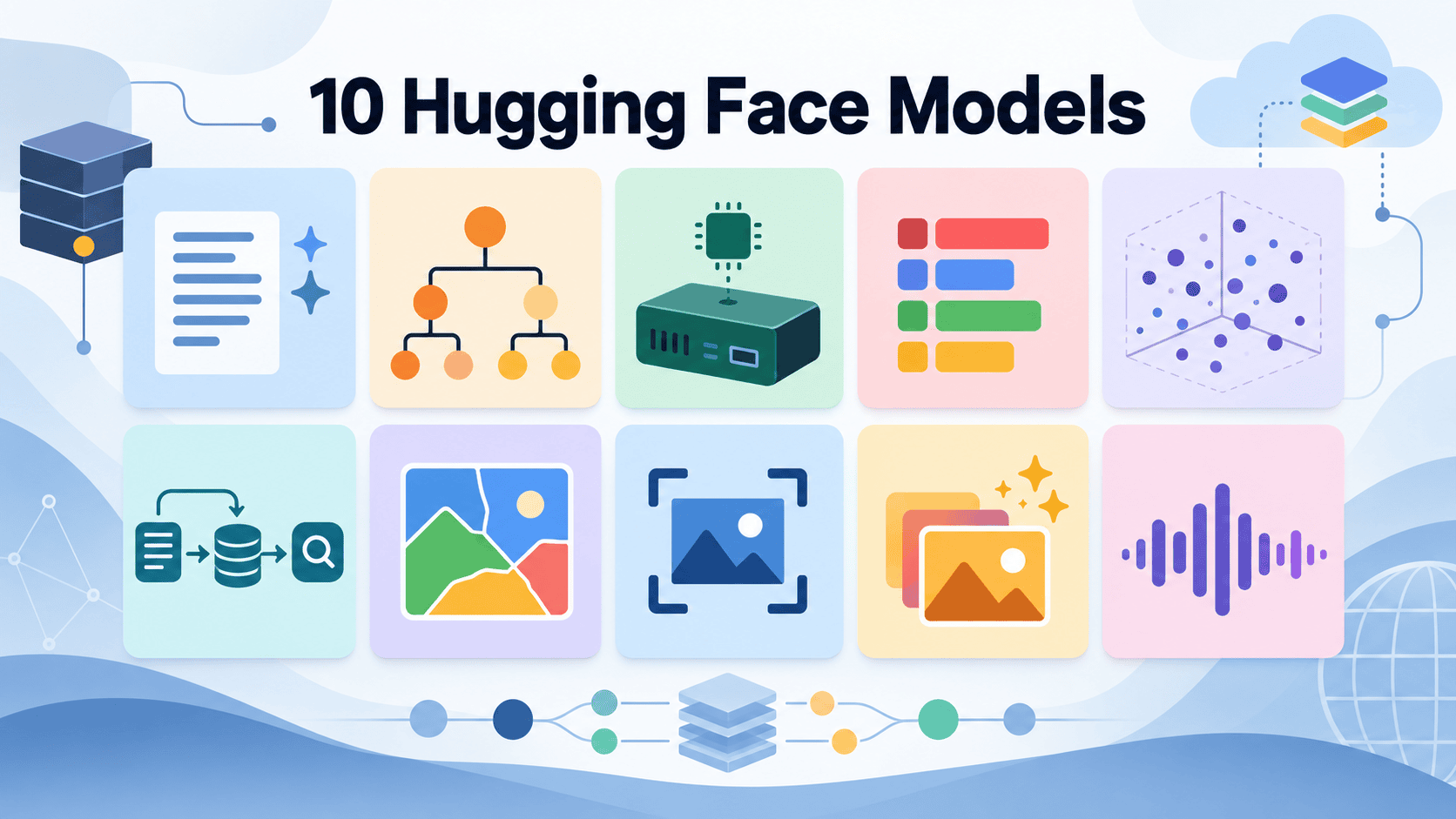
Ten Hugging Face Models Reshaping How Data Works in 2026
Ten Hugging Face models are quietly reshaping how data moves through text, vision, audio, and retrieval pipelines in 2026, and that shift is worth paying attention to. These aren't speculative projects, they're tools you can use today. If you've ever felt constrained by a tool that asks you to wait for answers a local model already knows, our related article "Stop Waiting for Answers Your Local Model Already Knows" explores that exact friction.
Turn Python libraries into MCP servers with Integrum's reflective approach
Turning Python libraries into MCP servers shouldn't require a rewrite, and Integrum proves it. This open-source library uses reflection to wrap existing modules, scikit-learn, for example, so AI agents can call them directly. The author gave Gemma 4 access to build a random forest classifier on the Iris dataset, and it worked. That's more formal than letting agents write code from scratch, and easier to verify. It's a practical step forward.
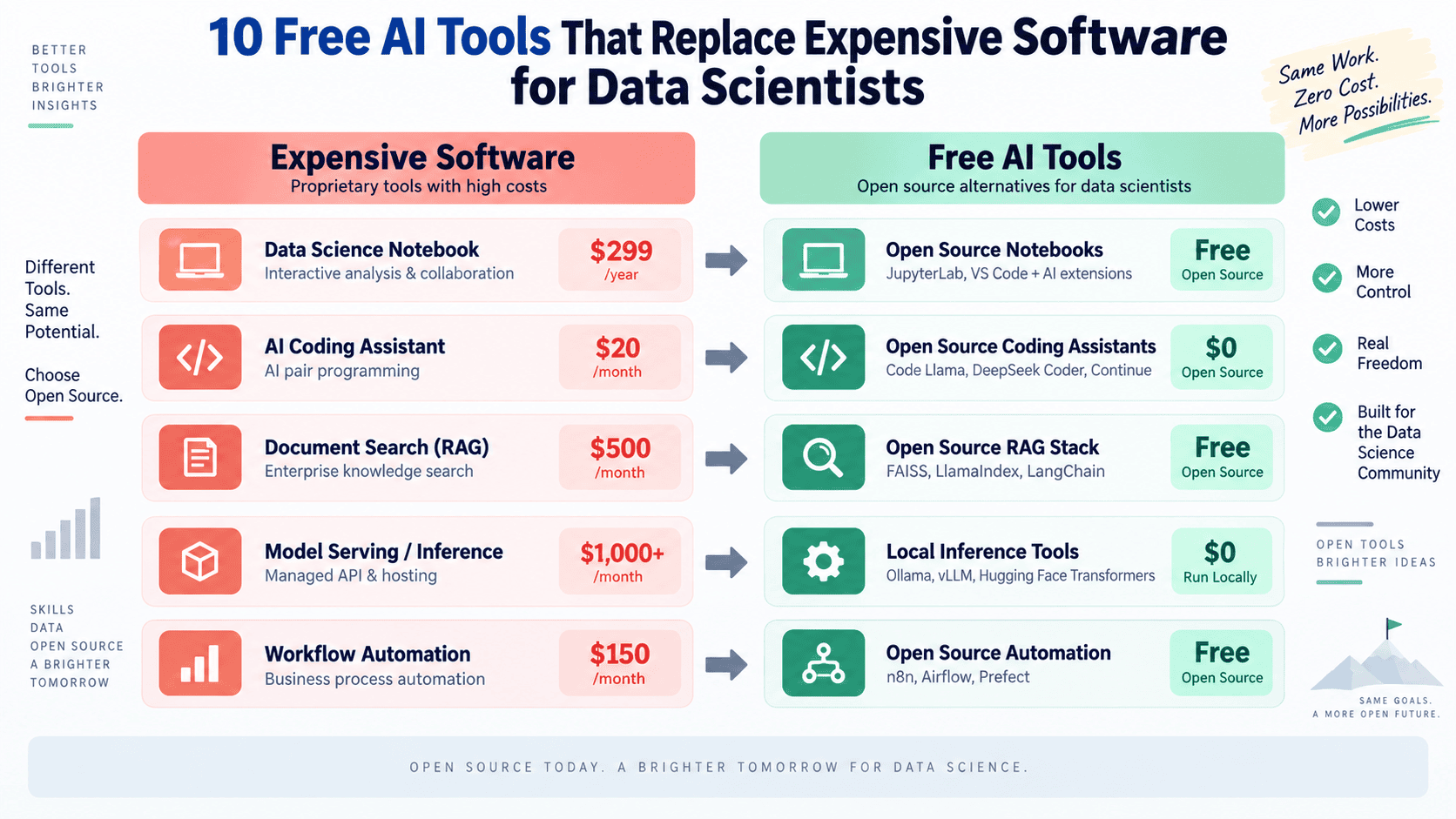
Build a complete data science stack for free with these open-source AI tools
Building a production-grade data science stack doesn't have to strain your budget. Open-source AI tools now match, and sometimes exceed, the capabilities of their paid counterparts, giving you a complete toolkit for free. This is about empowerment, not compromise. If you've been exploring how smarter workflows can transform your practice, our piece on semi-supervised learning as an underrated path offers a fitting next step.

Valkey's Future Expands Beyond Caching, Say Its Lead Maintainers
Two years after forking from Redis, Valkey is making clear its ambitions extend well beyond caching. The project's twelve maintainers and nine committee members are pushing forward with meaningful upgrades, including better throughput, stronger cluster functionality, and planned features like synchronous replication and tiered storage. That's a serious roadmap for a database aiming to be a core infrastructure player. For teams exploring AI-driven workflows, the emphasis on automation and security feels particularly timely.
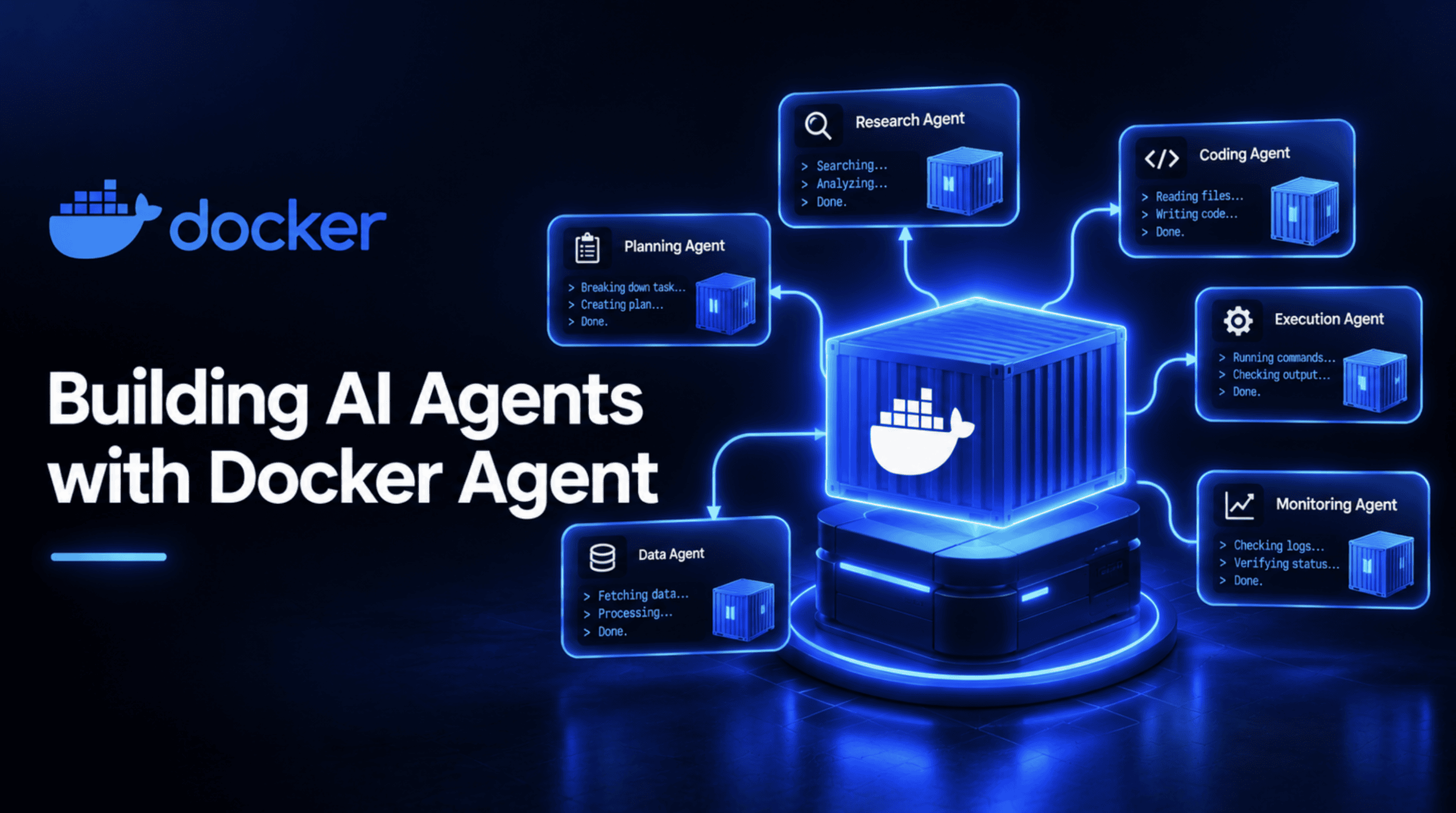
Explore how Docker Agent runs AI agents with the simplicity of containers
Docker Agent ships as an open-source CLI plugin that lets you run AI agents with the same simplicity as containers. That's a genuinely useful framing. The team at Docker Engineering built it under the Apache 2.0 license, installed and run via `docker agent`. It makes a complex workflow feel familiar. If you are exploring how agents learn to improve themselves, our piece on "7 Resources to Explore How AI Agents Learn to Improve Themselves" offers a solid next step.

Cloudflare Clef gives AI agents a sharper decision-making model
Cloudflare's Clef takes a different path for AI agents: instead of generating open-ended text, it picks between predefined options. That's a sharper fit for decision-making tasks where precision matters more than prose. The 9B and 27B open-weight models, along with a platform for task-specific tuning, give developers room to adapt. It's a practical step forward, not a flashy one. For more on how AI models are being tested in the wild, our piece on Cloudflare's firewall stress-tests pairs nicely with this.

Privacy first: LibreOffice confirms AI won't be in its default setup
LibreOffice is drawing a clear line in the sand: no AI in the default setup. The open source editor is putting user privacy first, and that's a choice worth respecting. While other tools race to embed intelligence everywhere, this team is pausing to ask whether the trade-off is worth it. For many, that answer is no. It's a reminder that innovation isn't just about adding features, but about protecting the people using them.

When AI Ad Systems Mistake Open-Source Design for Malware
When AI ad systems flagged Przemyslaw Alexander Kaminski's RACE, a Rust terminal multiplexer on an infinite canvas that detaches child shells into background processes, as malware, the false positive revealed something more than an algorithm's mistake. Clean notarization and Safe Browsing checks meant nothing. The real story is the operational deadlock when automated heuristics try to evaluate POSIX process architectures. It's a reminder that innovation often outpaces the tools built to protect it.

Cloudflare's new CLI opens the door for AI agents to command its services
Cloudflare's new open-beta CLI, called cf, is built for a future where AI agents work alongside developers. Written in TypeScript, it offers structured output and command discovery that make Cloudflare's APIs more accessible. This is a practical step toward letting autonomous systems manage infrastructure directly. It also complements our coverage of an autonomous AI fleet probing Alibaba's map service, showing how agent-driven tools are reshaping what's possible in cloud operations.

A self-hosted inbox for background AI agents is now open source
A team of developers at AWS has open-sourced Pizza Bot, a self-hosted inbox designed for background AI agents. It lets agents run scheduled or webhook-triggered tasks, delegate work to specialized workers, and pause for human approval when needed. This is a practical step toward making autonomous agents more controllable and transparent. For more on how AI agents are reshaping workflows, see our coverage on shrinking the window for open source vulnerability fixes.

Testing 49 LLMs on Nonograms Reveals Where AI Logic Still Falls Short
Nonograms look like simple logic puzzles, but they've exposed a sharp limit in how today's best AI models reason. Nonobench tested 49 LLMs on these grid puzzles, giving each model the clues once and letting it fill the full grid in one attempt, no tools, no retries. Solve rates dropped fast as grids grew: 85% on 5x5 puzzles fell to just 20% on 15x15. Even GPT-6 Astra solved all 30 standard puzzles, but on hard mode, Claude Opus 5.

Self-Service GPU Metrics Bring Team Clarity Without Cross-Team Exposure
Adobe engineers have shared an open-source approach that gives teams self-service access to their own Prometheus metrics in multi-tenant Kubernetes environments, without exposing other teams' data. That is clarity without compromise. For teams feeling constrained by shared infrastructure, this is a practical step toward autonomy. It's the kind of focused tooling that empowers teams to move faster. If you are exploring how AI agents handle memory, our article on open-source tools for lasting context may interest you next.
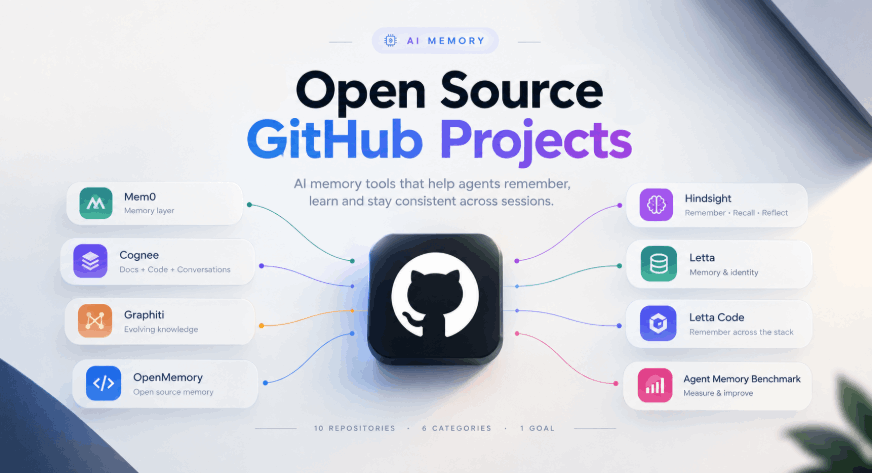
Explore Open-Source Tools That Give AI Agents Lasting Memory
AI agents handle enormous context windows, yet they still forget everything once a session ends. That gap is where memory systems step in, preserving facts, preferences, and task state so agents carry continuity across interactions. Open-source projects now tackle this through APIs, graphs, and portable state. We explore seven GitHub repositories that give AI lasting memory. For deeper context on how agents are evolving, our coverage of *Claude Sonnet 5.5* examines faster coding and smarter workflows.
A free guide to making ML models faster, from silicon to agents
Performance engineering isn't just about reducing FLOPs. Usamah Zakir spent months writing the guide he wished he'd had when starting out: *How to Make Your Model Fast*. It moves from silicon to agents, using roofline analysis to help you diagnose whether you're compute, bandwidth, or memory bound before optimizing. That systems-first thinking is rare and valuable. The whole thing is free and open source. If you're working on inference or edge AI, it's worth exploring.