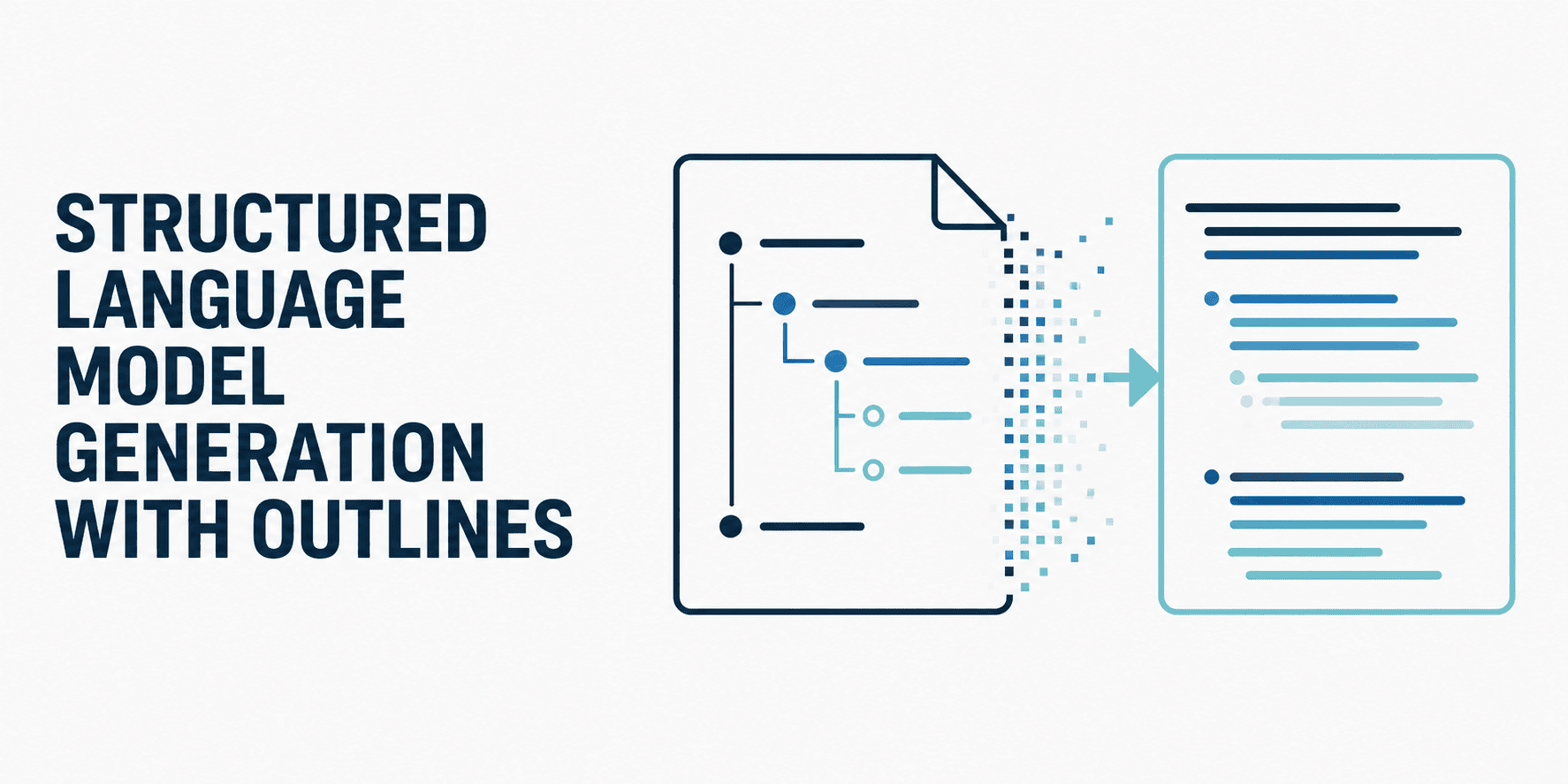
There is a persistent tension at the heart of large language models: they are celebrated for their fluency, yet that same generative freedom often becomes a liability when you need a specific, structured answer. Outlines, the open-source library at the center of this discussion, directly confronts that tension by introducing deterministic certainty into the generation process. Instead of hoping the model stumbles upon the right format, Outlines constrains the output to follow a predefined structure, whether that is JSON, a SQL query, or a specific code schema. This is not a minor tweak; it is a fundamental shift in how we approach reliability with these tools.
For anyone who has wrestled with getting a model to consistently output a clean array of objects, the practical relief here is immediate. The typical workaround involves repeated prompting, fragile parsing, and a silent prayer that the model does not add an extra comma or a stray explanatory sentence. Outlines removes that entire category of friction. It does not make the model smarter, but it makes the system more dependable. In our view, this is the difference between a demo and a product. A model that occasionally follows instructions is a curiosity; a model that *must* follow a schema is infrastructure. This dovetails with broader efforts to make AI more grounded in verification and to reduce hallucination through constraints, and it is a trend we expect to accelerate as teams move from chat experiments to production pipelines.
That said, we would caution against reading this as a limitation on the model's creativity. Rather, it is an acknowledgment that not every task benefits from infinite possibility. When you are building a tool that feeds data into a downstream application, you do not want variation; you want certainty. Outlines gives you that by letting you define the shape of the answer, then enforcing it with a grammar or a regular expression. For a developer, this means less time babysitting outputs and more time building features. For a business user, it means the difference between a dashboard that works and a dashboard that occasionally breaks. The library does not claim to solve all of AI's problems, but it solves a specific, painful one with elegance and speed.
If a reader asked us whether they should pay attention to this, our answer would be a direct yes, but with a caveat. The tool is powerful, yet its real value is unlocked only when you pair it with a clear understanding of your own data requirements. Do not use it as a crutch to avoid thinking about your prompt design; use it as a scalpel to enforce the structure you already know you need. The most interesting question to watch now is not whether Outlines works, but how the community will extend this pattern beyond simple JSON generation to more complex, nested schemas and multi-step reasoning tasks. That is where the next wave of productivity gains will come from, and it is a detail we will be tracking closely.