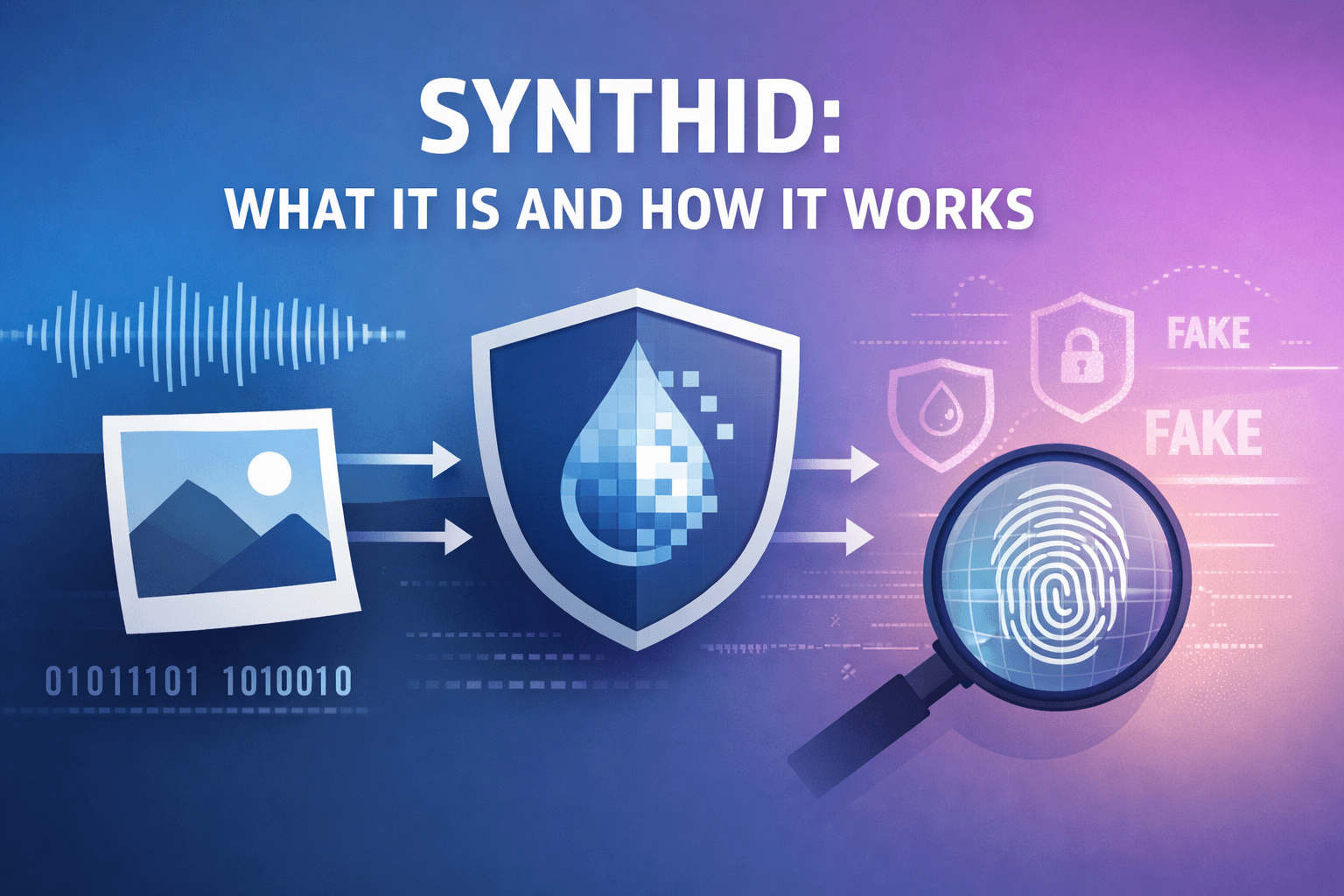
We think SynthID is the most practical answer yet to a question the industry has been dodging: how do we label AI-generated content without breaking the user experience? The invisible watermarking approach embeds a digital signature directly into text, images, audio, and video, so subtle that it doesn't degrade quality, yet persistent enough that it can be verified later. For anyone who has watched AI-generated imagery flood social feeds or read synthetic articles that read just like human writing, this matters. It gives you a way to check what you're seeing without relying on a platform's honesty or a user's self-disclosure.
Here is what this means for you in practical terms. If you produce content, whether you are a marketer, a journalist, or a creator, SynthID offers a tool to prove provenance. That is valuable when a client questions whether an image was generated or when an editor wants to confirm that a story's data visualizations came from a legitimate source. For consumers, the benefit is subtler but real: you can eventually install a browser extension or use a verification service to see if the content you are reading has an invisible watermark. No clunky metadata tags that get stripped when someone screenshots. No blockchain registry that requires a separate app. The watermark travels with the content.
The design choices here are worth noting. SynthID does not rely on visible markers, which users often crop out or ignore. It does not require a centralized database that could be hacked or taken offline. Instead, it uses a cryptographic approach that survives compression, resizing, and re-encoding. That means a video clip shared on WhatsApp or a meme saved from Twitter still carries the watermark. This is not a theoretical solution; it works across the formats that matter most today. The trade-off is that verification still requires access to the detection tool, which limits its use to those who know to look. But that is a problem of adoption, not of the technology itself.
The real test will come when bad actors try to strip the watermark or when generative models evolve to produce content that resists embedding. SynthID is not a silver bullet. No watermarking system is. But it is the first approach that balances invisibility, durability, and scalability well enough to deploy at the volume AI content is being created. That is the concrete point: SynthID gives us a baseline we can build on. It does not solve the authenticity crisis overnight, but it gives us a starting point that does not ask users to sacrifice clarity or trust. Start exploring how it works now, because the next wave of AI content will not wait for us to catch up.