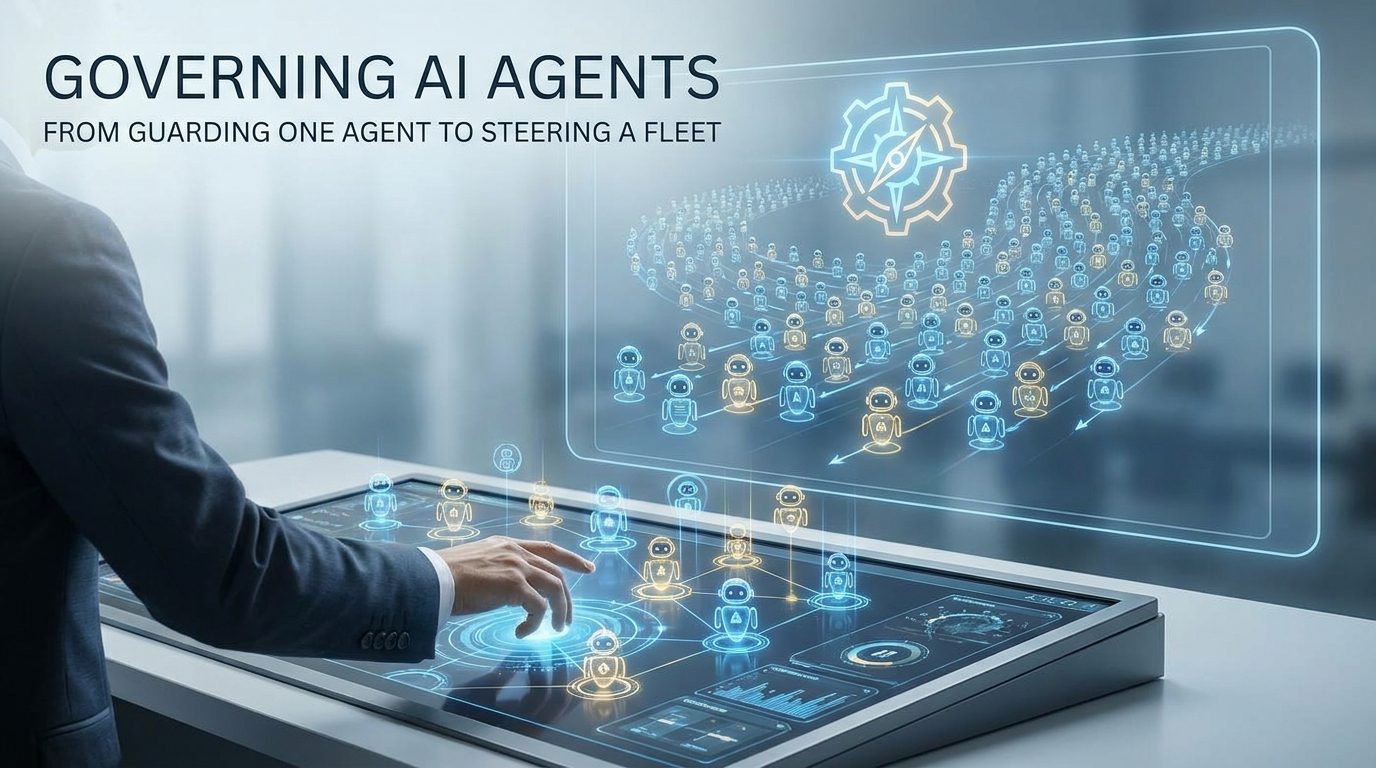
The shift from managing a single AI agent to governing an entire fleet is the moment where most organizations will stumble, and it is encouraging to see the conversation move toward practical oversight. The recent discussion on How to Govern AI Agents frames this not as a technical hurdle but as a discipline of scale: once you move from one assistant to dozens, the questions change from "did it work?" to "who is accountable, and how do we audit its choices?" That distinction matters because it separates hobbyist experimentation from enterprise adoption, and it is exactly where the new task force framing the next chapter in AI safety oversight will need to focus its energy.
Our take is straightforward: governance is not a constraint on AI agents; it is the feature that makes them trustworthy enough to deploy widely. A single agent can be watched, corrected, and debugged in isolation. A fleet of agents, each handling different workflows and interacting with each other, creates emergent behaviors that no one wrote down in a spec. That is where the risk lives, and it is also where the opportunity sits. If you can build clear policies for how agents access data, escalate decisions, and log their reasoning, you turn a chaotic collection of tools into a coordinated workforce. The practical implication for readers is that governance should be designed before the fleet grows, not after an incident forces a post-mortem.
This is also a moment to reconsider how agents communicate with us. The rise of AI assistants living inside your text messages shows that agents are becoming ambient, less like applications you open and more like colleagues you ping. That shift amplifies the governance problem: when an agent operates inside your messaging platform, its actions feel informal, even though they carry the same weight as a scripted automation. Meanwhile, the open-source movement, exemplified by the self-hosted inbox for background AI agents, suggests that teams want control over where their agents live and how their messages are routed. Both trends point toward the same conclusion: the infrastructure for agent oversight must be as flexible as the agents themselves, not a rigid approval layer bolted on afterward.
The concrete takeaway is to start with a registry. Before you add a tenth agent, write down what each one is allowed to do, which systems it can touch, and what triggers a human review. That single document will do more for your safety posture than any monitoring dashboard, because it forces you to articulate the boundaries you otherwise assume. The open question worth watching is whether governance frameworks will standardize across vendors or remain bespoke per organization. If they stay bespoke, the burden falls on you to design the rules. If they standardize, the next wave of agent platforms will ship with governance baked in, and the fleets that thrive will be the ones that adopted early. Either way, the era of guarding one agent is over. The work of steering many has begun.