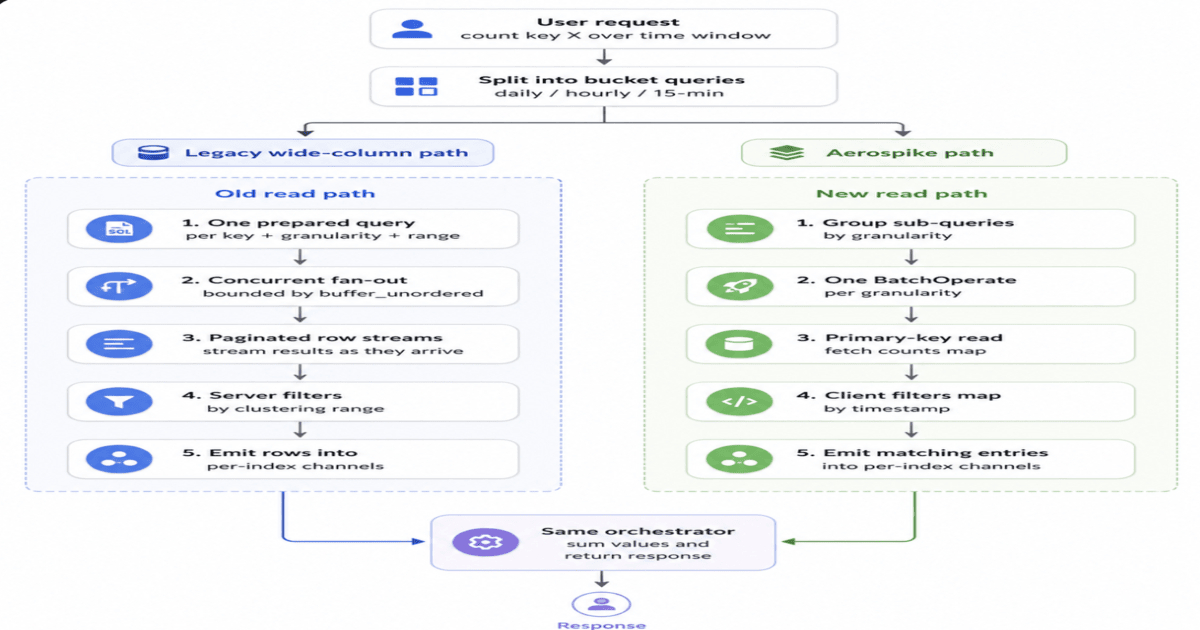
Grab's migration away from a wide column database for its Counter Service is a masterclass in treating infrastructure as an evolving system rather than a fixed monument. The headline numbers, roughly 50% lower production p99 read latency, a drop from 3 TB to 1 TB of disk usage, and a 45% to 50% reduction in cost per node, are impressive. But the real story is the discipline behind the shift. Grab didn't just swap one database for another; it redesigned the data model, consolidating time buckets into map-based records, and leaned on storage abstraction, shadow traffic, and data parity validation to de-risk the move. This is how mature engineering teams operate, and it offers a practical blueprint for anyone feeling the pinch of legacy infrastructure.
For readers wrestling with their own data bottlenecks, the takeaway is that the database itself is rarely the only problem. The way you model the data inside it often matters just as much. Grab's approach of validating parity before fully committing to the new system is particularly instructive. It acknowledges a truth many vendors gloss over: migration is not a switch-flipping event but a gradual, verifiable process. This echoes the philosophy behind From demo to production: build Python AI libraries that deliver, where the gap between a working prototype and a reliable production system is bridged by rigorous engineering, not just clever code. The same principle applies here: abstraction layers and shadow traffic are the production-grade equivalents of unit tests for your data infrastructure.
What makes this migration feel progressive rather than merely reactive is the consolidation of time buckets into map-based records. It's a subtle but smart acknowledgment that the shape of your data should match how you actually query it. This kind of thoughtful redesign is what separates a genuine transformation from a superficial upgrade. It also aligns with the spirit of Faster chunking in Rust without sacrificing accuracy, now open source, where performance gains come from a deep understanding of the underlying mechanics rather than throwing more hardware at the problem. Both stories reward a closer look at the structure of your workload before reaching for a larger hammer.
The cost reduction is the part that should catch the attention of any budget-conscious team. A 45% to 50% lower cost per node is not incremental savings; it's a fundamental shift in the economics of running that service. But the open question remains: how transferable is this playbook? Grab's success depended on a specific workload and the ability to invest in custom validation tooling. For smaller teams, the engineering effort might feel prohibitive. Still, the core lesson is universal. Before you accept the latency and storage costs of your current setup, ask whether your data model is doing the heavy lifting or just getting in the way. The answer might not require a new database at all, but a smarter look at the one you already have. The specific detail to watch is how Grab handles the next wave of traffic growth on this new model, because that will reveal whether the map-based consolidation scales as gracefully as it performs today.