How I’m Using Google Opal for Even More AI Automations
Our take
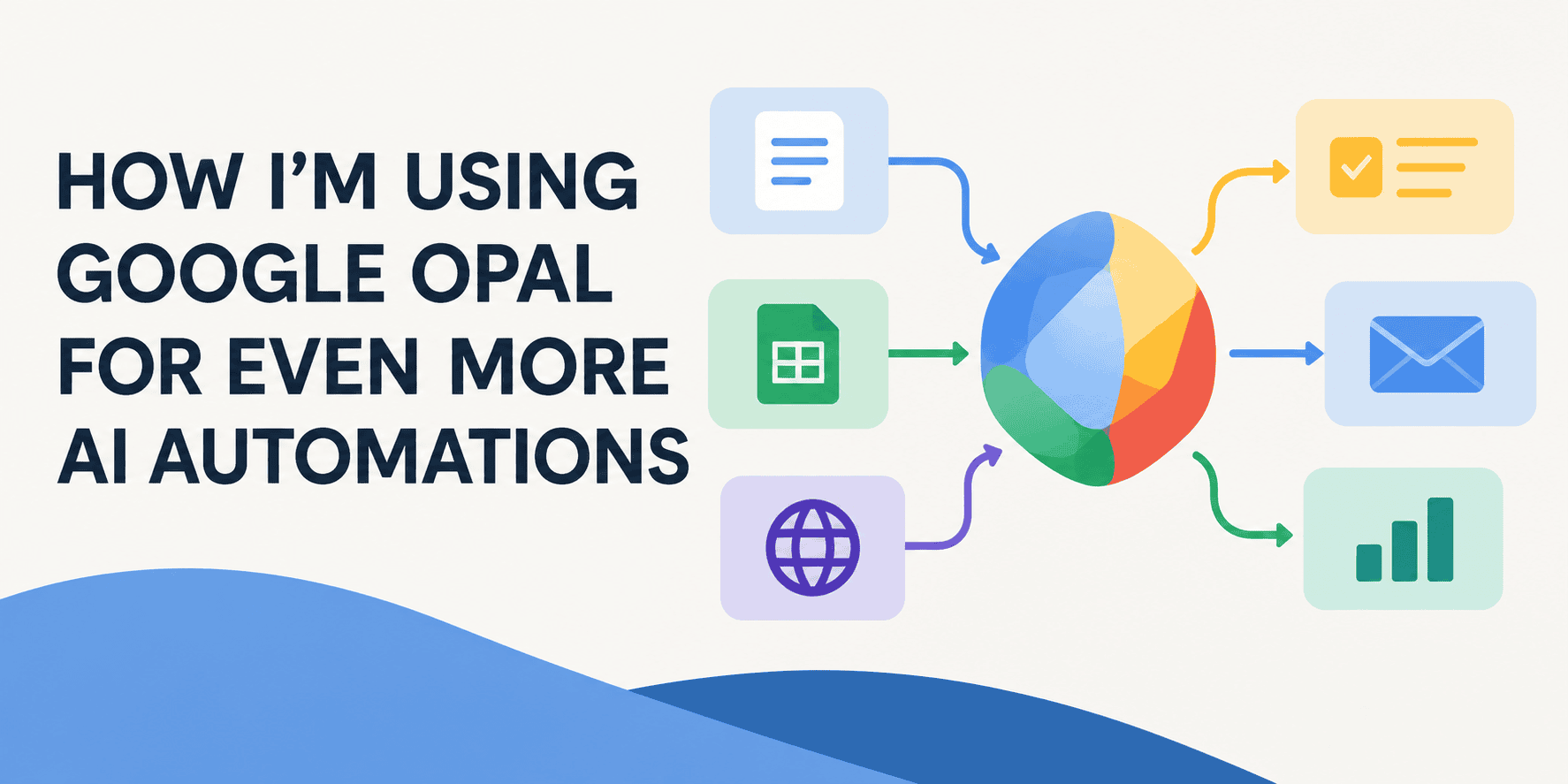
The emergence of tools like Google Opal, detailed in "How I’m Using Google Opal for Even More AI Automations," signals a significant shift in how organizations approach AI integration. Opal’s no-code nature, built on Google’s internal Breadboard framework, democratizes access to AI capabilities, moving beyond the realm of specialized engineers and empowering a wider range of users to automate tasks and build custom AI mini-apps. This echoes trends we’ve observed in other areas of data management and AI orchestration. For instance, the focus on agent orchestration as explored in Orchestration and Execution: How JONI Approaches the Agent Layer highlights the growing need for robust frameworks to manage increasingly complex AI workflows. Similarly, Atlassian’s approach to automating root cause analysis, as outlined in Atlassian Automates Root Cause Analysis by Correlating Metrics, Logs and Traces, demonstrates the practical application of AI in streamlining operational processes, and Grab's LLM-Kit, detailed in Grab's Agent Framework LLM-Kit Accelerates AI Agent Production Deployment, exemplifies how standardization can accelerate the deployment of AI agents at scale. Opal fits neatly into this broader ecosystem, offering a user-friendly entry point for those seeking to harness the power of AI without extensive coding expertise.
The key to Opal's potential lies in its ability to lower the barrier to entry for AI experimentation and automation. Historically, building AI-powered solutions required significant investment in specialized talent and complex infrastructure. Opal’s no-code interface allows individuals and teams to rapidly prototype and deploy AI applications, accelerating the innovation cycle and fostering a culture of experimentation. This shift is particularly impactful for businesses struggling to bridge the gap between their data and actionable insights. By enabling users to translate natural language requests into functional AI applications, Opal can unlock hidden efficiencies and automate tedious tasks, freeing up valuable time and resources for more strategic initiatives. It’s a pragmatic approach to AI adoption, prioritizing practical application over theoretical complexity. The success of similar frameworks underscores the growing demand for accessible AI tooling.
However, the rise of no-code AI tools also presents challenges. While Opal simplifies the development process, it's crucial to acknowledge that AI models, even those deployed through no-code platforms, still require careful training, validation, and ongoing monitoring. Ensuring data quality, addressing potential biases, and maintaining model accuracy remain paramount concerns. Furthermore, while Opal empowers individual users, organizations need to establish clear governance frameworks and best practices to ensure responsible AI deployment across the enterprise. The ease of creation shouldn’t overshadow the need for robust oversight and ethical considerations. The focus should be on empowering users *effectively*, not just *easily*. The value proposition isn't simply building *something*, but building *something useful and reliable*.
Ultimately, Google Opal represents a compelling step towards a future where AI is an integral part of everyday workflows, accessible to a broader audience than ever before. It's a testament to the evolving landscape of AI development, where the emphasis is shifting from complex engineering feats to user-friendly tools that empower individuals and organizations to leverage the transformative power of AI. As Opal matures and its capabilities expand, a critical question emerges: how will organizations adapt their workflows and skillsets to fully capitalize on this new era of accessible AI, and will the ease of use lead to a proliferation of poorly-trained or maintained AI solutions, necessitating new levels of AI governance and oversight?
Read on the original site
Open the publisher's page for the full experience