automation
automation at Beyond Market Intelligence is a file of 254 stories. The newest of them: “How to choose the right AI tool by asking what keeps your LLM in check”, “Pinpoint the bug: Odin reads your report and shows the file to fix”, and “Reimagining the workplace where AI handles tasks so people can lead”. The moment you trust an LLM to act on your behalf, you need a clear answer to one question: what stops it from disobeying? Paste a bug report into Odin and it pinpoints the exact file, 93% of the time, and the specific function, 79.4% of the time. Acme AI is the next-generation, AI-powered spreadsheet platform built to replace Excel and redefine how analysts, data scientists, and enterprise teams work… The list below is every automation story on Beyond Market Intelligence, newest first.
How to choose the right AI tool by asking what keeps your LLM in check
The moment you trust an LLM to act on your behalf, you need a clear answer to one question: what stops it from disobeying? Spec-driven test automation offers a practical answer. By defining precise expectations before the model acts, you create a guardrail that keeps AI focused and accountable. It's a shift from hoping an LLM behaves to knowing it will. For more on AI risk, explore our piece on why your next insider threat might come from an AI agent.
Pinpoint the bug: Odin reads your report and shows the file to fix
Paste a bug report into Odin and it pinpoints the exact file, 93% of the time, and the specific function, 79.4% of the time. This isn't another cloud-dependent AI tool. It runs mostly in your browser using local models, keeping your code private while matching the accuracy of far heavier agents. That efficiency is what stands out. If you've ever felt buried by debugging, this is worth exploring.

Reimagining the workplace where AI handles tasks so people can lead
Amjad Masad sees a future where AI agents handle the daily grind so people can focus on real decisions. He calls them "self-driving companies." It is a compelling vision, one that reframes productivity not as doing more tasks, but as leading with purpose. If the idea of automation freeing human potential resonates, read how Waymo brings self-driving tests to Toronto streets this year for a real-world look at AI taking the wheel.
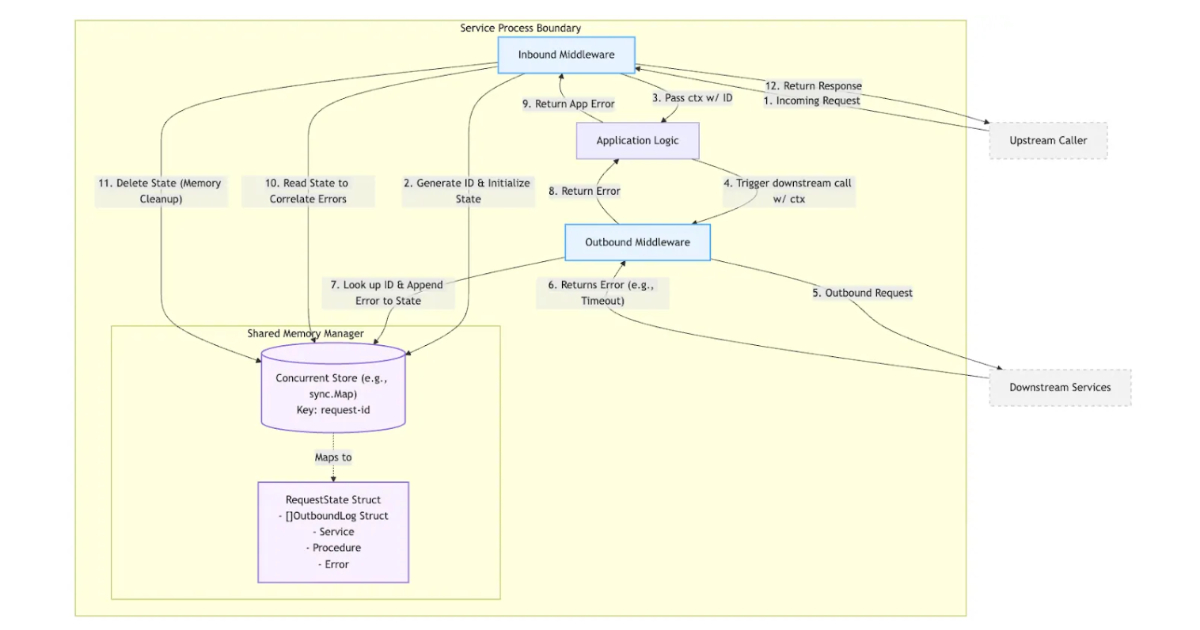
Uber's dependency analysis moves beyond sampled tracing to classify failure types
Uber's dependency analysis moves beyond the limits of sampled tracing, which can miss rare failures across a sprawling service mesh. By using RPC middleware and production metrics, the system classifies dependencies as fail-close, fail-open, or unknown. This approach is a practical step forward for engineers tired of guessing which downstream service caused an outage. For more on how platforms manage complex infrastructure, see our coverage of Grafana Tempo 3.1, which empowers operators to redact traces with simple queries.

Ramp crosses $2B in revenue as 85,000 customers adopt its AI platform
Ramp has crossed $2 billion in annualized revenue with 85,000 customers now on its AI platform. That scale signals something worth paying attention to. Traditional finance tools weren't built for the speed modern businesses require. Ramp's approach turns that constraint into an opportunity. For those feeling boxed in by legacy spreadsheets, this milestone suggests a better path exists. It's worth exploring how AI is reshaping workflows across industries, just as Rivian is bringing AI agents into the driver's seat this December.

Figma opens its platform to agents and expands code access in beta
Figma is opening its platform to agents and expanding code access in open beta, a move that signals a more connected, programmable future for design tools. The code layers feature, now widely available, lets teams work closer to production without leaving the canvas. It's a practical step toward bridging design and development. For deeper context on how AI agents are reshaping industries, see our related piece on Apate.ai sending agents undercover to study scam operations.

Explore how AI-designed chips can accelerate the future of computing
A startup is teaching AI to design chips, learn from each iteration, and improve the next one. The goal is to automate and accelerate chip design itself. This isn't about incremental upgrades; it's about rethinking the process from the ground up. If AI can master its own hardware, the future of computing gets faster, smarter, and more efficient. For more on how platforms are evolving, see our piece on Figma opening its platform to agents.

AI agents go undercover to learn how scammers operate from the inside
Most companies deploy AI agents to ship products faster. Apate.ai sends them undercover to get scammed. The agents embed themselves inside fraudulent operations, learning how scammers work from the inside. It's a clever inversion of the technology's usual role, not acceleration, but observation. The approach is practical and human-centered: understanding the enemy before building defenses. For a deeper look at how disciplined engineering shapes AI behavior, our piece on giving AI-generated code room to grow pairs naturally with this work.

Factory robots retrain in minutes, not weeks, for delicate assembly tasks
Factory robots can now retrain for delicate assembly tasks in minutes, not weeks. Industrial Next is solving a real problem: automating complex work that has long required human hands. This isn't about replacing people, it's about empowering manufacturers to move faster. If you're curious about how technology reshapes established industries, you might also enjoy learning how Apple reframes the smart home with its newest connected display.
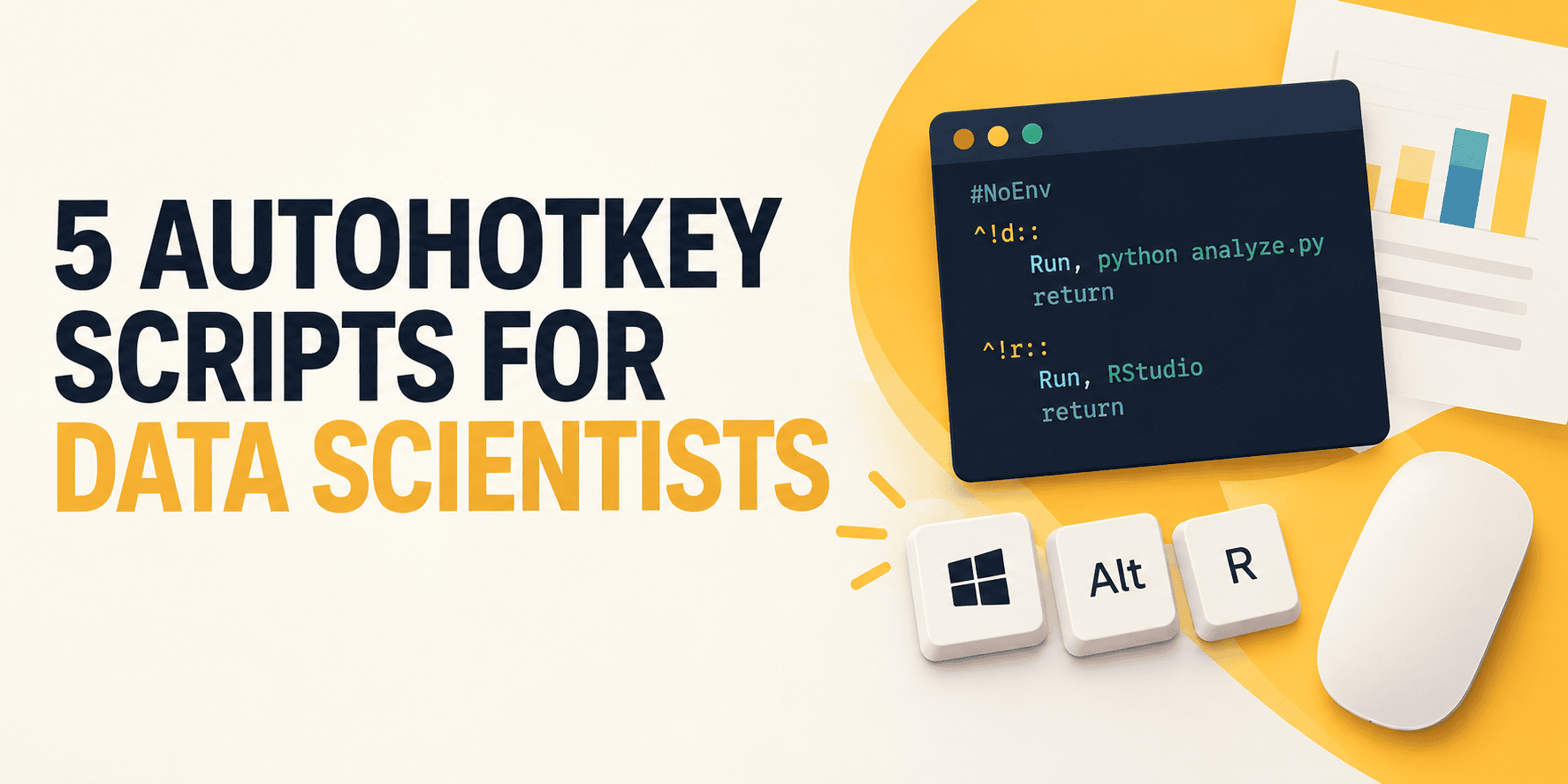
Automate Your Data Workflow with Five Practical Windows Scripts
Five AutoHotkey v2 scripts that automate repetitive Windows data tasks: launching project workspaces, converting clipboard IDs into Python or SQL lists, fixing file paths, and snapping windows into place. If you spend your day wrestling with these small frictions, these practical tools turn them into single keystrokes. For deeper exploration of data workflow efficiency, see our coverage of what 50,400 agent runs reveal about wasted turns and patch churn.

Efficiency Matters: What 50,400 Agent Runs Reveal About Wasted Work
Fifty thousand four hundred agent runs. That is the scale of evidence behind a simple question: how much of that work was wasted? Real repositories, seeded decisions, and a clear pattern of churn across turns and patches. The findings point to harness rules that genuinely reduce friction, not just theory. Efficiency is not about speed alone. It is about knowing which actions matter. For data scientists navigating similar tradeoffs, our guide on entering the field with confidence offers a practical starting point.
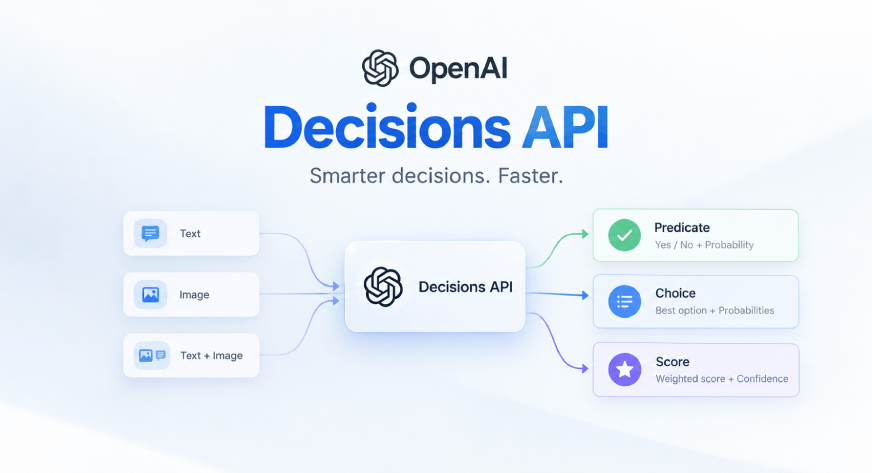
Make Smarter AI Agents That Know When to Escalate and When to Act
A false positive triggers an unnecessary escalation; a false negative lets a genuine issue slip through. That's the high-stakes calculus every decision-making AI agent must master. The new OpenAI Decisions API gives developers a structured way to handle exactly that, knowing when to act and when to hand off. It moves beyond simple classification into practical, context-aware judgment.

Six years in, Amy Ma refines the art of sorting recyclables
Six years in, Amy Ma has refined the art of sorting recyclables into something almost meditative. The Danu founder didn't set out to build a flashy gadget; she built a patient, practical system for a messy problem. That persistence matters. It echoes the quiet resolve we admire in builders who solve the unglamorous parts of daily life. If you're wrestling with your own workflow inefficiencies, her approach might inspire a different way forward.

CircleCI Automates Machine Runner Scaling to Match Workload Demand
Manual scaling has always been the hidden tax on self-hosted CI runners. CircleCI is removing that burden with the general availability of Machine Runner Orchestrator 1.0.0, which automatically matches your virtual machine footprint to actual workload demand. This is practical automation that lets teams stop babysitting infrastructure and start focusing on delivery. If you are exploring how AI-native tools are reshaping data and development workflows, our piece on building a complete data science stack with open-source tools offers a fitting next stop.
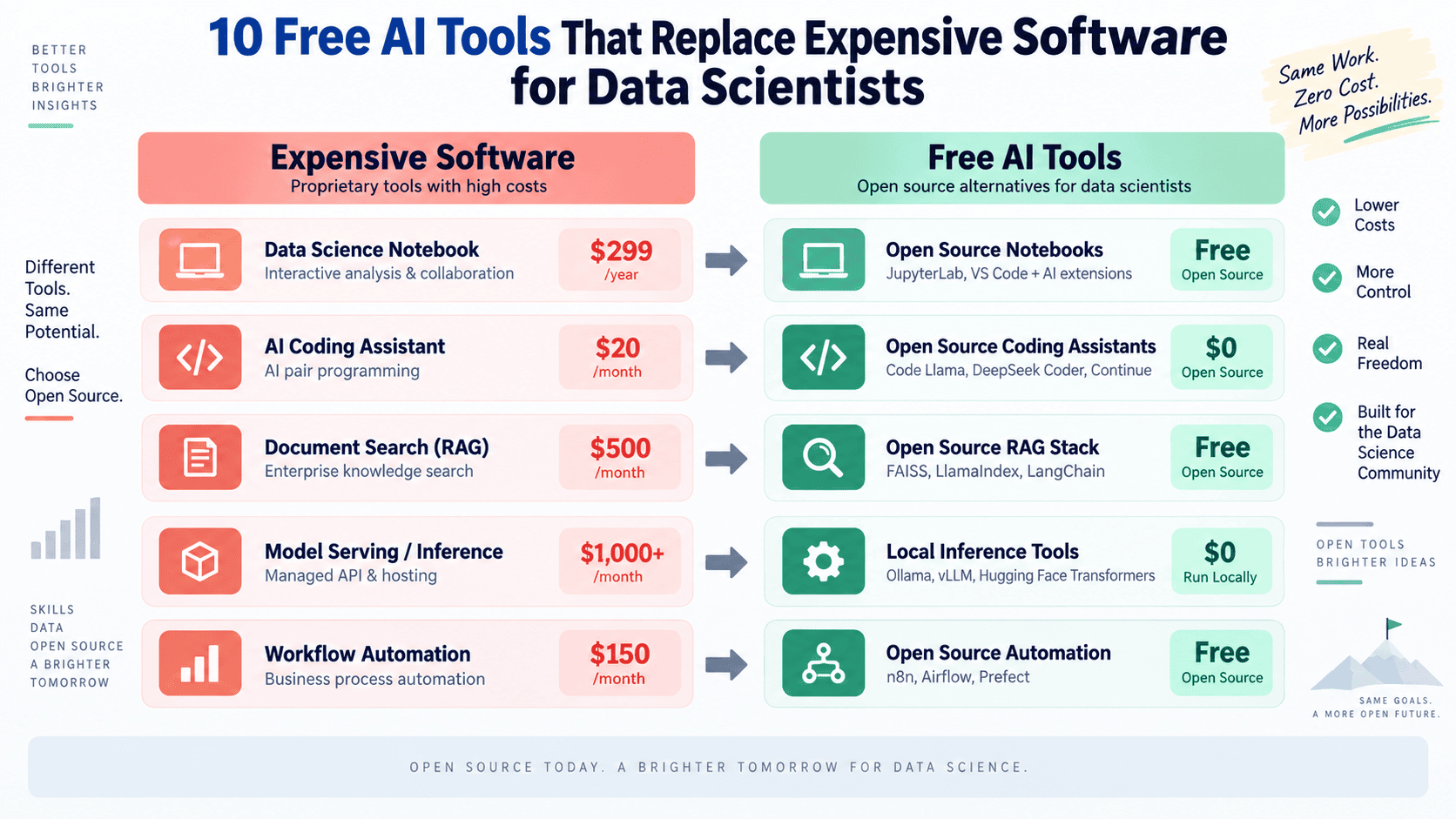
Build a complete data science stack for free with these open-source AI tools
Building a production-grade data science stack doesn't have to strain your budget. Open-source AI tools now match, and sometimes exceed, the capabilities of their paid counterparts, giving you a complete toolkit for free. This is about empowerment, not compromise. If you've been exploring how smarter workflows can transform your practice, our piece on semi-supervised learning as an underrated path offers a fitting next step.
When Code Outpaces Reading, It's Time to Hire AI
AI agents now write more code than any of us can read. That single realization reframes the entire conversation around artificial intelligence. We have moved past the era of asking AI for help and into an era where we hire it as a collaborator. The shift is practical, not philosophical. If you are still treating AI as a tool for drafting emails, you are missing the point.

Valkey's Future Expands Beyond Caching, Say Its Lead Maintainers
Two years after forking from Redis, Valkey is making clear its ambitions extend well beyond caching. The project's twelve maintainers and nine committee members are pushing forward with meaningful upgrades, including better throughput, stronger cluster functionality, and planned features like synchronous replication and tiered storage. That's a serious roadmap for a database aiming to be a core infrastructure player. For teams exploring AI-driven workflows, the emphasis on automation and security feels particularly timely.

Google gives Gemini a workplace identity to plan and execute tasks
Google is giving Gemini its own email address. That's the headline, but the real story is about agency. By turning Gemini into an AI agent that can plan, execute tasks, and delegate work to subagents across business systems, Google is rethinking what a workplace identity means. This isn't just another assistant, it's a colleague that operates autonomously. For a deeper look at how Google is reimagining data ownership, see our piece on "Why Google's $10 Million Bid for Old Emails Signals a Smarter Data Future."

Vesta secures $30M to bring AI agents to mortgage lending
Vesta just secured $30 million to bring AI agents into mortgage lending, a sector ripe for smarter workflows. The startup, backed by Conversion Capital, builds AI-native software that helps lenders originate mortgages more efficiently. For anyone who has felt the drag of manual data entry and legacy systems, this feels like a genuine step forward. If you're curious about how AI is reshaping familiar tools, our piece on Argon entering the spreadsheet arena offers a parallel view worth exploring.

AI agents need a digital handshake to navigate today's web defenses
Personal AI agents are hitting a wall. Every time they try to book a flight or make a reservation, anti-bot defenses block the way, leaving consumers stuck in the middle. That friction is the problem a new standard aims to solve, giving agents a digital handshake to navigate today's web defenses. It's a practical step forward. For more on how agents are reshaping workflows, Cloudflare's new CLI opens the door for AI agents to command its services.

How Google's Data Validated Part of My Argument and Left Room to Explore
Google's own data validated half of my argument, and left the other half open for exploration. In this third installment on spec-driven test automation, we see how measurable evidence can sharpen a thesis without closing the conversation. That's the kind of thinking partner AI should be. For a deeper look at that concept, see our guide on turning AI into a thinking partner that accelerates how you learn.
Excel users share frustrations over data quirks and constant update fatigue
Excel users are voicing familiar frustrations: leading zeros that vanish, design choices that feel like puzzles, and the relentless pace of updates in 365. The top discussion this week captures a shared exhaustion, not with data itself, but with the workarounds required to manage it. When the most celebrated macro is simply "Filter by active cell," it signals a deeper need for tools that adapt to how people actually work.
Maximize Your Power BI Pipeline Without Wasting Time on Dead Ends
You're right to question whether Excel VBA opening a file is the most reliable path, it often creates more dead ends than solutions. Power BI Premium with Copilot gives you a cleaner option: schedule a direct refresh through the service, or use Power Automate to trigger a refresh when a new CSV lands in SharePoint. Skip the Excel middleman entirely. Your data pipeline should flow forward, not loop through fragile workarounds.

How Photon's $4.5M bet on AI agents reimagines messaging over apps
Photon's $4.5 million bet says something direct about where messaging is heading: consumers may soon prefer talking to an agent over downloading another app. The startup helps developers build AI agents that work across iMessage, SMS, email, and more. It's a practical wager that convenience will win. We see a similar thread in our coverage of "Chat with Sidekick to build your store and see it take shape instantly," where Shopify's AI agent lets merchants create stores through conversation.