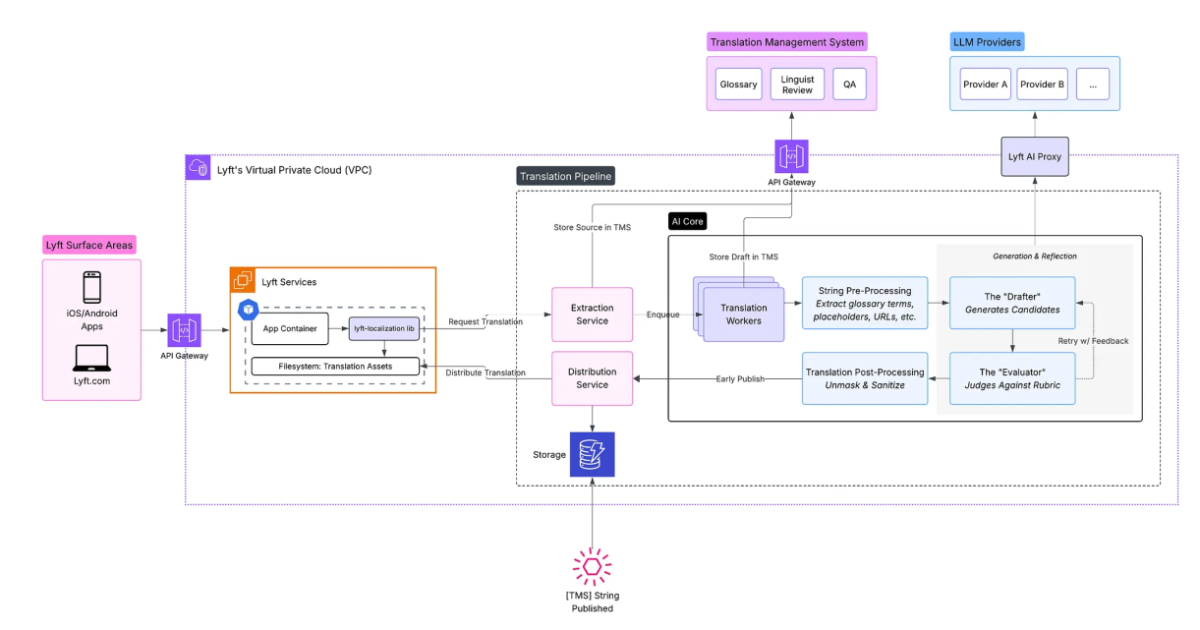
Lyft's approach to AI localization is a practical blueprint, not a flashy experiment. The company built a dual-path pipeline where large language models handle the bulk of translation work in minutes, while human reviewers step in for the tricky stuff like regional idioms and legal messaging. That division of labor is the real story here, because it acknowledges what too many AI rollouts ignore: speed is meaningless if the output undermines trust. For teams wrestling with global launches, this is a reminder that the goal is not to replace judgment but to deploy it where it actually matters.
What stands out is how Lyft frames the human role as a feature, not a fallback. By letting the AI process most content automatically, the system clears the bottleneck that traditionally delayed international releases. But by keeping humans in the loop for high-stakes or culturally nuanced text, Lyft avoids the classic failure mode of literal translations that miss the mark. For practitioners, this suggests a smarter way to think about automation: use it to handle the volume, then invest human attention where the cost of error is highest. That is not a compromise; it is a design choice that protects brand consistency without sacrificing momentum.
The practical takeaway for anyone building similar systems is to resist the urge to treat AI as a turnkey solution. Lyft's pipeline works because it separates the ordinary from the exceptional. If you are localizing an app, a marketing site, or even internal documentation, the question is not whether to adopt AI but where to draw the line between automated and reviewed work. Start by identifying the content that carries legal weight or cultural sensitivity, and route that to humans. Everything else can flow through the model. That is a straightforward, defensible starting point.
The deeper implication is about resource allocation. Lyft's system does not just save time; it reallocates human expertise to the tasks that actually require it. For teams with limited headcount, that is a meaningful shift in how to approach global growth. You are no longer choosing between speed and quality. You are choosing how to deploy your best people. That is a far more useful conversation than another debate about whether AI will replace translators. The answer, as Lyft demonstrates, is that the two can coexist productively, but only if you design for it from the start.