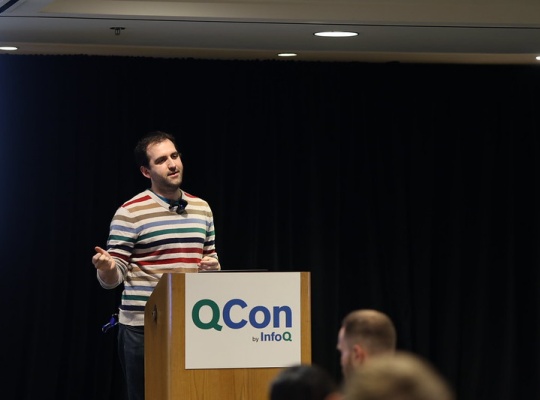
When Uber Eats decided to move from native screens to a single-page WebView architecture, it wasn't just a technical swap. It was a deliberate bet on flexibility over the status quo. Nick DiStefano's walkthrough of that migration is a masterclass in what it takes to bypass the slow, grinding release cycles that most mobile teams treat as inevitable. For engineering leaders who have felt the pain of waiting weeks to ship a UI change, this is not just interesting. It is a roadmap.
The core insight here is that the migration was native-driven, not a wholesale surrender to the web. DiStefano and his team built a generic message bridge between native and web layers, which means they didn't trade one silo for another. They created a system where state is managed cross-platform with intention, not as an afterthought. That is the part most teams miss. It's easy to throw a WebView into an app and call it a day. It is much harder to design a bridge that handles shared state cleanly, especially when you are moving a high-traffic product like Uber Eats. If you are considering a similar path, the takeaway is direct: the bridge is the architecture, and the UI is just the passenger.
What stands out in DiStefano's approach is the emphasis on not degrading metrics during the migration. That sounds like a baseline requirement, but it is actually where most large-scale UI overhauls fail. Users do not care about your architectural purity. They care that the checkout flow works. By keeping the native shell in charge of navigation and critical paths, the team reduced risk while still gaining the speed of web-based iteration. For our readers, this is the practical lesson: you do not have to choose between native reliability and web velocity. You can have both, but only if you are willing to design the bridge as a first-class citizen. That is a hard truth, and it is the one worth stealing.
The open question DiStefano leaves us with is about the long-term cost of that bridge. Every abstraction is a maintenance burden. Once you build a generic message layer, you are now maintaining it forever, or until you rip it out again. That is not a reason to avoid the approach. It is a reason to go in with your eyes open. If we were advising a reader who asked about this talk, we would say this: study the bridge design, borrow the metric-tracking discipline, but budget for the ongoing complexity. The win is real, but it is not free. The detail to watch is how Uber Eats handles the next big platform shift, because the same bridge that lets you move fast today is the thing you will have to untangle tomorrow. That is the trade-off, and it is worth making.