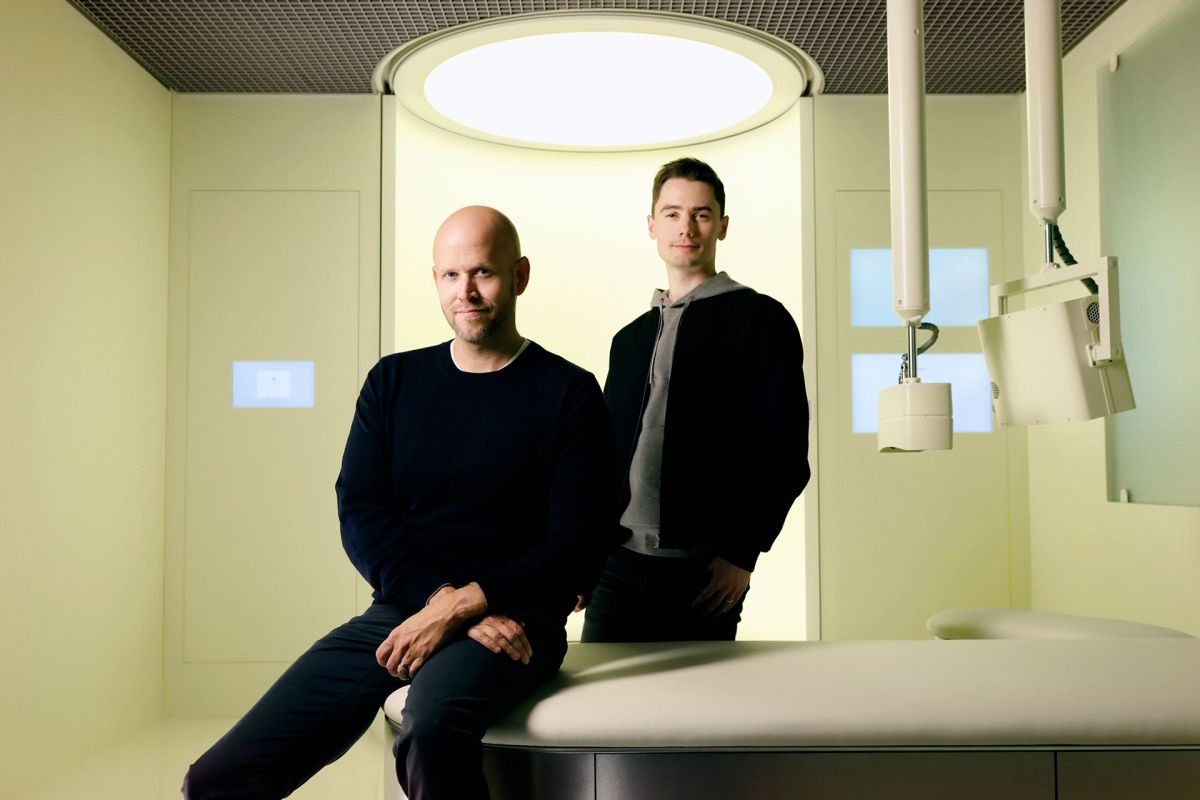
Investors are betting hundreds of millions that the future of medicine starts with a full-body scan, and for once, the hype might be pointing in a productive direction. Neko Health, backed by Spotify founder Daniel Ek, just raised $700 million to make preventative scanning a mainstream service, while Midjourney is building its own scanner and Function Health has secured significant capital for its broader platform. This isn't just a funding trend; it's a bet that the most expensive, reactive healthcare system in the world can be disrupted by simple, proactive data collection. The same logic is driving AI agents reshape hardware design as Flow Engineering secures $750M valuation, investors see raw data as the raw material for smarter decisions, whether the domain is chip design or cholesterol management.
What does this mean for you? If you've ever left a doctor's office with more questions than answers, you understand the appeal. Traditional checkups are built around symptoms: you feel something wrong, you go in, and the system reacts. Neko Health, Function Health, and similar companies flip that model. They scan your body for anomalies before you feel anything, turning healthcare from a reactive chore into a proactive discovery process. This is not a replacement for your physician. It's a data layer that gives you and your doctor a much clearer starting point. Think of it as the difference between navigating a city with a static map versus a real-time GPS that highlights every pothole before you hit it.
The parallels to hardware design are instructive. Just as Flow Engineering uses AI agents to simulate and optimize physical products before they're built, these health startups use sensors and algorithms to build a baseline of your biology. The goal is to catch a problem in simulation, before it becomes a crisis in reality. This is a fundamentally different relationship with your own body, one that demands a tolerance for ambiguity. A scan may flag a half-dozen minor irregularities, most of which will mean nothing. The question is whether the industry can help users interpret that noise without creating unnecessary anxiety.
Here is the specific consequence to watch: the economics of scale. Neko Health raised $700 million not just to build better scanners, but to make them cheap enough to deploy widely. If these companies succeed, the cost of a comprehensive scan could drop below the cost of a single emergency room visit. That would change the incentive structure of the entire insurance and wellness industry. The open question is whether the data these scans produce will remain private, portable, and useful, or whether it will get locked inside proprietary platforms that mirror the worst habits of the legacy systems they claim to replace. The answer will determine whether this category becomes a genuine tool for empowerment or just another expensive subscription.