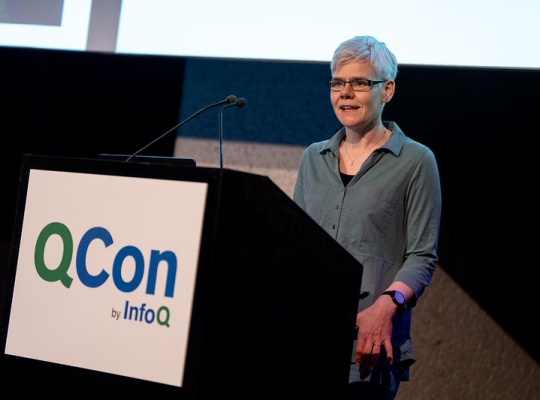
The technical career path was never a ladder, and Sophie Weston's 30-year retrospective confirms what many of us suspect but rarely hear articulated: the journey from senior individual contributor to strategic leader is a winding route, not a linear climb. Her framing of the "broken comb" metaphor is the most useful mental model we've encountered in years. It shifts the focus from accumulating more technical depth to deliberately broadening your ability to see systems, connect disparate ideas, and influence outcomes beyond your immediate codebase. That is the real work of leadership, and it starts long before you get the title.
For the senior IC who feels stuck, Weston's point about organizational flexibility is the practical lever to pull. You can't become a strategic thinker in a vacuum, and you can't force that evolution if your environment rewards only individual output. The takeaway here is to audit your surroundings with the same rigor you apply to a production system. Are there opportunities to contribute to cross-functional planning, to mentor others on systems thinking, or to translate technical trade-offs for non-technical stakeholders? If those doors are closed, your growth is capped regardless of how many frameworks you master. Seek out the spaces where your voice can shape priorities, not just execute them.
Weston's emphasis on public speaking and community engagement is the part that will make some engineers uncomfortable, but it's also the most actionable advice in the piece. We often treat these activities as extracurricular, yet they are the feedback loops that turn internal expertise into external influence. Writing a blog post, speaking at a local meetup, or leading a working group forces you to articulate your reasoning clearly and invite scrutiny. That process sharpens your strategic thinking in ways that internal code reviews never will. It also builds a reputation that precedes you, which is essential when you need buy-in for a cross-team initiative.
The concrete point to carry forward is this: start treating your career as a portfolio of skills in systems thinking and communication, not a checklist of seniority levels. Weston's experience suggests that the leaders who succeed are the ones who deliberately cultivate a "broken comb" of varied abilities, and then put themselves in environments where those abilities can be exercised. So, look at your current role and ask yourself one question: are you spending at least twenty percent of your energy on problems that don't have a ticket number yet? If not, the path forward isn't to work harder; it's to change the shape of your work. That is the strategic move.