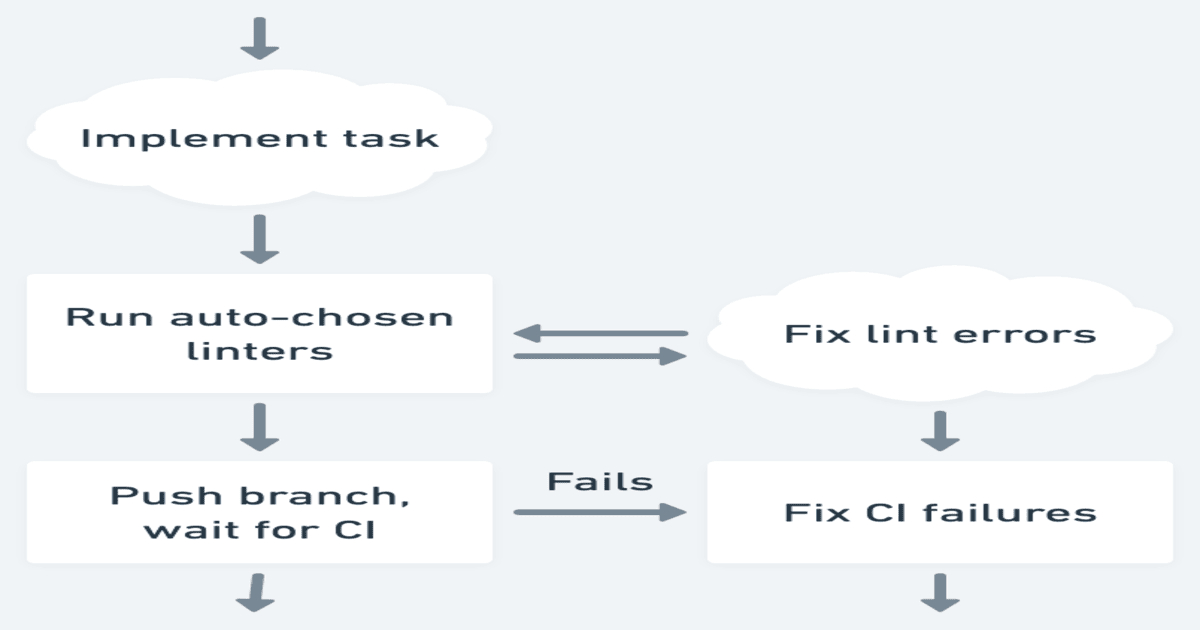
Stripe's Minions are not a glimpse of some distant future. They are a working system, already generating over 1,300 pull requests per week from Slack messages, bug reports, and feature requests. That is a practical shift in how software gets built, and it deserves attention beyond the novelty of the name. The Minions are autonomous coding agents that use LLMs, blueprints, and CI/CD pipelines to produce production-ready changes. Human review remains in the loop, but the volume and autonomy of the work is what matters here. Stripe engineers are not talking about assistants that suggest a line of code. They are describing agents that take a task from a chat thread and deliver a complete change for review. That changes the rhythm of development work.
For anyone managing a team or building software, the implication is straightforward. If an agent can reliably handle a bug fix or a feature request from start to finish, the human developer's role shifts toward review, architecture, and the work that requires judgment. The Minions handle the grunt work, but they do not replace the person who understands why a system works the way it does. That is a productive division of labor, not a threat to jobs. The key constraint is reliability. Stripe's approach relies on blueprints and CI/CD pipelines to keep the output safe. That is not magic. It is engineering discipline applied to the agents themselves. The lesson is that autonomous agents need guardrails, not freedom. The more structured the task, the more autonomous the agent can be.
What this means for the broader industry is that the spreadsheet era of software development, manual, repetitive, and error-prone, is running out of time. Teams that treat coding as a craft of typing will find themselves outpaced by teams that treat coding as a craft of directing. Stripe is not the only company exploring this territory, but the scale of their deployment is notable. Over 1,300 pull requests per week is not a pilot. It is a production workload. The Minions are not replacing developers. They are compressing the time between an idea and a deployable change. That is the metric that matters.
The practical takeaway for your team is this: start identifying the tasks in your workflow that are predictable enough to hand off. If a task can be written as a blueprint, it can probably be automated. The Minions show that the technology is ready. The question is whether your process is ready to trust it.