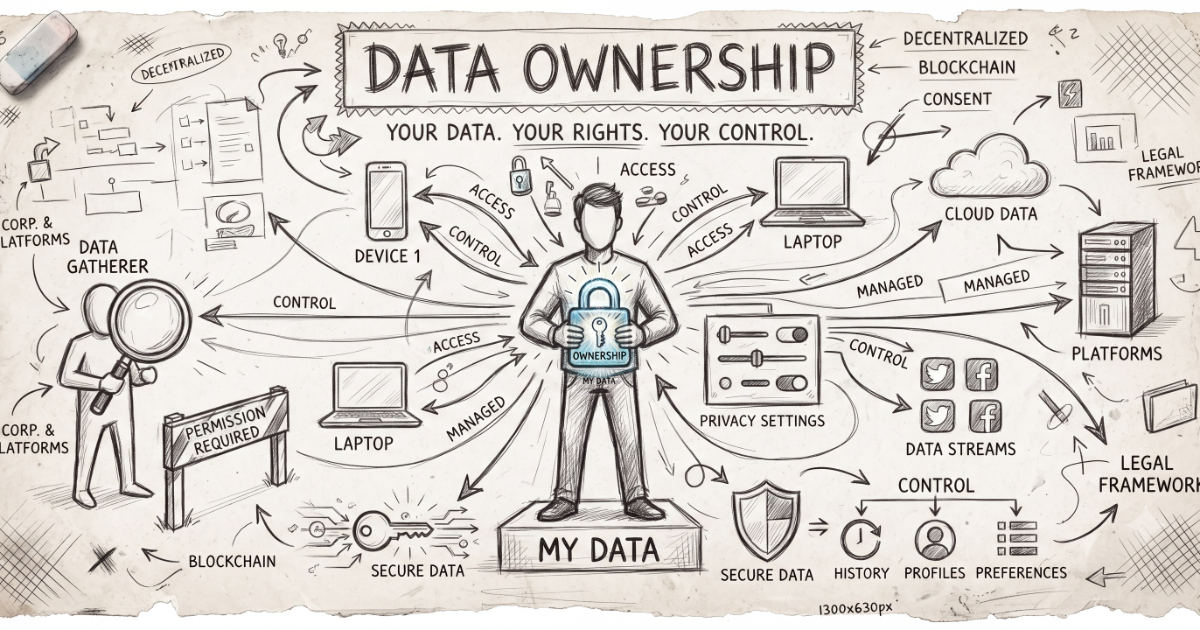
The panel's core provocation is one we should sit with for a moment: owning your data is not the same as holding the keys to it. The speakers, including Zenna Fiscella, Paul Frazee, Boris Mann, and Robin Berjon, pushed past the familiar refrain of account control to describe something more demanding. Structural independence means your data's fate is not tied to a single company's server or a single product's roadmap. Interoperability means your data can move between tools without friction or ransom. Community governance means the rules of the road are set by the people using the road, not just the people selling the asphalt. That is a heavier lift than any export button can manage.
For our readers, this distinction is not academic. If you have felt the quiet unease of building a workflow inside a tool that could change its terms tomorrow, you already understand why "just download a CSV" is a weak form of freedom. The panel's emphasis on unbundled platforms points to a future where your spreadsheet, your database, and your documents are not a single monolith but a set of interoperable parts you assemble and reassemble. This is not about nostalgia for self-hosting everything. It is about refusing to accept that the only choice is between convenience and control. The practical takeaway here is direct: evaluate your next tool not just on features, but on whether it lets you leave without losing your mind.
What would we tell a reader asking, "What should I actually do about this today?" Start by asking harder questions of the vendors you already pay. Do they support open standards for import and export, or do they lock you into their own format? Can you move your data to a competitor without losing formatting, relationships, or logic? Is there a community or a cooperative model underneath the product, or is it just a venture-backed race to capture you? The panel's call for shared standards is not a plea for a utopian single protocol. It is a practical demand that the industry stop treating data silos as a feature. We would tell you to reward tools that treat interoperability as a baseline, not a premium add-on. And we would tell you to be suspicious of any platform that describes your data as "safe" while making it harder to leave.
The open question worth watching is whether the demand for structural independence will translate into actual purchasing decisions. The panel made a strong case for why it should, but the market has a long history of trading sovereignty for convenience. The specific detail to watch is the emergence of community-governed tools that offer real interoperability, not just promises. If those tools can match the polish of their closed rivals, the conversation will shift from "why local-first?" to "why not?" If they cannot, then the burden falls on users to demand better of the tools they already use. The path to sovereign data is not a single destination; it is a series of deliberate choices about what you are willing to accept. The question is not whether you want ownership, but whether you are ready to require it.