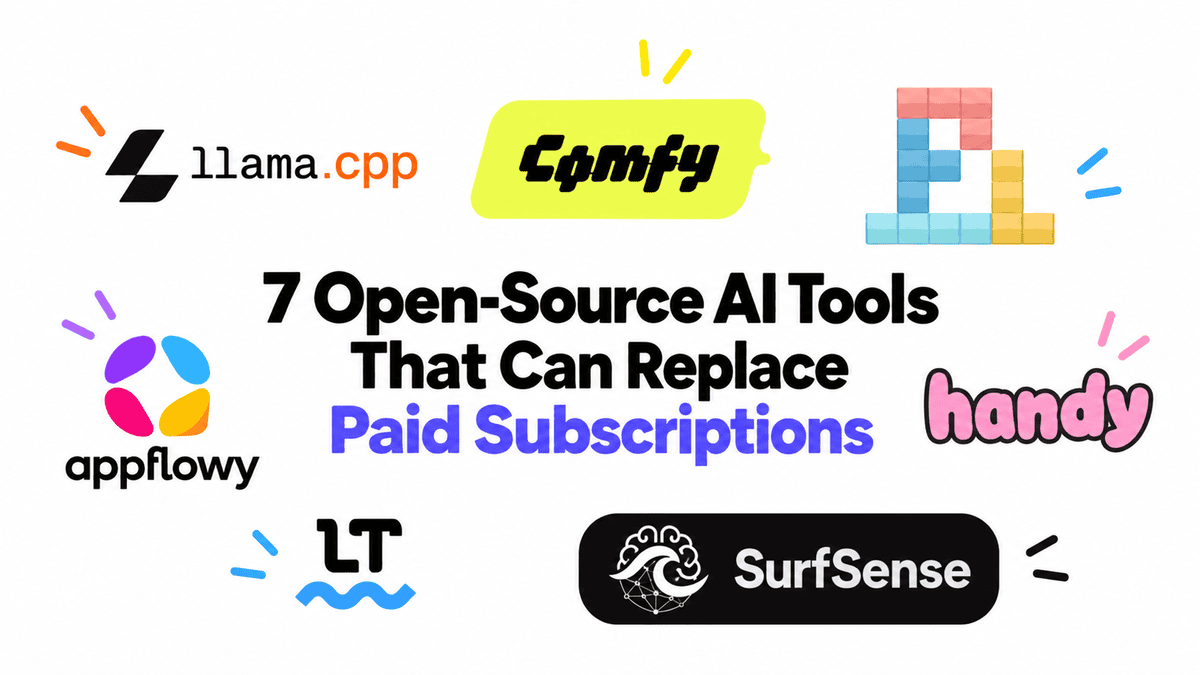
The conversation around data privacy often feels abstract, but the rise of self-hosted AI tools makes it concrete: you can now run powerful models like open-source alternatives to OpenAI, Midjourney, and Notion entirely on your own hardware. For anyone who has felt uneasy about handing their most sensitive spreadsheets or creative work to a third-party cloud service, this shift is not just interesting, it's a practical path to reclaiming control. We believe this movement represents a genuine evolution in how users approach productivity, one that aligns closely with the growing scrutiny of surveillance technologies highlighted in our coverage of Balancing safety and privacy in the push for smarter surveillance and Flock's public safety pitch and its privacy promises are telling different stories. Where those stories expose the tension between convenience and oversight in public spaces, self-hosted AI offers a parallel solution for personal data: the ability to opt out of external monitoring entirely.
What makes this development immediately relevant is its practicality. The open-source alternatives listed, covering everything from AI APIs to note-taking and writing assistants, are not theoretical. They are downloadable, runnable systems that can replace subscription services while keeping your data on a machine you own. For spreadsheet users, this means no more worrying about whether your financial models or proprietary datasets are being analyzed by someone else's servers. The cost argument is equally compelling: self-hosting can reduce recurring expenses, especially for teams that already maintain their own infrastructure. Google's recent move to support local models in its Antigravity SDK, as we reported in Google Antigravity SDK Now Runs Agentic Workflows Locally for Greater Data Privacy, signals that even major players recognize the demand for local execution. This is not a fringe preference, it is becoming a mainstream expectation.
The practical takeaway is straightforward: if you rely on tools like Grammarly or NotebookLM for daily work, you can now test a local alternative this afternoon. The barrier to entry has dropped. Many of these open-source projects offer one-command installs or Docker containers, and documentation is improving rapidly. For a small business or a solo power user, the trade-off is no longer about sacrificing convenience for privacy, it is about investing a few hours of setup time to eliminate ongoing dependence on external APIs. The question we are left with is not whether this technology works, but how quickly the ecosystem will mature to match the polish of commercial products. Watch for improvements in user interface design and model accuracy over the next six months; those are the gaps that will determine whether self-hosted AI remains a niche experiment or becomes the default choice for anyone serious about data sovereignty.