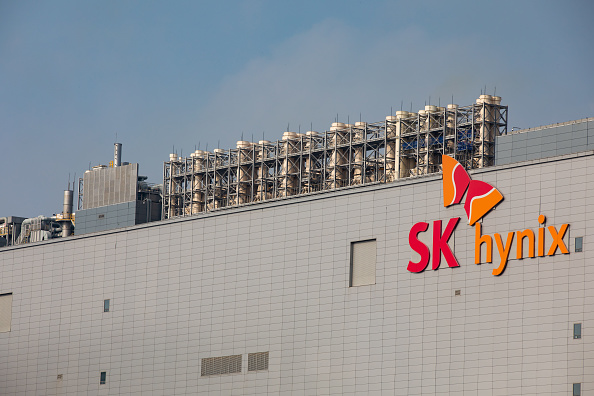
The semiconductor industry's geography is being rewritten in real time, and SK Hynix's Solidigm is caught in the middle of the most consequential chapter. The company reportedly needs U.S. approval to send additional chipmaking equipment to its China site, while simultaneously weighing construction of a new NAND factory in America. This is not a logistical hiccup; it is a strategic squeeze that reveals how deeply technology supply chains have become instruments of policy. For anyone building a business on data-intensive workflows, the practical implication is immediate: the hardware that powers your AI tools and storage infrastructure is no longer a commodity you can take for granted. The location of fabrication capacity now determines access, cost, and continuity. That reality is already reshaping how fast companies can scale, as AI-Powered Sourcing Helps Scimplify Triple Revenue to $200M shows, a growth story built on supply chain agility, not just clever code.
Solidigm's predicament is a mirror for the broader tension between national security controls and global manufacturing footprints. The company's China facility already operates under a license that permits certain equipment. Expanding that license would mean more advanced tools can enter a market the U.S. government increasingly treats as a technology adversary. At the same time, building a new U.S. factory would align with Washington's push to bring leading-edge memory production back home. But these two paths are in conflict. The equipment SK Hynix wants to send to China is exactly the kind the U.S. wants to keep out. You cannot easily do both. The decision, when it comes, will send a signal about whether the export control regime has room for exceptions, and that matters for every company that relies on NAND flash for enterprise storage, AI training clusters, or edge computing.
This is not a story about one company's factory plans. It is about the end of the assumption that globalized semiconductor supply chains are frictionless. The same dynamic is playing out in other critical materials. As As fusion power scales, Licube is building the lithium supply chain to fuel it illustrates, companies are now building parallel, redundant supply chains for essential inputs before those inputs become bottlenecks. The question for our readers is straightforward: how much of your data strategy relies on access to next-generation memory chips that may not be freely available in a few years? If your AI models or database workloads depend on high-capacity, low-latency NAND, the political geography of its production is no longer abstract.
The specific detail to watch is the timeline. SK Hynix's existing license for its China factory runs through a defined period, and the equipment it now seeks approval for suggests the company expects to operate that site at a higher technology node for years to come. If the U.S. grants the request, it will signal a pragmatic willingness to decouple over time rather than abruptly. If it denies it, the calculus for building a U.S. NAND fab changes dramatically, because the economics of that facility depend on volumes that take years to ramp. The answer will arrive before most companies have even asked the question about their own memory supply. That is worth paying attention to now, not after the equipment is already on a boat.