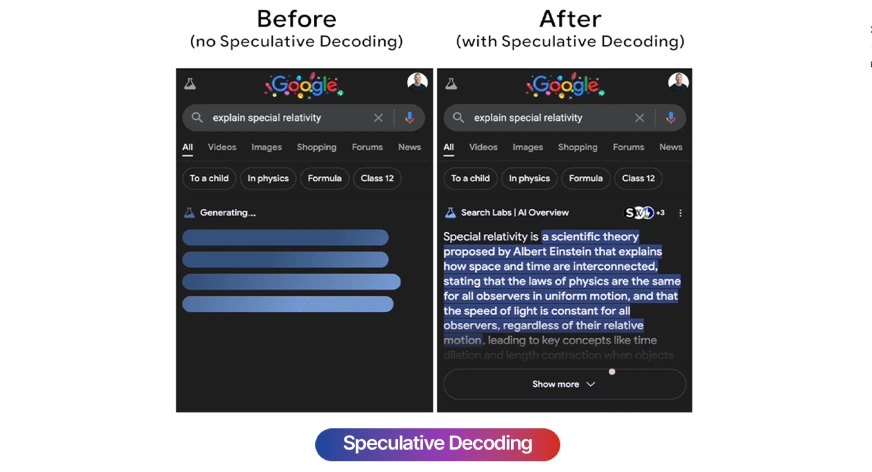
Speculative decoding is one of the most practical ideas we've seen in a while, and it deserves more attention than it gets. Large language models can generate text up to three times faster by using a smaller model to draft responses while a larger one verifies them. That's not just a clever technical trick; it's a direct answer to the friction you feel when waiting for an AI to finish a thought. For anyone who uses AI tools daily, speed isn't a luxury. It's the difference between a tool that feels responsive and one that feels like a chore.
What this means for you is simpler than it sounds. When you ask an AI to summarize search results or draft an email, the model isn't just pulling words from a hat. It's making a series of educated guesses about what comes next, one token at a time. Speculative decoding works by letting a faster, less capable model take the first pass, then having a slower, more accurate model check the work. If the draft is good, the larger model approves it in one go. If not, it corrects the path. The result is that you get the quality of a large model without waiting for it to compute every single word from scratch. It's a division of labor that mirrors how a skilled editor might skim a rough draft before committing to a final version.
We think this matters because it removes a barrier that too many people accept as normal. Most of us have learned to tolerate the pause between typing a prompt and seeing a response. We've been trained to expect that "good" AI means waiting a few extra seconds. Speculative decoding challenges that assumption. It shows that speed and intelligence aren't trade-offs. You can have a model that's both accurate and quick, provided you're willing to rethink how the work gets done. That's a progressive stance, and it's one we fully support.
The practical takeaway is straightforward: the next time you're evaluating an AI tool, ask about latency, not just accuracy. If a product isn't built to minimize wait times, it's leaving performance on the table. Speculative decoding is proof that faster responses aren't a compromise. They're an engineering choice, and one more tools should make. So, the next time an AI answers you in a flash, you'll know why. And if it doesn't, you'll know what to ask for.