What the Agentic Era Means for Data Science
Our take
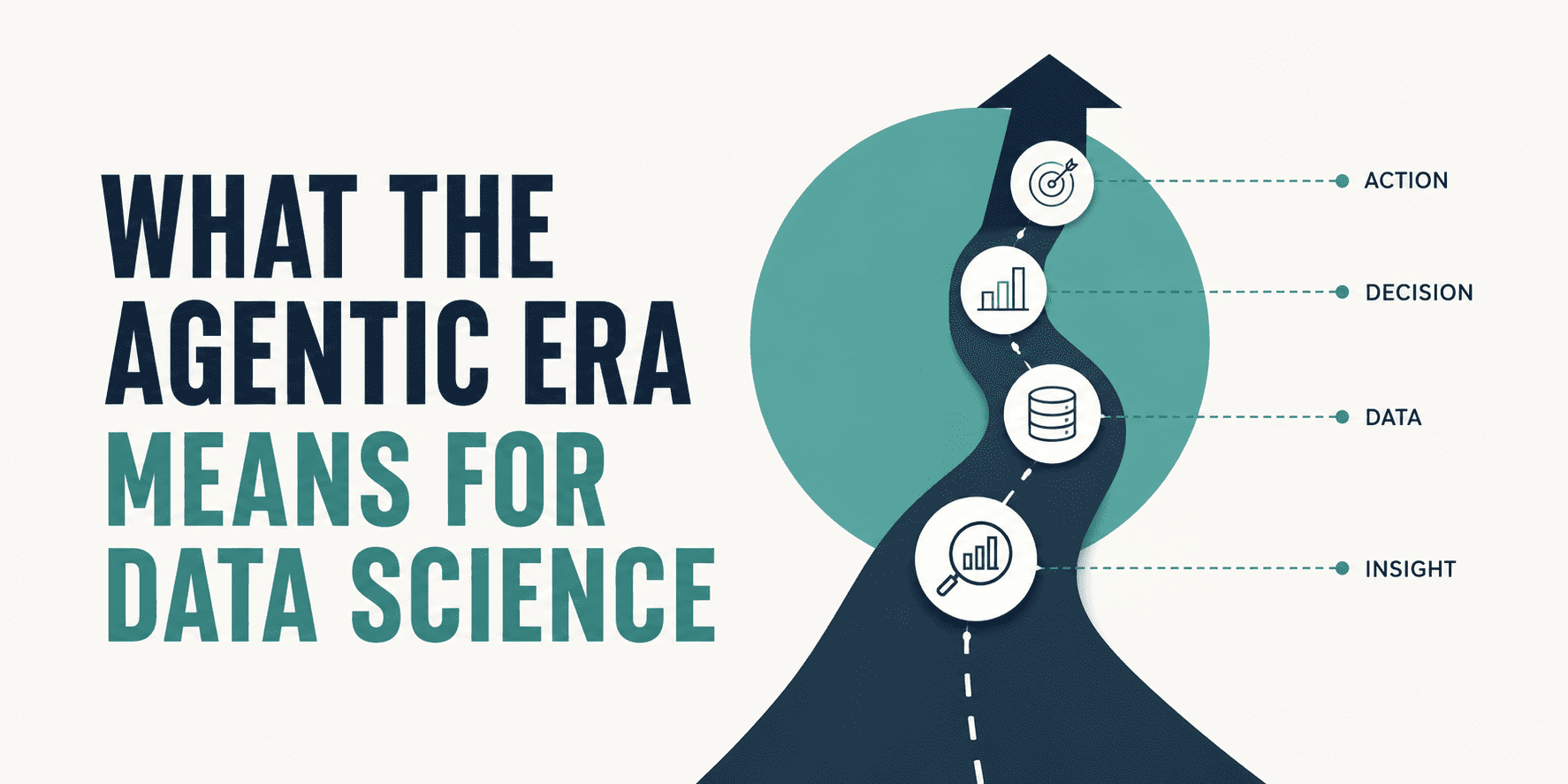
The rise of AI agents is reshaping data science in a way that feels both inevitable and urgent. As practitioners confront the growing complexity of model pipelines, the promise of autonomous assistants that can draft queries, clean data, and even suggest feature engineering strategies is no longer a futuristic notion—it is happening now. This shift builds on foundations we’ve already explored, such as the practical efficiencies detailed in 3 SpaCy Tricks for Efficient Text Processing & Entity Recognition and the core programming fluency highlighted in 5 Must-Know Python Concepts for AI Engineers. By integrating agents into everyday workflows, data scientists can move beyond manual scripting toward a collaborative cadence where the tool anticipates routine steps, freeing mental bandwidth for higher‑order problem solving.
What makes the agentic era distinct is not merely automation but agency. Modern agents are designed to act with purpose: they prioritize tasks, negotiate resource constraints, and adapt to evolving data contexts. This means a data scientist no longer spends hours stitching together ETL scripts; instead, an agent can ingest raw logs, flag anomalies, and propose a cleaned dataset ready for modeling. The impact is twofold. First, project timelines compress dramatically, allowing teams to iterate faster and respond to market signals with agility. Second, the skill set required of practitioners evolves. Mastery of prompt engineering, model interpretability, and the ability to audit agent decisions become as essential as traditional statistical knowledge. In other words, the role is shifting from hands‑on coder to orchestrator of intelligent components.
The broader significance extends beyond individual productivity. Organizations that adopt agent‑driven pipelines can achieve a more consistent data governance posture because agents enforce schema standards and documentation automatically. This continuity reduces the risk of hidden biases and improves regulatory compliance, a concern that has intensified with the proliferation of AI‑generated insights. Moreover, the agentic model democratizes advanced analytics: non‑technical stakeholders can engage with data through natural‑language interfaces, requesting forecasts or scenario analyses without learning a single line of code. The net effect is a more inclusive data culture where insight generation is a shared responsibility rather than a siloed function.
Looking ahead, the critical question is how the community will balance empowerment with oversight. As agents become more autonomous, establishing transparent audit trails and robust feedback loops will be essential to maintain trust and avoid unintended outcomes. We can expect a growing ecosystem of tools that let data scientists “listen” to agent reasoning, adjust its objectives, and verify its outputs before they influence business decisions. The agentic era promises a future where data work is not just faster, but smarter—provided we equip ourselves with the right mix of technical fluency and strategic oversight.
Read on the original site
Open the publisher's page for the full experience