3 SpaCy Tricks for Efficient Text Processing & Entity Recognition
Our take
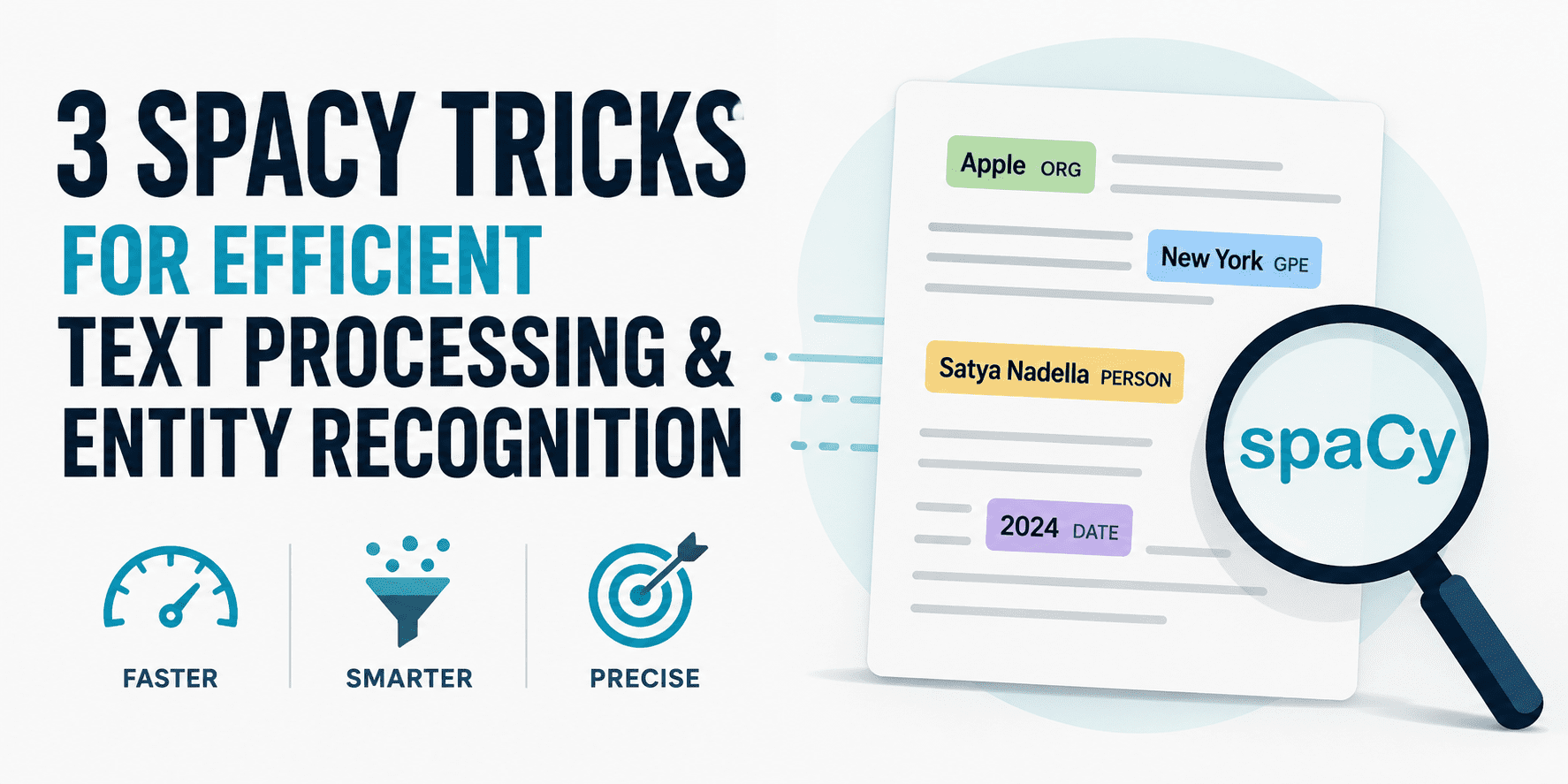
The world of natural language processing is moving at a pace that can leave even seasoned developers feeling adrift. Yet every day, new tools and techniques surface that promise to cut through the noise and deliver faster, more accurate insights from text. The article “3 SpaCy Tricks for Efficient Text Processing & Entity Recognition” does exactly that: it distills three practical methods that empower developers to squeeze maximum performance from SpaCy without sacrificing clarity or maintainability. If you’ve ever found yourself bottlenecked by slow parsing or struggling to fine‑tune entity recognizers, this piece is a must‑read. It connects neatly to the broader conversation about model calibration explored in A Deep Dive into Calibration of Language Models: Platt Scaling, Isotonic Regression, Temperature Scaling and the foundational Python concepts outlined in 5 Must-Know Python Concepts for AI Engineers. Together, these resources paint a picture of how thoughtful engineering choices—whether in calibration, language model deployment, or library optimization—can dramatically improve the end‑user experience.
Why does this matter? In many real‑world scenarios, the volume of text to be processed is staggering: from customer support tickets that flood in every minute to legal documents that span thousands of pages. Traditional SpaCy pipelines, though robust, can become sluggish when faced with such workloads. The tricks highlighted in the article—such as leveraging the `nlp.pipe` method with batch processing, disabling unnecessary pipeline components to sidestep superfluous computation, and employing custom entity patterns that are both expressive and lightweight—provide a clear roadmap to turning latency into a competitive advantage. By reducing processing time, developers free up resources for higher‑level analytics, real‑time dashboards, or even user‑facing features that respond instantaneously to textual input. In the age of “data‑first” product design, that speed translates directly into greater customer satisfaction and higher retention rates.
Beyond raw performance, the article also nudges the industry toward a more human‑centered approach to AI. The customizable entity recognition trick, for instance, invites teams to tailor models to the specific jargon and nuances of their domain. Rather than exporting a monolithic, one‑size‑fits‑all solution, developers can now iterate quickly, test new patterns, and immediately see the impact on accuracy—all without deep diving into complex machine‑learning code. This democratization of NLP tooling aligns with the broader shift toward “AI as a service” frameworks that empower non‑experts to build sophisticated applications. When combined with the insights from Why Do LLMs Corrupt Your Documents When You Delegate?, the message becomes clear: the more we can abstract away technical friction, the faster enterprises can adopt AI responsibly and at scale.
Looking ahead, the convergence of efficient text processing tricks with emerging trends—such as on‑device inference and federated learning—poses exciting questions. Will the next generation of NLP platforms integrate these low‑level optimizations directly into their APIs, making them invisible to the developer? How will the balance between speed and adaptability shift as models grow larger and more complex? As we continue to push the boundaries of what can be achieved with text, the insights from this article remind us that sometimes the most impactful innovations are those that streamline the path from data to decision. The future of data management will reward those who can transform raw text into actionable intelligence quickly and accurately, and mastering SpaCy’s hidden tricks is a decisive step toward that future.
Read on the original site
Open the publisher's page for the full experience