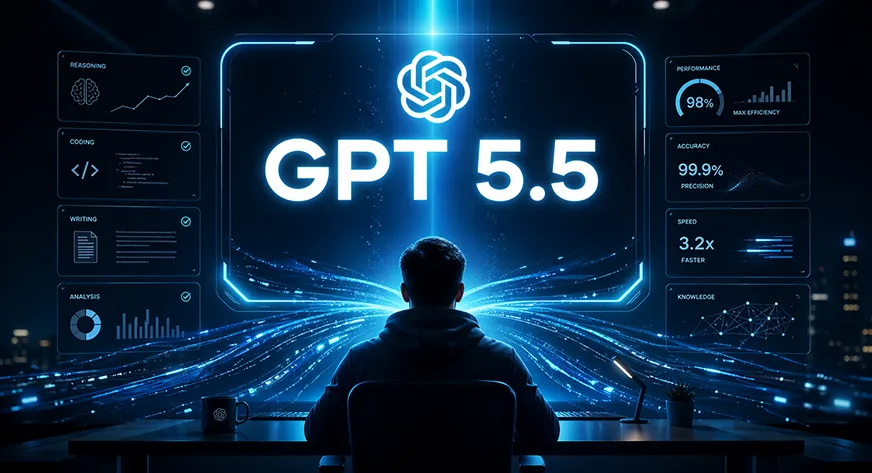
If you have been keeping up with OpenAI's recent releases, you already know that GPT-5.5 is not just another incremental update, it is the version that makes every previous AI assistant feel like a 1.0 prototype. And we mean that literally: after one session with this model, you will understand why the company felt confident dropping a major image generation tool and then following it with something even bigger.
What matters here is the leap in practical capability. The earlier models, even GPT-4, often required you to structure your prompts carefully or rephrase when the assistant misunderstood context. GPT-5.5 closes that gap. It handles messy, real-world requests without requiring you to become a prompt engineer. For the analyst who has been wrestling with a spreadsheet full of inconsistent data, or the product manager trying to synthesize feedback from multiple sources, this means less time correcting misunderstandings and more time acting on the output. The assistant now operates closer to how a knowledgeable colleague would: it asks clarifying questions when needed, remembers the thread of a conversation, and delivers answers that feel reasoned rather than regurgitated.
We also note the timing. OpenAI chose to announce GPT-5.5 on the heels of its image generation model, ChatGPT Images 2.0, and that sequence is telling. Rather than staggering releases to maximize separate headlines, the company is signaling that its core language model has matured enough to be the foundation for everything else. The image generation is impressive, but the underlying assistant is what makes that generation useful in context. You can now describe a chart you need, have the assistant draft the data, generate the visual, and then iterate on the design without switching tools or losing conversational flow. That is not a theoretical future, it is what the current offering does.
None of this means legacy tools are obsolete overnight. But if you are still treating AI assistants like expensive autocomplete, GPT-5.5 makes that approach feel like a missed opportunity. The new version asks more of you in return: it expects you to bring real problems, not toy examples. Give it something meaningful, a messy data set, a complex requirement, a stack of meeting notes, and it will show you what a mature assistant can actually do. The practical test is simple: open a session and paste in a real work challenge you have been avoiding. If the answer changes your workflow, you will know why this release matters.