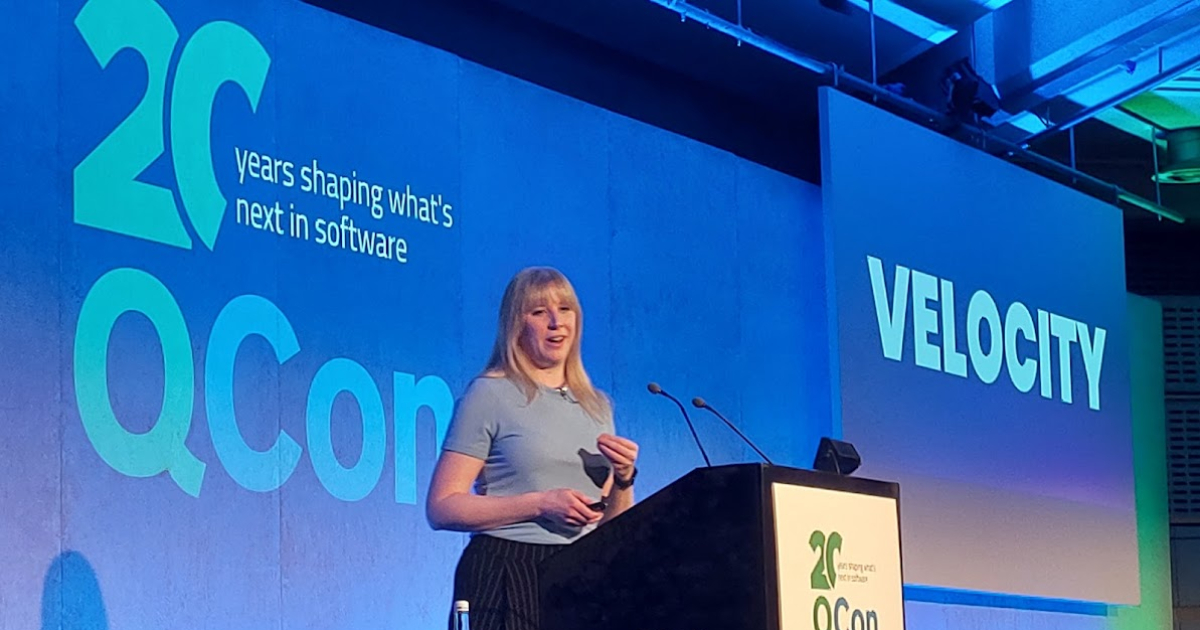
The long-sought velocity in development has arrived, and the industry is still figuring out what to do with it. Hannah Foxwell made that clear at QCon London 2026, and her point deserves attention. She deliberately set aside the technical mechanics of agentic coding to focus on the human implications. That is exactly where the conversation needs to be.
For too long, the promise of faster development has been framed as a straight line to more output. Write code faster, ship more features, move on to the next sprint. Foxwell's talk suggests something more nuanced. When the tools themselves accelerate work, the bottleneck shifts from production speed to decision speed. Teams now face a different kind of pressure: not how quickly they can generate code, but how thoughtfully they can guide, review, and validate what is produced. The human role does not shrink. It becomes more about judgment, context, and intent.
This is a practical shift for anyone leading or working on a development team. The question is no longer whether you can build something fast. It is whether you can build the right thing, with the right constraints, for the right users. Agentic coding tools remove friction from the mechanical parts of software creation, which means the value of a developer shifts toward understanding the problem, defining the outcomes, and ensuring quality. If your team is still measuring success by lines of code or feature count alone, you are measuring the wrong things.
Foxwell's framing also highlights a tension that will only grow. Faster coding does not automatically mean better products. It can just as easily mean faster accumulation of technical debt, faster propagation of bad assumptions, and faster burnout for the humans trying to keep up. The industry has spent years chasing speed. Now that it is here, the real work is learning how to use it without losing the human judgment that makes software useful in the first place. The team that figures that out will not be the one that codes fastest. It will be the one that knows when not to code at all.