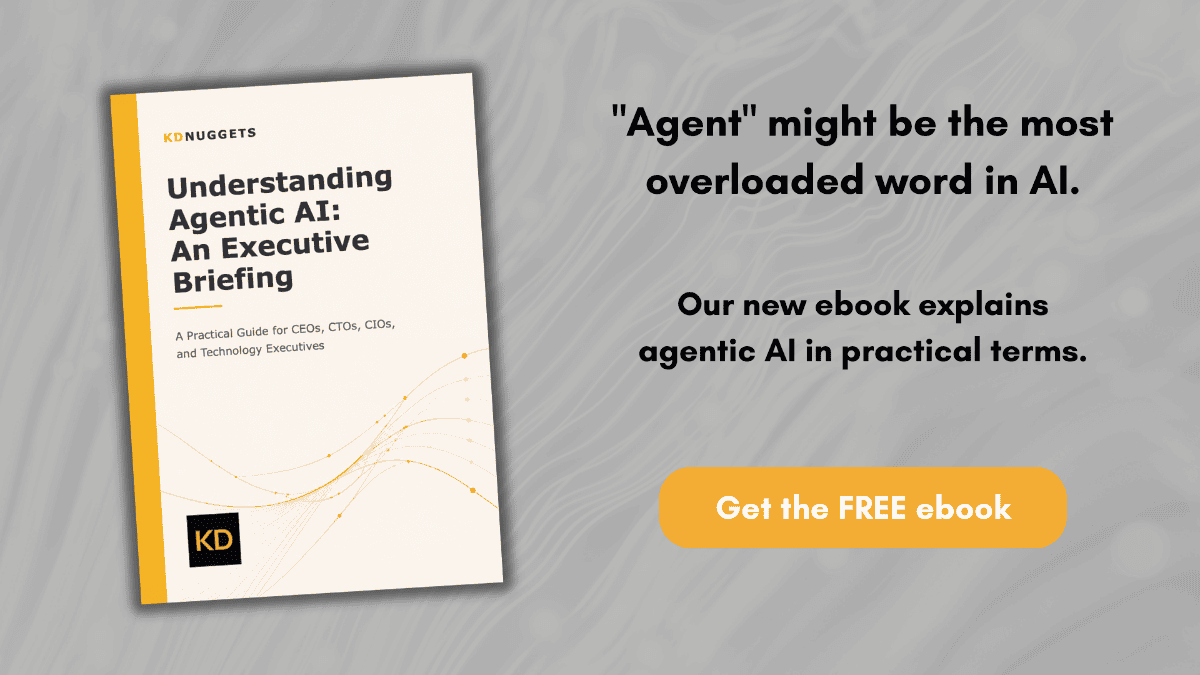
Executives don't have a spreadsheet problem. They have a decision problem. The tools we use to model scenarios, allocate capital, and pressure-test assumptions were built for a slower era, one where the cost of asking a follow-up question was measured in days, not seconds. So when a new briefing crosses our desk, we tend to brace for hype. We were pleasantly surprised, then, by the pragmatism of *Understanding Agentic AI: An Executive Briefing*. This isn't a manifesto about the coming robot takeover. It's a grounded walkthrough of the components that actually make an agentic system function, aimed squarely at the people who sign the budget, not the engineers who write the code.
Our honest take is that this is the right conversation at the right time. The market has spent the last year drowning in the word "agent," and most of that noise has been unhelpful. Some vendors want you to believe that a slightly smarter autocomplete is now your new chief of staff. Others insist that anything short of a fully autonomous supply chain is a failure. Both extremes miss the point. What matters, and what this book gets right, is that agentic systems are not magic. They are built from predictable, understandable components, and once you know what those components are, you can start asking the questions that actually matter for your organization. Questions like: Where does the model's authority end and a human's judgment begin? And more importantly, what does our data need to look like for this to be trustworthy?
For a CEO or a CIO, the practical takeaway is not about the technology itself. It's about the shift in how you evaluate software. Traditional spreadsheets are deterministic. You type a formula, you get an answer. Agentic systems are probabilistic. They reason, they adapt, and yes, they sometimes get things wrong. That is not a reason to avoid them, but it is a reason to approach them with a clear-eyed understanding of governance and oversight. We would tell any executive who asks: do not buy the promise of full automation. Buy the promise of better decision support. The real value today is not in replacing your team with agents; it is in giving your team a new kind of copilot that can handle the tedious, multi-step research and data wrangling that currently eats up their week. That frees them up for the judgment calls that only humans can make.
If you are still on the fence, consider the financial asymmetry. The cost of a poorly scoped AI initiative is not just the failed pilot; it is the opportunity cost of the next three quarters you could have spent building a workflow that actually works. Our advice is simple: read this briefing, but do not read it alone. Bring your head of engineering and your head of product into the room. Use the book as a shared vocabulary to ask the hard questions about architecture and data readiness. The specific detail we are watching for is not in the book itself, but in how quickly the vendors you already use start embedding these components into the tools you already own. The moment your ERP or your CRM starts offering agentic workflows natively, that is when the real transformation begins. Be ready for that moment, not by adopting a new platform, but by understanding the building blocks that are about to become table stakes.