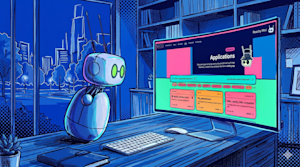
The emergence of Hugging Face's Reachy Mini App Store represents a pivotal moment in democratizing robotics, much like how spreadsheet innovations have transformed data management for everyday users. While many struggle with seemingly simple technical challenges—from Having issues printing a document to Only show Yes percentages—the barriers to entry for physical computing have remained remarkably high. This changes with an ecosystem that allows anyone to Simplifying a task assignment process, where 2000 tasks are broken up among 10 workers using natural language commands rather than specialized robotics knowledge.
What makes this development particularly significant is how it addresses the fundamental bottleneck that has constrained robotics progress: the scarcity of accessible development pathways. For decades, robotics remained confined to specialists who understood firmware intricacies, SDKs, and hardware-specific protocols. Hugging Face's approach flips this paradigm by positioning AI agents as intermediaries that translate human intentions into executable robot behaviors. When a 78-year-old retired marketing executive can build a sophisticated "VP of Future Thinking" facilitator for his Zoom meetings using nothing but plain English descriptions, we witness the collapse of traditional expertise barriers. This isn't merely about simplifying existing processes—it's about expanding who gets to participate in shaping our robotic future.
The platform's model-agnostic architecture further amplifies its transformative potential. By supporting everything from Hugging Face's own ML Intern to external models like GPT-5.5 and Claude Opus 4.6, users aren't locked into proprietary ecosystems that limit innovation. This open approach mirrors the collaborative spirit that has driven software development forward, suggesting that robotics may finally be entering its equivalent of the open-source renaissance that transformed computing. The fact that over 150 creators with no prior robotics experience have already contributed 200+ applications signals genuine community adoption rather than artificial inflation.
Looking ahead, the most compelling question isn't whether this platform will succeed, but how quickly the definition of "robotics developer" will expand beyond traditional boundaries. As hardware becomes increasingly commoditized and behavioral complexity becomes the primary differentiator, we're witnessing the emergence of a new creator economy—one where describing what you want a robot to do matters more than understanding how to program it. The real disruption may lie not in the robots themselves, but in who feels empowered to imagine what they might accomplish.